
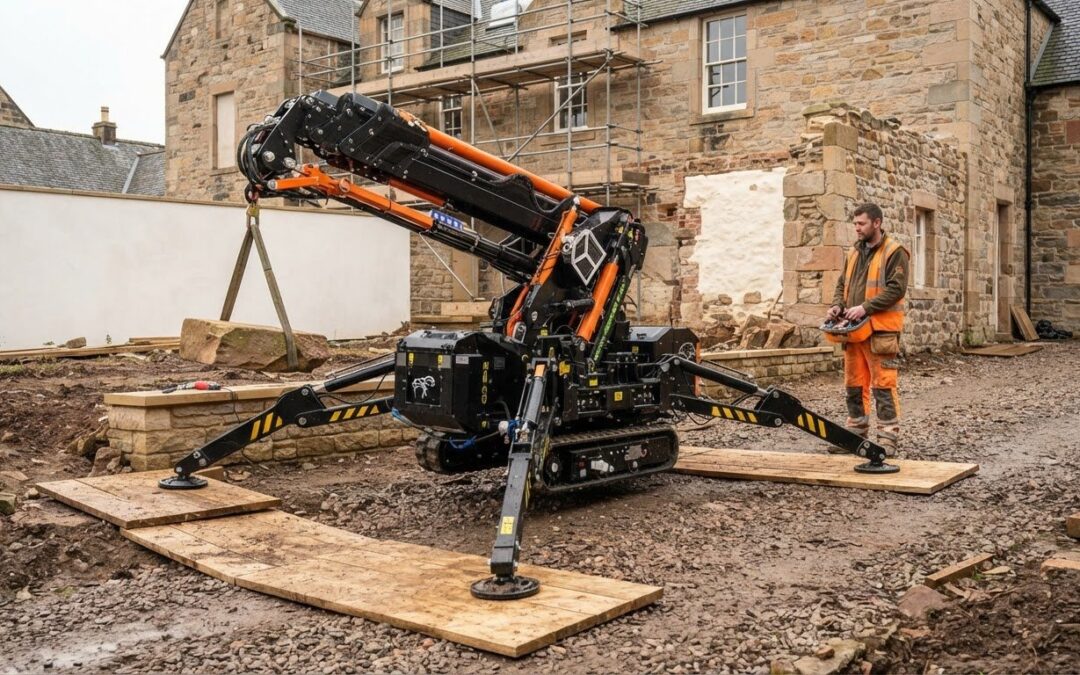
Uneven ground does not automatically rule out a lift, but the setup must suit the surface and the crane’s supports. A mini spider crane setup on uneven ground depends on secure outrigger positions, suitable load-spreading supports and levelling before the lift.
The slope is only one factor. Soft spots, loose soil and standing water can also affect stability. Even a slight tilt can affect balance and lifting capacity, while a narrower outrigger footprint can reduce capacity.
This guide explains how to assess ground conditions, position outriggers and use support mats or timber baulks. It also covers why a reduced-capacity setup may be necessary when space restricts the outrigger footprint.
You’ll learn what makes a lifting position suitable and which site conditions need careful planning. The practical aim is to understand the factors that shape a safe setup before lifting begins.
Key Takeaways
- Compact spider cranes can suit restricted-access locations; the smallest models are under 600 mm wide, so access dimensions matter when planning the route to the lift.
- As the lifting radius increases, capacity decreases. A reduced outrigger footprint can also lower capacity, so the permitted setup must match the load and working position.
- Support plates or timber baulks help spread outrigger loads, but they don’t replace an assessment of a slab or raised floor.
- Plan the crane’s route to and from the lift, as well as its working position, and account for how rain or frost can make sloping ground more hazardous.
Can Cranes Operate on Uneven or Sloped Ground?
Yes, a crawler crane can work on uneven ground when the machine and setup suit the surface, slope and lift. For a mini spider crane setup on uneven ground, assess the access route, working clearance and outrigger support positions before lifting.
Restricted-Site Crawler Crane Access
Compact crawler cranes can reach restricted-access sites where larger cranes cannot pass. The smallest spider crane models are under 600 mm wide, which can help with narrow entrances. Measure the full route, including doorways, corridors and turns, then compare it with the crane’s travel dimensions. A doorway that allows entry may still lead to a space too tight for the crane to turn or set up.
Check the working area as well as the entrance. The crane needs room to position its boom and deploy its supports without obstructing the load path. A compact machine may reach a confined location, but available clearance still determines whether it can complete the lift safely.
Track-Based Ground Access
Crawler tracks spread the machine’s weight over a wider contact area than wheels, which can help it travel across soft, loose or uneven surfaces. Rubber tracks provide contact with the ground, but they do not make every surface suitable for travel or lifting. Inspect the route for soft patches, loose material and changes in level.
Treat travel and lifting as separate conditions. A crawler may reach a position on uneven ground, but that does not establish that the position can support the lift. The crane’s setup and support points must still suit the ground and planned load.
Access Planning and Lift Requirements
Plan the full route to and from the lift, not just the final position. Note slopes, turns, overhead obstructions and surfaces that rain or frost could make more hazardous. Allow working clearance around the crane, including the space needed to deploy its supports.
Plan the lift before work starts. Not every mini spider crane lift automatically needs a separately appointed person; this depends on the operation’s complexity and coordination. Use an appointed person to plan lifts where needed, and include the load, crane position, route and ground conditions in the lift arrangements.
Outrigger footprint and reduced-capacity configurations
The outrigger footprint affects how a spider crane can be positioned and which lifting capacity applies. A restricted setup can reduce capacity, so the load chart must match the crane’s actual configuration.
Outrigger Footprint Options
Spider cranes use four individually adjustable outrigger legs to support the machine during lifting. The legs can be positioned to suit available space, but a narrower footprint can reduce lifting capacity. A tight site therefore affects both where the crane fits and the loads it is permitted to lift.
After deploying the outriggers, level the crane before lifting. Even a slight tilt can affect balance and capacity. Check which outrigger positions the planned lift requires, then use the load chart for that exact arrangement. Do not apply figures for a wider footprint to a narrower setup.
Compact crawler spider cranes can have capacities under one tonne, while larger mini crawler cranes can lift up to 10 tonnes. These are broad model ranges, not a rating for every setup. The permitted load depends on the machine, its configuration and the working position.
Load Moment, Radius and Rated Capacity
Radius is the horizontal distance between the crane’s centre of rotation and the suspended load. As radius increases, lifting capacity decreases. A load within the rated capacity close to the crane may exceed the permitted capacity farther away.
Load moment describes the effect of a load acting at a distance from the crane. The operator must account for the load and its working radius, then follow the applicable load chart. For a Sunward SWTC05, use the chart for the specific crane and outrigger configuration rather than relying on a single headline capacity.
Check the complete lift path, not just the starting point. If the load moves outwards or the crane must work with a reduced footprint, the capacity can change during the lift. A compact mini spider crane may fit a restricted position, but the chart still sets the safe working limit.
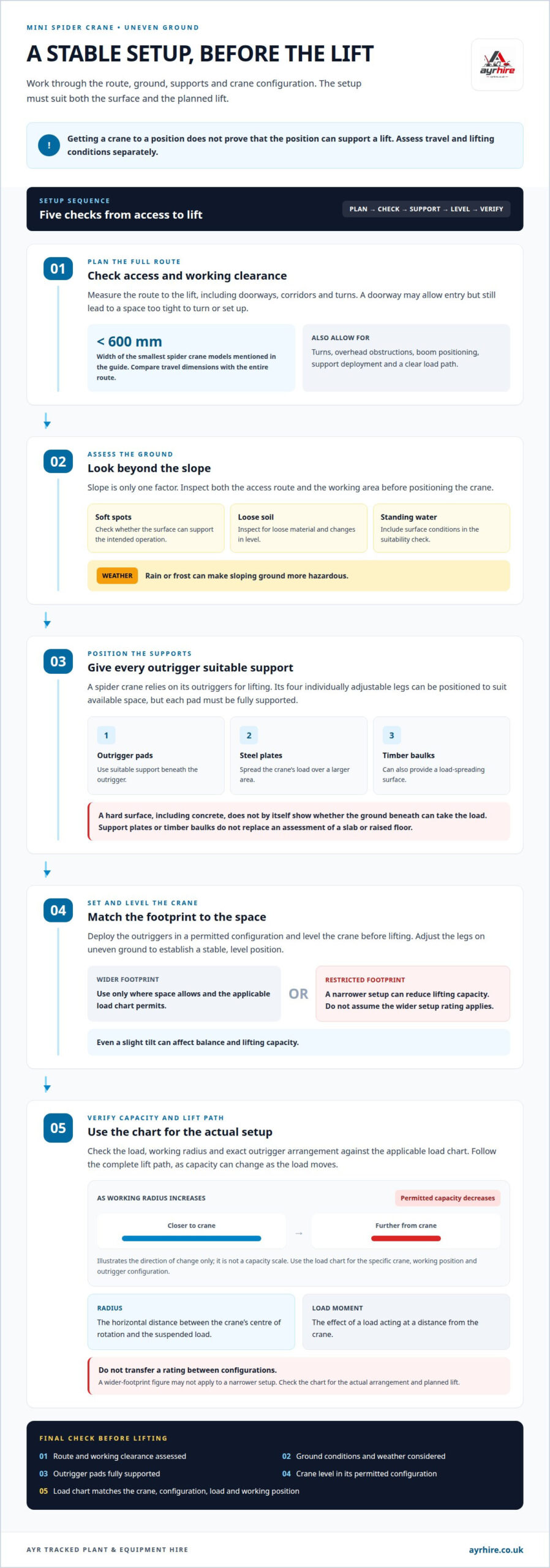
Working without outriggers, mats or stabilisers
Some crawler cranes can travel on their tracks without mats or stabilisers. That does not mean every crane can lift safely without support. A spider crane relies on its outriggers for lifting, so distinguish travelling across rough terrain from setting up to suspend a load.
Tracks spread a crawler crane’s weight across the ground, which can help it move over soft or uneven surfaces. The ground must still suit the intended operation. Before positioning the crane, check the route and working area for soft spots, loose soil and standing water. Rain or frost can make sloping ground more hazardous.
For a spider crane, place each outrigger on suitable support. Outrigger pads or steel plates spread the crane’s load over a larger area. Timber baulks can also provide a load-spreading surface. Supports may be needed even on concrete, because a hard surface alone does not show whether the ground beneath can take the load.
Set the outriggers in line with the crane’s permitted configuration, then level the machine before lifting. On uneven ground, adjust the legs to establish a stable, level position. Keep each pad fully supported. If the site requires a narrower footprint, use the capacity for that configuration rather than assuming the wider setup rating applies.
Slabs and raised floors need particular care. The load at each outrigger pad and how it is distributed determine whether the floor can support the crane. Load-spreading plates or timber baulks do not replace an assessment by a structural engineer or site operator. This matters even when the floor looks sound and the crane is stationary.
In short, tracks may allow travel without mats, but the lifting setup depends on the crane type, terrain and support points. Treat each stage separately: plan the access route, position the crane, set suitable supports and confirm the lifting configuration before work begins.
Spider crane operation on soft or uneven ground
A safe setup depends on ground strength, the load at each outrigger and the planned lift. In the UK, LOLER requires lifting operations to be properly planned by a competent person, appropriately supervised and carried out safely.
Ground Stability and Setup Loads
Assess how the crane’s weight and suspended load transfer through its outriggers into the ground. Use the manufacturer’s information for expected outrigger reactions in the planned lifting configuration. Divide the load at each pad by its effective support area to understand the pressure on the surface.
Compare that pressure with the ground’s capacity to support it. Uneven or soft terrain can create different support conditions at each leg. Look for changes in soil, slope and drainage around every pad. For a slab or raised floor, involve a structural engineer or site operator in assessing the point loads.
Pre-Operation Ground Checks
Before operation, inspect the crane’s working position and access route for soft spots, loose soil and standing water. Check all four outrigger positions, including whether the ground is level enough for the planned setup and each support can sit securely.
Confirm that the pads or load-spreading supports are correctly positioned and that the crane is level after deploying its outriggers. Check the load, working radius and permitted crane configuration against the load chart. Reassess conditions if rain or frost changes the surface or makes a slope more hazardous.
Do not lift if a support sinks, shifts or loses firm contact. Resolve the ground or setup issue before continuing. These checks give the team a clear basis for managing changing outdoor conditions.
For a lift on challenging ground, arrange a mini spider crane hire suited to the site and planned operation.
Ayr Tracked Plant & Equipment Hire: TMC25/BG250 Mini Spider Crane
Ayr Tracked Plant & Equipment Hire offers the TMC25/BG250 Mini Spider Crane for lifting work where compact access is important. It may suit projects where the crane must reach a restricted position, but the ground and planned lift still determine the setup.
Before arranging a hire, prepare the details that shape the operation: the load, lifting radius, access route, working clearance and ground conditions at each outrigger position. Include slopes, soft areas or slabs, as these affect positioning and support requirements. This information helps match the crane to the site and plan its configuration.
If a compact crane fits your lifting requirements, contact Ayr Tracked Plant & Equipment Hire to discuss the TMC25/BG250 Mini Spider Crane.
Turn your site assessment into a lift plan
Next, turn the site information into a clear lift plan. Set out the load’s pick-up and landing points, its intended route between them and who will coordinate the work area. This gives the lifting team a shared picture of the task before positioning equipment.
Treat a mini spider crane setup on uneven ground as part of the complete operation, not as an isolated equipment choice. Consider the planned lift, site access and changing ground conditions together. If rain, frost or site activity alters conditions, pause and reassess the arrangements before continuing.
Clear planning helps you make a sound decision about the equipment and the sequence of work. If you’re preparing a lift and want to discuss the TMC25/BG250 Mini Spider Crane, talk through your project with Ayr Tracked Plant & Equipment Hire. A well-defined plan is a practical start towards getting the lift done with care.
Frequently Asked Questions
Why Use a Spider Crane?
A spider crane can bring lifting capability to locations where a larger crane may struggle to fit. Its compact design helps with confined access, such as indoor work or a restricted building site, while its outriggers provide a stable lifting position. For example, it may suit placing equipment through an opening where access for a conventional crane is limited. The lift still depends on the machine, load and site conditions.
What ground slope can a mini spider crane operate on
A mini spider crane can operate on sloping ground when the machine, support positions and lift suit the slope. Deploy the outriggers and level the crane before lifting. Rain or frost can make slopes more hazardous.
What ground bearing pressure and outrigger mats are required for a mini spider crane
Use the manufacturer’s information for outrigger reactions, divide each pad’s load by its effective support area, and compare the resulting pressure with the ground’s capacity. Place pads on load-spreading plates or timber baulks, even on concrete. Slabs and raised floors need assessment by a structural engineer or site operator.
What does the manufacturer manual say about spider crane setup on uneven ground
Use the manufacturer’s information for expected outrigger reactions, and check the load chart for the crane’s actual outrigger configuration and working position. Deploy the outriggers on suitable supports and level the crane before lifting.