Autumn rain can make a planned delivery route unusable faster than expected. Moving building materials on a muddy site works best when access routes are planned before the ground softens. Keep vehicle movements on suitable routes, limit repeated traffic over vulnerable ground and plan where materials will be unloaded.
Wet ground can slow more than deliveries. Plant can struggle for grip, walking routes can become less secure, and repeated journeys over saturated soil can leave ruts and compact the ground. It is a frustrating combination when materials still need to reach the right place at the right time.
This guide explains how to plan access routes before autumn rain, manage plant and material movements, and reduce disruption caused by soft ground. It also covers what to consider when choosing ground protection and equipment, so the route suits the site instead of making muddy conditions harder to manage.
Key Takeaways
- Plan separate routes for plant, deliveries and pedestrians before rain softens the ground, and identify vulnerable areas early.
- Repeated heavy movements on saturated soil can cause rutting and compaction, so avoid concentrating traffic on the same track.
- According to The National Archives, Section 148 of the Highways Act 1980 makes it an offence to deposit dirt on a highway if it could disturb other highway users.
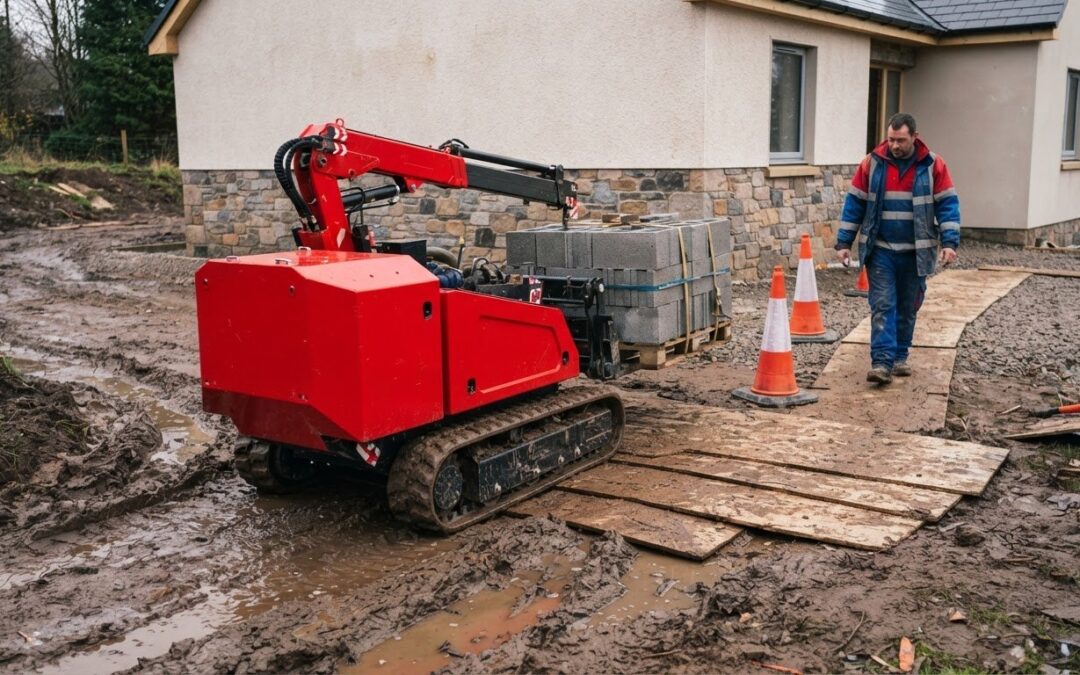
- Match the moving equipment to the load and site access; a tracked multi-loader can help transport materials across challenging ground.
1. Heavy plant and vehicle movements on saturated soil
Repeated heavy vehicle movements on saturated soil can create ruts and compact the ground, especially when traffic follows the same line. Keep journeys to a planned route where conditions allow, and avoid sharp turns or braking on soft patches. Before loading, check the materials’ weight and dimensions, then confirm the vehicle can carry the load. Overloading can lead to tyre failure, loss of control or a breakdown.
Spread materials evenly across the vehicle and secure them with suitable straps or other tie-downs. A shifting load can affect stability. Drivers should allow extra stopping distance and account for the vehicle’s increased height when loaded, particularly near overhead obstructions. On site, stay alert to pedestrians, plant and obstacles, and separate walking routes from vehicle movements wherever possible.
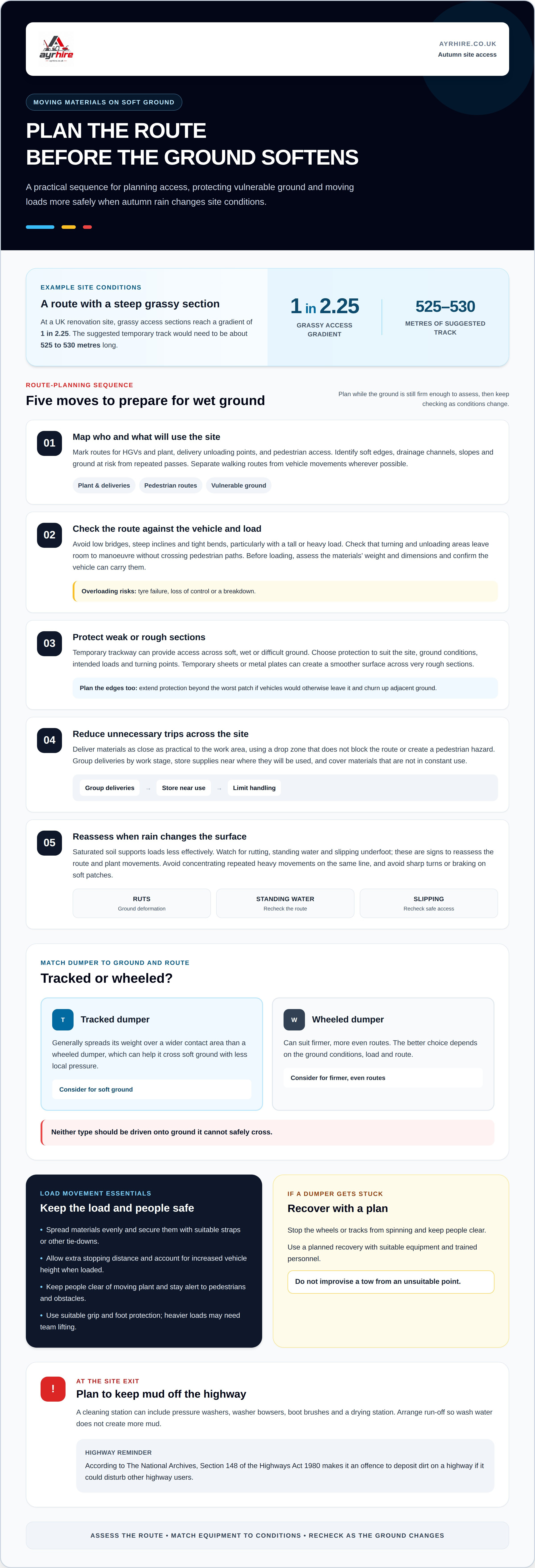
Tracked dumpers generally spread their weight over a wider contact area than wheeled dumpers, which can help them cross soft ground with less local pressure. Wheeled machines can suit firmer, more even routes. The better choice depends on ground conditions, load and route. Neither type should be driven onto ground it cannot safely cross.
Good practice when moving loads includes assessing the load and route, using suitable handling equipment, and keeping people clear of moving plant. Workers handling materials should use suitable grip and foot protection, while heavier loads may need team lifting. If a dumper becomes stuck, stop the wheels or tracks from spinning, keep people clear, and use a planned recovery with suitable equipment and trained personnel. Do not improvise a tow from an unsuitable point.
Plan a cleaning station at the site exit. Pressure washers, washer bowsers, boot brushes and a drying station can remove excess mud from vehicles and people. Arrange run-off so wash water doesn’t create more mud. According to The National Archives, Section 148 of the Highways Act 1980 makes it an offence to deposit dirt on a highway if it could disturb other highway users. A clean exit route helps protect road users and keeps mud from being carried beyond the site.
2. Planning access routes before ground becomes saturated
Plan the route while the ground is still firm enough to assess. Mark where HGVs and plant will travel, where deliveries will be unloaded, and how pedestrians will reach work areas. Identify soft edges, drainage channels, slopes and ground that could be damaged by repeated passes. Separating vehicle and pedestrian movement helps reduce conflicts as conditions worsen.
Choose a route that suits the vehicle and its load. Avoid low bridges, steep inclines and tight bends, particularly when a load is tall or heavy. Check that turning and unloading areas leave enough room to manoeuvre without crossing pedestrian paths. On soft or uneven ground, move materials with suitable equipment at a controlled pace, keeping loads stable and clear of workers.
Temporary trackway can provide access for vehicles and machinery across soft, wet or difficult ground. Its suitability depends on the site and ground conditions, so consider the route, intended loads and turning points together. Temporary sheets or metal plates can also create a smoother travel surface across very rough sections. Extend protection beyond the worst patch if vehicles would otherwise leave it and churn up the adjacent ground.
Deliver materials as close as practical to the work area, with a drop zone that does not block the route or create a pedestrian hazard. Group deliveries by work stage and store supplies near where they will be used. Cover materials that are not in constant use. This reduces unnecessary trips across the site and limits handling when mud makes walking and machinery movement less secure.
Where preparing an access line involves clearing woody growth, a FORST TR8 8" Tracked Wood Chipper can help process cut material as part of the route preparation.
At the UK renovation site, grassy access sections reach a gradient of 1 in 2.25, while the suggested temporary track would need to be about 525 to 530 meters long.
3. Autumn rain and soft, muddy construction-site ground
Autumn rain changes how a construction site supports plant and people. As soil becomes saturated, it softens and deforms under wheel or track pressure. Vehicles may lose grip, while repeated passes can deepen ruts and push mud onto nearby walking routes. A surface that supported a delivery vehicle earlier can become difficult to cross after more rain. Moving building materials on a muddy site can then take longer as routes become less reliable.
Wet weather can lower ground bearing capacity because saturated soil supports a load less effectively. That can restrict vehicle access and increase the chance of wheels or tracks sinking, particularly on soft, uneven ground. Look for rutting, standing water and slipping underfoot. These are signs to reassess the route and plant movements. Moving building materials on a muddy site calls for close attention to the changing surface, not just the planned route.
On construction sites, sticky soil can hold up excavation, compaction and foundation work. Mud can also make it harder to achieve proper subgrade compaction, while removing wet material and bringing in fresh fill disrupts the work sequence. CIRIA reporting highlights that poor soil-moisture management can cause delays and additional project costs.
Ground protection can create a more stable travel surface. Depending on the product, it may also provide anti-slip features. Trackway and geogrids on regularly used surfaces can reduce mud production and the amount carried on footwear and tyres. Choose protection to suit the ground and expected traffic, rather than treating every section the same way.
Rain can make the problem cyclical: mud dries, then further wet weather creates more mud. Keep supplies that are not in constant use covered, and prevent vehicles from crossing ground that is too soft to recover through normal site activity. Close those areas until they receive the necessary attention. After rainfall, review the route, including walking paths, turning points and loading areas, before directing another vehicle across them.
4. What equipment is best for moving building materials across muddy construction sites?
A tracked hauler can be a practical option for carrying materials across a soft site. Its tracks spread contact with the ground, helping it travel where a wheeled machine may struggle. The right choice still depends on the load, route, turning space and ground condition. A machine that moves well on one section may bog down on another.
Start with the material. Bagged supplies, blocks and timber need different support and load security. Check the weight, dimensions and shape, then match them to the equipment’s rated capacity and carrying platform. Keep the load stable and balanced. For fragile or awkward materials, a lifting attachment or crane may suit the task better than repeated manual handling.
Hand trolleys work best on short, firm, even routes. Mud, ruts and slopes can make pushing harder and less controlled, especially with a bulky load. Forklifts can move heavier loads efficiently where the surface and route support them. Cranes suit lifting materials over obstacles or placing them at height, but need a stable setup and clear lifting area.
On regularly used routes, consider whether ground protection is needed before sending plant through. Trackway can provide a more stable access surface, while sheets or plates may help across particularly rough patches. Plan the protection and machine together: the route must suit the equipment’s width, turning needs and load, not just its ability to cross mud.
Construction equipment can carry loads of several tonnes, so castors on handling equipment must suit the load and its distribution. Uneven weight can overload individual castors. Check and maintain forklifts, cranes and hand trolleys before use, and stop using equipment if damage affects safe handling. Keep pedestrians clear during loading and travel. Arrange tracked equipment hire to support material movement across challenging site access.
Ayr Tracked Plant & Equipment Hire
Ayr Tracked Plant & Equipment Hire supports site teams moving materials where soft ground and restricted access complicate deliveries. The ALMA Crawler Multi-Loader can help transport materials around challenging site routes, while Vacuum Lifter Hire offers a lifting option for suitable loads. Matching equipment to the route, load and handling task helps keep movement practical and reduces reliance on repeated manual carrying.
Consider this equipment when planned access is difficult for conventional vehicles or materials need controlled movement between delivery and work areas. When discussing the job with Ayr Hire, describe the site conditions and material-handling requirements so the equipment can be matched to the task.
For help planning equipment for your site, contact Ayr Tracked Plant & Equipment Hire.
Set up your next site move with confidence
Plan the next move before the ground changes again. When moving building materials on a muddy site, consider how the delivery point, work area and load-handling method fit together. A clear plan gives the team a practical basis for choosing equipment and organising each movement.
Ayr Tracked Plant & Equipment Hire offers equipment for different site tasks, including the KUBOTA Mini Excavator / Digger and TMC25/BG250 Mini Spider Crane. The right option depends on what needs moving and how the site is laid out. Share those details when discussing the work, including access restrictions and where materials need to go.
For a practical conversation about equipment for your site, contact Ayr Tracked Plant & Equipment Hire. A considered plan can help your team approach wet-weather work with greater control.
Frequently Asked Questions
Wet Mud Slowing Down Construction?
Yes, wet mud can slow work by making routine site movements harder to coordinate. Deliveries may arrive but remain difficult to distribute, and crews can lose time travelling between storage and work areas. Keep frequently needed materials near their work face and separate them from supplies for later phases. This can reduce extra journeys and keep active work areas clearer.
How can temporary site roads and ground protection mats prevent vehicles getting bogged down?
Temporary roads and mats provide a firmer surface for vehicle movement over soft ground, helping tyres or tracks maintain contact. Plan a continuous protected line through access points, turning areas and delivery zones, rather than covering only the visibly muddy patch. Secure, even transitions between protected and unprotected ground help avoid abrupt changes in surface. The selected system must suit the site and vehicle loads.
What are the risks of using forklifts and telehandlers on muddy construction sites?
Forklifts and telehandlers can lose traction or stability on soft, uneven ground, especially while carrying a raised or extended load. Mud may also hide ruts, debris or changes in level, making travel and turning harder to judge. Keep loads low during movement where the machine’s operating instructions allow, travel slowly, and stop if the route no longer supports controlled handling.