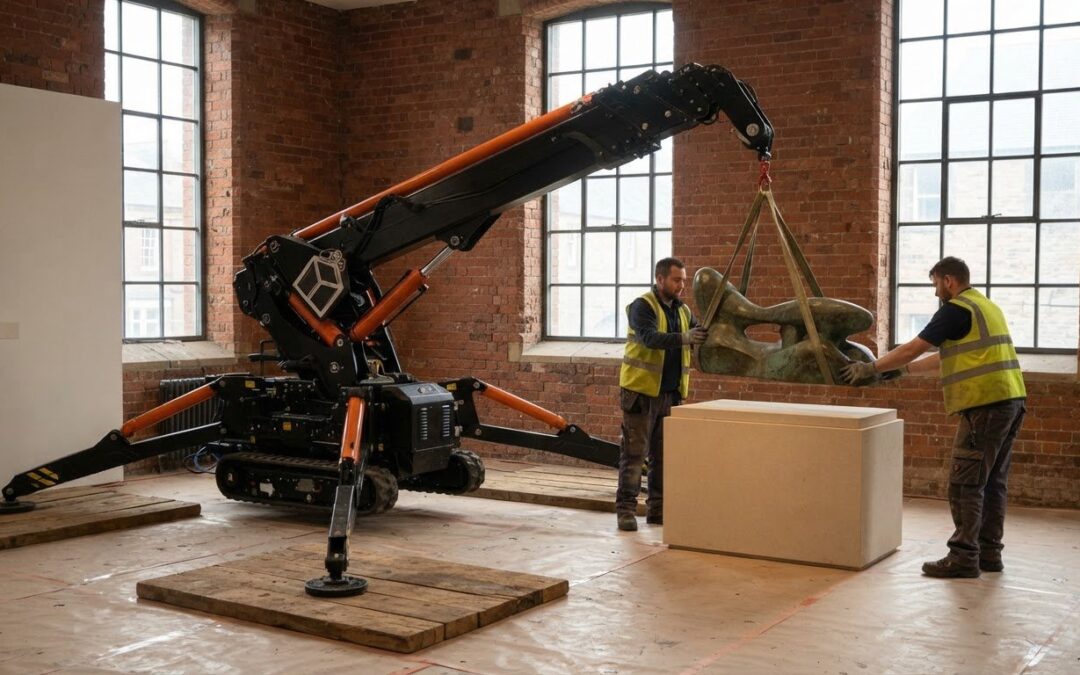
A restricted route can shape a sculpture lift as much as the load itself. A compact crane for art installation in Dumfries can lift exhibition sculptures, position them on plinths and help erect a sculpture frame where access is tight. A tracked mini crane can suit challenging approaches, with the lifting plan shaped around the sculpture’s weight, dimensions, lifting points and route to its final position.
It’s understandable to focus first on the crane’s lifting capacity, but clearances, ground conditions and space to position the sculpture matter too. This article explains how a compact tracked crane can support exhibition installations, what affects equipment choice and how restricted access shapes planning. It also covers practical considerations for lifting a sculpture and erecting its frame, so you can assess the work involved before arranging hire.
Key Takeaways
- Match the crane to the sculpture’s weight, shape and lifting points, as well as the route to its final position.
- Plan restricted access around clearances, ground conditions and the space needed to set up for the lift.
- Understand how a professional lifting plan can support the careful positioning of exhibition pieces and the erection of a sculpture frame.
- Explore how tracked plant, including a mini spider crane or crawler multi-loader, can help address challenging site access.
Mini cranes lifting sculptures for exhibitions
A sculpture lift depends on the load, its balance and the route to the display position. In Dumfries, a compact crane can help place an artwork accurately on a museum plinth.
Crane hire and contract lifting
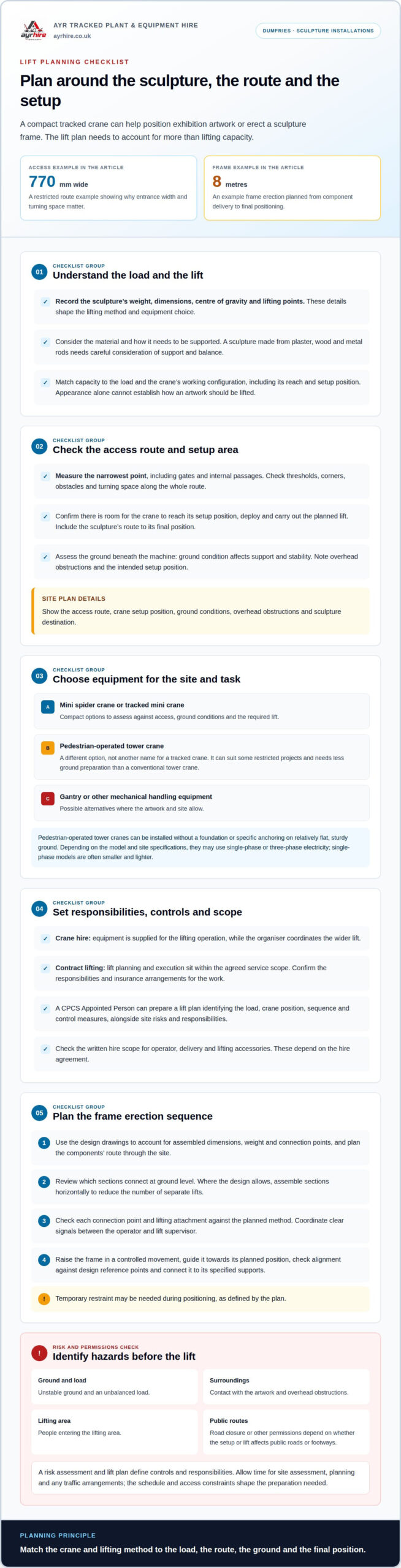
With crane hire, the equipment is supplied for a lifting operation, while the organiser coordinates the wider lift. Contract lifting places lift planning and execution within the agreed service scope. A CPCS Appointed Person can prepare a lift plan identifying the load, crane position, sequence and control measures. The plan should also set out responsibilities, site risks and insurance arrangements for the work.
Lifting capacities and crane specifications
Capacity depends on the load and the crane’s working configuration, including reach and setup position. The lift plan matches these factors to the sculpture’s weight, dimensions, centre of gravity and lifting points. Material matters too: a sculpture made from plaster, wood and metal rods needs careful consideration of support and balance. Its appearance alone cannot establish how it should be lifted.
Crane choices and lifting alternatives
Suitable compact options include mini spider cranes and tracked mini cranes, chosen to suit access, ground conditions and the required lift. A lift onto a plinth typically involves confirming the load and route, positioning the crane, attaching suitable lifting gear, raising the sculpture under control, then lowering and aligning it. Alternatives include a purpose-designed gantry or other mechanical handling equipment, where the artwork and site allow.
Approvals, safety and booking
Road closure or other permissions depend on whether the crane setup or lift affects public roads or footways. Key risks include unstable ground, an unbalanced load, contact with the artwork, overhead obstructions and people entering the lifting area. A risk assessment and lift plan define controls and responsibilities. Allow time for site assessment, planning and any traffic arrangements. The schedule and access constraints shape the preparation needed.
Pedestrian-operated tower cranes are designed for simple, rapid assembly and disassembly and are often operated by remote control. They can be installed without a foundation or specific anchoring on relatively flat, sturdy ground. Depending on the model and site specifications, they may use either single-phase or three-phase electricity. Single-phase models are often smaller and lighter than three-phase models.
Compact crane hire for restricted-access projects
For an installation in Dumfries, restricted access affects the crane route, setup position and lifting method. A compact machine can suit a confined site, but the project still needs a clear plan for the load and ground.
Hire for confined spaces
Mini crane hire can help where doorways, courtyards or narrow approaches limit conventional plant. One site access example describes a route just 770 mm wide, showing why entrance width and turning space matter. A site assessment considers the full route, including thresholds, corners and obstacles, then matches the equipment dimensions to the available space. Mini cranes and pedestrian-operated tower cranes are different options, not interchangeable labels.
Mini tower crane hire is another possible approach. Pedestrian-operated tower cranes need less ground preparation than conventional tower cranes and can suit some restricted projects. The site layout, ground and lifting task determine whether this type or a tracked crane is appropriate.
Operator and hire inclusions
Crane hire may include an operator, while delivery and lifting accessories depend on the hire agreement. The written scope should identify what is supplied, who operates the machine and which lifting equipment is included. That clarity helps the installation team coordinate arrival, setup and the lift without assuming every hire package covers the same items.
Hire price depends on the equipment, project requirements, hire period and agreed inclusions, and is provided in response to a quote request. Buying a crane is a separate equipment purchase, rather than a hire arrangement; Ayr Hire provides equipment hire for installation work.
Access, ground and setup requirements
Measure the narrowest point on the access route, including gates and internal passages. The setup area also needs room for the crane to deploy and perform the planned lift. Ground condition matters because the machine’s support and stability depend on the surface beneath it. A site plan should show the route, intended setup position, overhead obstructions and sculpture destination.
For a Dumfries project, send those details with the load information when arranging compact crane hire. They help define the equipment and setup required for the site.
Professional erection of an 8-metre sculpture frame
An 8-metre sculpture frame needs a planned sequence, from component delivery to final positioning. The lift plan should follow the design drawings and account for the frame’s assembled dimensions, weight and connection points. Those details guide the crane position, lifting attachments and order of assembly. They also help the installation team coordinate the frame’s route through the site.
Before lifting, the team reviews the frame components and confirms which sections connect at ground level. Where the design allows, assembling sections horizontally can reduce the number of separate lifts. The appointed lifting team then checks each connection point and attachment against the planned method. Clear signals between the operator and lift supervisor keep the movement coordinated, especially where the frame passes near a building or exhibition structure.
During erection, the crane raises the frame in a controlled movement while installers guide it towards its planned position. The team monitors alignment against the design reference points, then connects the frame to its specified supports. Temporary restraint may be needed during positioning, as defined by the project design. No section should be treated as stable until its required connections are complete. This staged approach helps avoid unexpectedly loading an unfinished connection.
Final checks focus on position, connections and the intended relationship between frame and sculpture. For example, a frame supporting a suspended artwork needs its attachment points aligned with the artwork’s lifting or suspension arrangement. The installation sequence should leave enough room to raise and fit the sculpture without striking the frame. A clear handover records completed connections and any remaining installation work. For Dumfries exhibition projects, drawings, component details and the site layout give the lifting team the information needed to plan each stage.
Mini crawler and tracked cranes
Tracked mini cranes combine a compact carrier with a crane for on-site lifting. Their tracks help the machine travel across a project area, while the crane performs the lift from a planned position. This can help where wheeled plant cannot follow the route or access crosses uneven surfaces. For a compact crane for an art installation in Dumfries, the choice still depends on the load, working reach, ground and setup space.
Mini crane development has accelerated over the last 30 years as manufacturing, maintenance and facilities management have needed more sophisticated lifting and materials handling. For sculpture work, the key distinction is how the machine reaches its working position, not simply how small it looks. A tracked crane may travel through a site before setting up, while a pedestrian-operated tower crane is assembled at its working position. Each approach has different access and setup demands.
For Dumfries installations requiring a compact crane, planning starts with the route from delivery point to lift position. The lifting team considers narrow passages, turns, thresholds, surface changes and overhead restrictions, then compares those constraints with the crane’s dimensions and intended configuration. At the lift position, the plan accounts for the sculpture’s weight, centre of gravity, lifting points and required reach. These details help determine whether the machine can complete the lift from that position.
Tracked travel doesn’t remove the need to assess the ground or manage the lifting area. The plan should identify the route, setup location, people nearby and any obstacles that could affect movement. It should also define how the crane will be positioned before lifting begins and how the artwork will be guided into place. This connects access planning with the final lift, rather than treating them as separate tasks.
For a sculpture project with a challenging approach, discuss tracked crane hire around the site route and lifting requirements.
Ayr Tracked Plant & Equipment Hire: TMC25/BG250 Mini Spider Crane
Ayr Tracked Plant & Equipment Hire offers the TMC25/BG250 Mini Spider Crane for lifting projects where a compact crane is needed. For sculpture installations in Dumfries, it may suit work with restricted access, provided the crane’s capabilities match the load and site conditions.
Share the sculpture’s weight and dimensions, lifting points, access route and intended position when discussing the job. These details help establish whether the crane suits the required lift and what site arrangements are needed. If the artwork also needs moving around the site, Ayr Hire’s ALMA Crawler Multi-Loader may be relevant to the handling plan.
For a sculpture lift or frame installation, contact Ayr Tracked Plant & Equipment Hire to discuss the project requirements.
Turn the installation brief into a clear next step
Before setting a date, bring the venue team and installation crew around one shared brief. Record the artwork’s handling requirements, the planned installation sequence and any limits on access or working space. This gives everyone a common reference as arrangements develop, from delivery coordination to the final placement. It also helps keep decisions about the sculpture, frame and site connected.
For a compact crane for art installation in Dumfries, the next step is to discuss the actual project rather than choose machinery by name alone. Ayr Tracked Plant & Equipment Hire offers the TMC25/BG250 Mini Spider Crane, alongside other tracked plant and lifting equipment. The project details can guide a practical conversation about the equipment relevant to your installation.
Contact Ayr Tracked Plant & Equipment Hire to discuss your sculpture installation and plan the next step with confidence.
Frequently Asked Questions
What is the hourly or daily cost of compact crane hire in Dumfries?
Free delivery applies within 10 miles of Ayr, so a Dumfries booking falls outside that stated delivery area. Include the Dumfries site location in your quote request so delivery arrangements can be factored in.
What lifting capacity and reach are needed for the artwork installation?
Capacity and reach depend on the sculpture’s weight, dimensions, centre of gravity, lifting points and the crane’s setup position. Share these details when requesting a quote so the lift can be matched to suitable equipment.