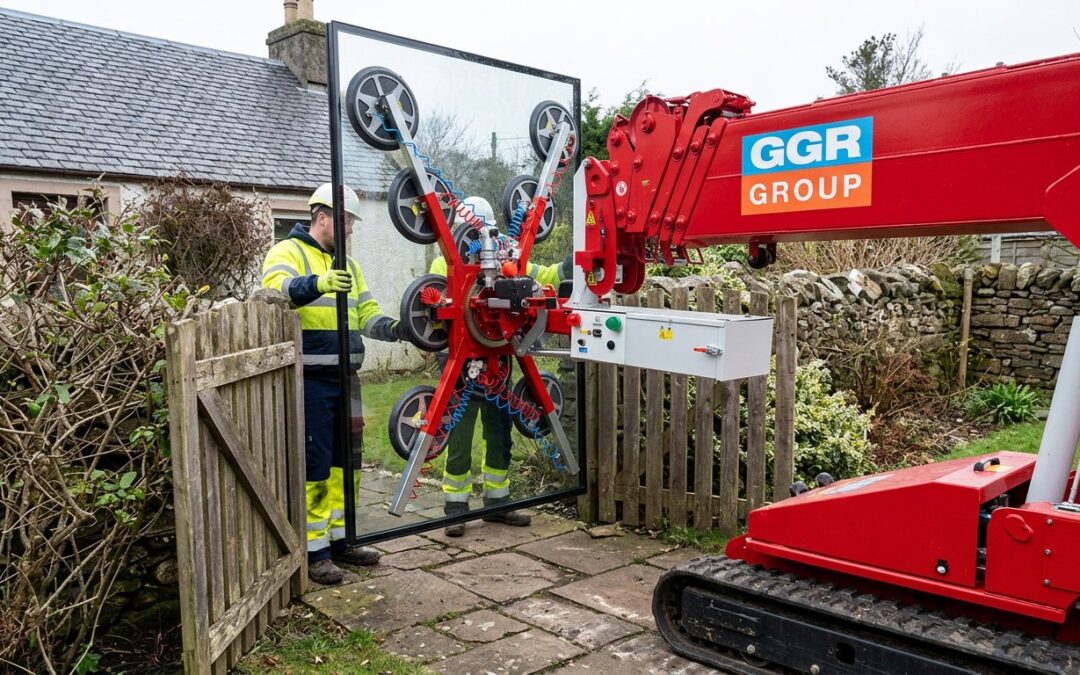
A glazing robot isn’t the only way to move large glass panels into a garden. A glazing robot hire alternative in North Ayrshire could involve mechanical lifting equipment, tracked transport or both, depending on the access route and installation. The aim is to move the glass through the gate and into position with less reliance on manual handling.
It’s understandable to focus on the narrowest point: a gate, side passage or uneven garden path can rule out some equipment. The panel’s size and weight, turning space and final fitting position also affect what will work. Plan around the whole route, not just the lift itself.
This article explains the alternatives and the factors that affect access, handling and installation. You’ll learn what information helps plan the move, how equipment options differ, and when specialist lifting support can help. This gives you a clearer basis for planning glass installation at a North Ayrshire property.
Key Takeaways
- Map the full route from delivery point to garden, including gate width, turns, ground conditions and the final fitting position.
- Match the handling method to the glass and the site. The access route and space to position equipment can shape the plan as much as the lift itself.
- Professional lifting equipment can reduce reliance on manual handling, but careful planning and coordinated movement remain essential to manage installation risks.
- For restricted access, tracked transport or vacuum lifting may help address different parts of the move. Learn how Ayr Tracked Plant & Equipment Hire’s ALMA Crawler Multi-Loader and Vacuum Lifter Hire could fit the job.
Professional moving of glass panels through gates and into gardens
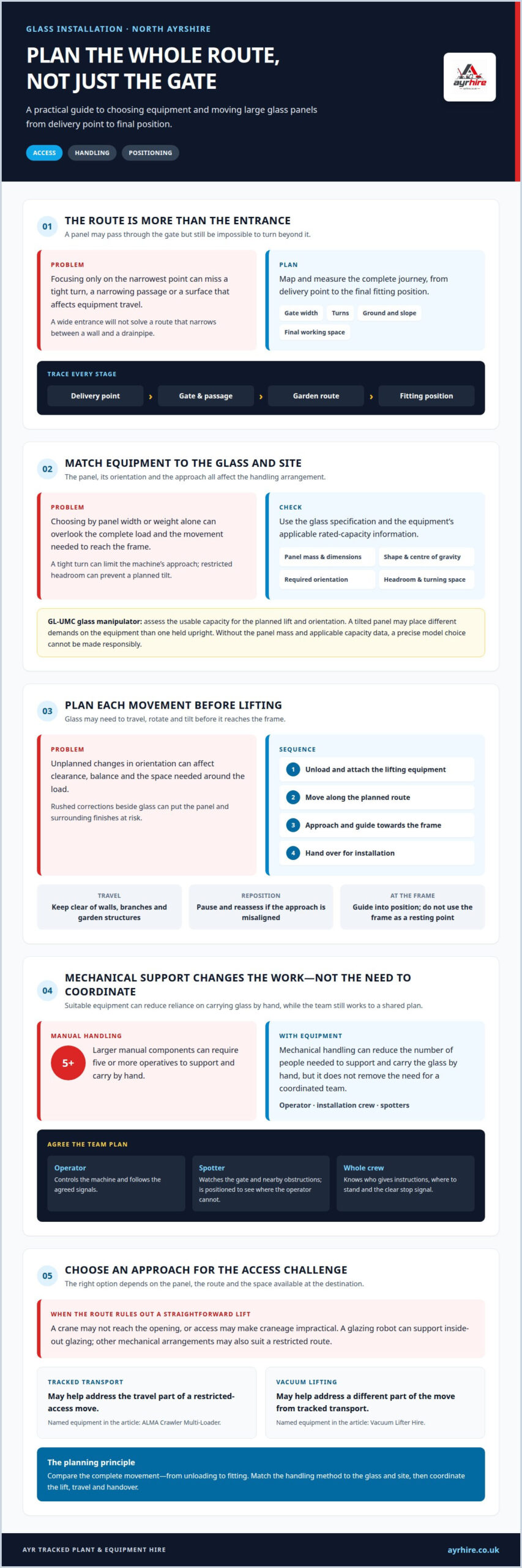
A professional move starts at the delivery point and ends at the installation position. The team maps the entire route, including the gate opening, side passage, garden surface and final working space. A panel may pass through a gate but still be impossible to turn beyond it. Measuring the route and planning each change of direction helps identify the problem before the glass arrives.
In a North Ayrshire garden, the access path may include paving, lawn, a slope or a tight corner beside the house. Each surface affects how equipment can travel and where it can stop. Plan the sequence around the whole route, rather than treating the gate as the only restriction. A wide entrance, for example, won’t solve a route that narrows between a wall and a drainpipe.
Manual handling can require five or more operatives when larger manual components are involved. Mechanical equipment can reduce the number of people needed to support and carry glass by hand, but it does not remove the need for a coordinated team. The operator, installation crew and spotters still need clear roles, especially at a gate with limited visibility and turning space.
Where a crane cannot reach the opening, or access makes craneage impractical, glazing robots can support inside-out glazing. Other mechanical arrangements may also suit a restricted route. The right option depends on the panel, the approach and the space available at the destination. A professional compares the complete movement, from unloading to fitting, before settling on an approach.
Rotation, tilt and final positioning
Glass often needs more than a straight lift. A panel may travel upright, rotate to clear a boundary, then tilt towards its frame. Each change in orientation affects clearance, balance and the space required around the load. The professional plans these movements in sequence, identifying where the panel can pause and where it must stay clear of walls, branches or garden structures.
At the installation point, account for the frame and available working space. Guide the panel towards the opening without using the frame as a resting point. If the approach is misaligned, pause and reassess the angle before continuing. This controlled sequence helps avoid rushed corrections beside the glass or damage to surrounding finishes.
Choosing GL-UMC glass manipulator capacity
For a GL-UMC glass manipulator, capacity selection starts with the complete load, not just the panel’s width. Use the glass specification and the manipulator’s rated capacity information to assess suitability. Panel mass, dimensions, orientation and centre of gravity all affect the lifting arrangement. A large panel may place different demands on equipment when tilted than when held upright.
The usable capacity must cover the planned lift in the required orientation. Consider the route, too: a tight turn can limit the machine’s approach, while restricted headroom can prevent a planned tilt. Without the panel’s mass and the equipment’s applicable capacity data, a precise model choice cannot be made responsibly. Base the selection on the actual glass and movement, not an assumed standard panel.
For glass lifting and installation, coordinate the lift, travel and handover at the frame. Before moving, align the handling equipment and confirm the route is clear. During travel, the operator controls the machine while spotters watch the gate and nearby obstructions. At the frame, guide the panel into position in a measured sequence. This planning makes a glazing robot hire alternative in North Ayrshire a practical option when the site’s access or layout calls for another handling method.
How professional equipment can reduce manual handling and installation risks
Mechanical handling changes how a glazing team controls a panel during a lift. Instead of relying on people to carry its full weight, the team uses suitable lifting equipment to support and guide it. This can reduce repeated lifting and carrying, but it doesn’t remove every risk. The operator still needs a clear plan for attaching, moving and releasing the glass at the installation point.
Before choosing equipment, consider the panel specification and the task. Its mass, dimensions, shape and required orientation affect the handling arrangement. Also consider the distance to the opening, available headroom and turning space. A panel that can be lifted in an open driveway, for example, may need a different approach inside a narrow extension.
Plan the movement before lifting
Break the job into stages: unloading, attaching the lifting equipment, moving the panel, approaching the frame and handing it over for installation. Each stage has a distinct position and purpose. This sequence helps identify pinch points, overhead obstructions and places where equipment cannot manoeuvre. It also gives the operator and installation team shared instructions before the load moves.
Clear communication is part of the plan. The operator follows signals from an agreed spotter, while the rest of the crew stays outside the movement path. Identify who gives instructions and where that person will stand. If a wall blocks the operator’s view, the spotter’s position is especially important. A clear stop signal lets the team pause if the route changes or visibility is lost.
Equipment must suit the load and movement, not just the panel’s weight in isolation. Check the applicable rated capacity and handling configuration against the planned lift. A tilted panel, for instance, may place different demands on the equipment than an upright one. Consider the surface beneath the machine, too: soft ground or an uneven threshold can affect stability and travel.
Control contact, movement and handover
Protect glass edges and faces throughout handling. Position the lifting attachment as specified for the equipment and panel, then check that the load is secure before moving. Avoid contact with masonry, door frames and stored materials. At the opening, move steadily while the installation team guides the approach without placing hands between the panel and a fixed surface.
At the frame, control the final movement rather than relying on a sudden correction. The installer indicates the required position, and the operator responds with small, coordinated adjustments. If the panel meets resistance, pause and reassess alignment. Forcing glass against a frame can increase the chance of damage; a controlled pause gives the team time to correct the approach.
Weather and ground conditions also shape the plan. Wind can affect a large panel, while rain may change grip and footing around a garden entrance. Consider conditions before starting and adjust the sequence where needed. If the route becomes obstructed, stop until the obstruction is cleared. A planned pause is preferable to steering glass around an unexpected obstacle.
For a site with several trades, timing matters too. The glazing team coordinates its route with deliveries and nearby work, keeping the movement area clear during the lift. If your project also needs equipment hire for site access, consider how that requirement fits the wider sequence before work begins.
Ayr Tracked Plant & Equipment Hire
Ayr Tracked Plant & Equipment Hire offers lifting and tracked equipment hire for projects where glass or materials need to pass through restricted access and reach a garden installation area. The right approach depends on the panel, route and lifting requirements. Share those project details when requesting a quote.
Vacuum Lifter Hire is suited to glass handling, while the ALMA Crawler Multi-Loader can move materials along challenging site routes. These options address different parts of the task. Match the equipment to the planned movement, available space and destination, rather than assuming one machine will cover every stage.
If you’re planning a glazing project in North Ayrshire, contact Ayr Tracked Plant & Equipment Hire to discuss the equipment needs and site access.
Plan your next glazing project with confidence
Choosing a glazing robot hire alternative in North Ayrshire starts with the project details, not an assumption that one machine suits every garden. Set out the glass dimensions and weight, delivery point, access route and intended installation position. This helps focus the equipment discussion on the actual site and work sequence.
Plan around other activities at the property, too. Coordinating access and equipment movements with the wider project schedule can help keep the work organised. Ayr Tracked Plant & Equipment Hire offers tracked plant and lifting equipment hire across South Ayrshire, North Ayrshire, East Ayrshire, Dumfries & Galloway and Glasgow, making it a local point of contact when site access is part of the challenge.
Share the project requirements and discuss the next step directly. Contact Ayr Tracked Plant & Equipment Hire to talk through your plans and move your glazing project forward with a clearer equipment brief.
Frequently Asked Questions
What alternatives to hiring a glazing robot are available for glazing work in North Ayrshire?
Alternatives include vacuum lifter hire, a glass trolley for suitable ground-level movement, or a specialist glazing contractor to plan and carry out installation. Where garden access is restricted, tracked transport may help move materials along the route; Ayr Tracked Plant & Equipment Hire’s ALMA Crawler Multi-Loader is one equipment option. The suitable method depends on the panel, access constraints and whether the project needs hired equipment or installation expertise.
How does glazing robot hire compare with vacuum lifter hire, a glass trolley or a specialist glazing contractor?
A glazing robot is a mobile glass-handling machine, while a vacuum lifter uses suction to hold a panel during lifting. A glass trolley is primarily for transporting glass across a suitable surface. A specialist glazing contractor provides installation expertise, rather than simply equipment hire. For example, a project may need a contractor for fitting, with separate handling equipment selected to suit the panel and access route.