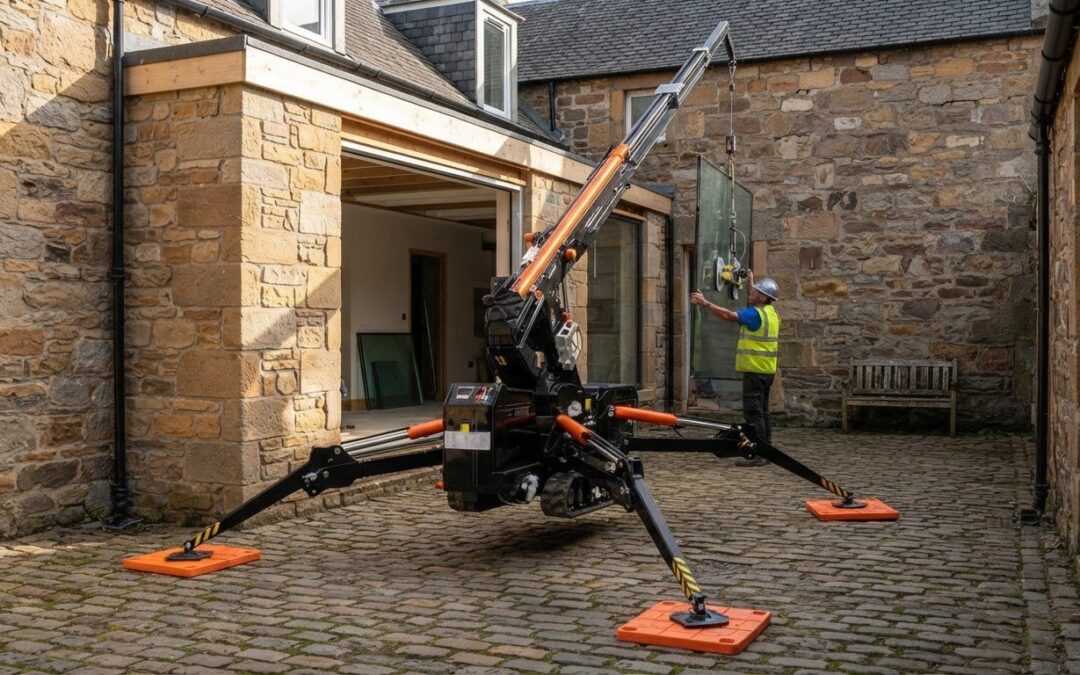
The right crane for a cramped site may be the smaller one. What a spider crane is used for is lifting materials where access is restricted, including construction sites, factories and gardens. Its compact tracked chassis and extending stabilisers help it work in tight spaces and on uneven ground, while careful planning is still needed to protect the crane’s balance and the supporting surface.
Lifting capacity matters when choosing equipment, but access can be just as important. A crane that can reach the work area and set up there may suit the task better than a larger machine that cannot get into position. Spider cranes are designed for manoeuvrability, rather than maximum lifting capacity.
This guide explains how spider cranes work, where they’re commonly used and how their compact design can help on challenging sites. It also covers planning for uneven terrain and low load-bearing floors, and when another type of crane may be more suitable.
Key Takeaways
- Match the crane to the access route and lift, not lifting capacity alone. Spider cranes are designed for confined sites where larger cranes may struggle to reach.
- Uneven ground affects stability. Ground condition and the crane’s set-up both matter when planning a lift.
- Compact dimensions can help with restricted access and low load-bearing floors, but the supporting surface still needs careful consideration.
- Explore how Ayr Tracked Plant & Equipment Hire’s TMC25/BG250 Mini Spider Crane could suit a lifting task with challenging site access.
What are Spider Cranes & when are they used?
A spider crane is used to lift materials where a conventional crane cannot easily reach. Its compact design suits confined spaces such as factory interiors, narrow garden access routes and construction sites with limited room to set up.
Lifting and Access in Confined Spaces
Spider cranes are compact mini cranes designed to manoeuvre into restricted work areas and lift loads once positioned. Their small footprint can help when a beam must pass through a narrow opening or materials need lifting inside a building. The right choice depends on the load, lifting capacity required and available room. Hire cost depends on factors such as the machine and the job; pricing is provided after a quote request.
Comparing Spider, Mini and Mobile Cranes
A spider crane is a type of mini crane, distinguished by its tracked base and stabilisers that extend for lifting. “Mini crane” is a broader term, while a mobile crane may suit a site with enough access and set-up space for a larger machine. Spider cranes prioritise manoeuvrability and access, making them useful when a larger crane cannot reach the work area. Compare the load and lift path with the space available for the machine and its supports.
Load Capacity and Reach
Spider cranes lift materials such as construction components in restricted locations, but permitted loads and working heights vary by model and lifting position. A crane’s capacity can change with its boom configuration and the distance between the crane and the load. The required height and reach matter alongside the load’s weight. Plan the lift around the crane’s capacity for the full task, not its maximum capacity alone.
For a lifting job, choose a spider crane by matching the load, required height and reach to the site’s access and set-up space. These factors also shape hire cost, alongside the equipment and job requirements.
Operation on uneven ground and difficult terrain
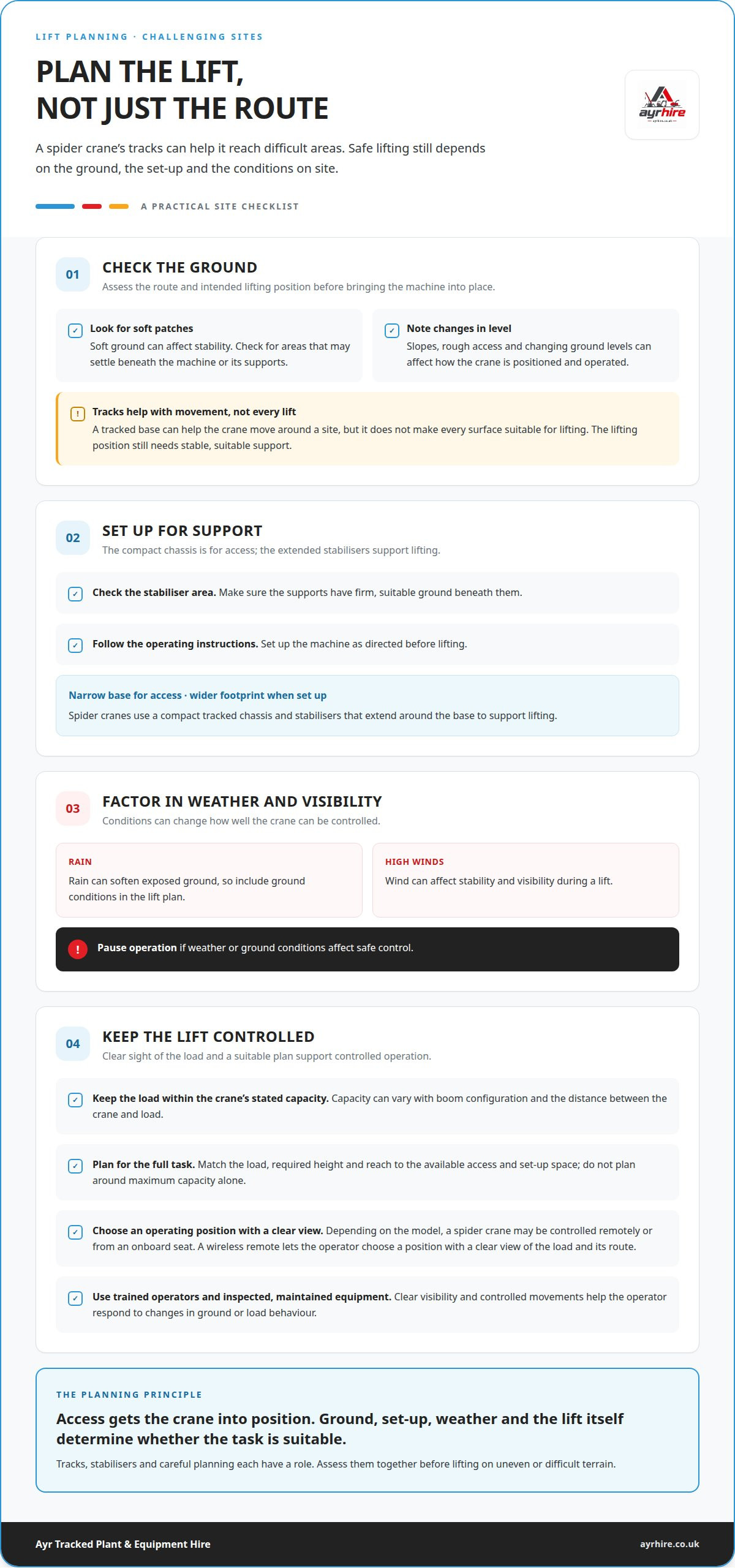
Uneven ground affects how a spider crane can be positioned and operated. A sloped garden, soft verge or rough construction access can affect stability, so assess ground conditions before bringing the machine into position. Tracks help the crane move around a site, but do not remove the need for a stable lifting position.
Before operation, assess the ground for soft patches, changing levels and areas that may settle. The crane’s stabilisers need firm, suitable support, and the machine must be set up according to its operating instructions. Rain can soften exposed ground, while high winds can affect stability and visibility during a lift. Include these conditions in the lift plan.
Spider cranes may be controlled remotely or from an onboard seat, depending on the model. A wireless remote lets the operator choose a position with a clear view of the load and its route. With onboard operation, the operator remains at the machine. In either case, clear visibility and controlled movements help the operator respond to changes in ground or load behaviour.
- Assess the surface and intended set-up area before lifting.
- Keep the load within the crane’s stated capacity.
- Pause operation if weather or ground conditions affect safe control.
- Use trained operators and regularly inspected, maintained equipment.
Tracks can support movement across difficult access routes, but they don’t make every surface suitable for lifting. Crawler machines use tracks, which can improve stability on soft terrain and sites at risk of sinking. The load, surface, set-up and weather all influence the lifting operation. A tracked machine such as an ALMA Crawler Multi-Loader can help move materials around challenging site access, while lifting itself depends on using a suitable crane and set-up.
Spider crane definition and compact design
A spider crane is a compact tracked mini crane with articulated stabilisers that extend to support lifting. Its design combines a narrow base for access with a wider footprint when set up.
Spider Crane Definition
Also known as a mini crane, a spider crane moves on tracks and uses an articulated boom to lift and position loads. The stabilisers extend from the chassis before lifting to support the machine during operation. This design helps crews plan lifts where a larger crane cannot manoeuvre into position.
Spider cranes can be useful for construction and demolition work in confined spaces. Their compact form can help with site access, but accessibility and manoeuvrability take priority over maximum lifting capacity. That distinction matters when the job needs a crane to reach a restricted area, rather than simply handle the heaviest possible load.
Compact Design and How It Works
During set-up, the crane’s stabilisers extend around its tracked base to support lifting. The operator uses the boom to raise and position the load within the machine’s operating limits. The compact chassis helps it travel through restricted access routes, while the extended supports provide a wider base for lifting.
Spider cranes are more mobile and easier to transport than crawler cranes, which are larger and heavier. They’re also easier to set up, making them suited to smaller jobs and short-term projects. A crawler crane may be a better fit for long-term work requiring greater stability. The choice depends on access, project duration and the lift itself.
When arranging spider crane hire, consider the route to the work area as well as the lifting position. A narrow doorway, limited turning space or restricted set-up area can affect whether the crane can reach the job. Compare these constraints with the crane’s operating space to see whether its compact design suits the task.
Use on low load-bearing floors
A spider crane’s compact design can help with indoor lifting, but it does not automatically make a floor suitable. The machine’s weight, the load and the forces applied through its supports all affect the floor. A lift inside a warehouse, for example, may involve different floor conditions from a ground-level outdoor set-up.
Assess the complete load path before positioning the crane. Consider where the tracks will travel, where the stabilisers will bear and whether the floor can support those forces. A floor may look sound yet still have limits that matter under concentrated loads. Structural information about the building and the proposed crane set-up helps determine whether the planned position is suitable.
Stabilisers extend the crane’s support beyond its compact chassis, but their contact points can place concentrated forces on the surface. This matters on suspended floors, mezzanines and upper levels. The load’s weight and position, boom reach and lifting height also affect how the crane operates. A lift close to the machine may place different demands on the set-up from one reaching across a room.
- Include the crane, lifted load and support positions in the floor assessment.
- Map the route from the entrance to the lifting position, including turns and thresholds.
- Identify floor openings, changes in level and areas with different construction.
- Plan the lift around the crane’s capacity at the required reach and height.
These checks distinguish access suitability from floor suitability. A compact crane may pass through a doorway but still need a different position or lifting arrangement once inside. If the floor cannot support the planned set-up, the lift needs another approach. The machine’s small footprint alone does not make the position suitable.
Planning an indoor lift on a restricted floor? Discuss your spider crane hire requirements and the site access involved.
Ayr Tracked Plant & Equipment Hire: TMC25/BG250 Mini Spider Crane
Ayr Tracked Plant & Equipment Hire offers the TMC25/BG250 Mini Spider Crane for lifting work where site access is restricted. Its compact spider crane format can suit projects that need lifting equipment to reach a confined work area, such as a building interior or a site with limited room to manoeuvre.
For a hire enquiry, share the access route, lifting location, load and required reach. These details help match the equipment to the task and identify practical considerations such as set-up space and floor or ground conditions. If the job involves moving materials across difficult access rather than lifting them, Ayr Hire’s ALMA Crawler Multi-Loader may be a better fit.
Contact Ayr Tracked Plant & Equipment Hire to discuss your lifting requirements.
Plan the lift around the whole site
Turn the question of what a spider crane is used for into a clear project decision by planning the lift alongside the rest of the work. Consider how materials arrive, where they need to go and which activities must happen before or after the lift. A coordinated sequence helps reduce access conflicts and organise equipment movements.
Share the planned task, site layout and lifting requirements when discussing equipment. Ayr Tracked Plant & Equipment Hire also offers a KUBOTA Mini Excavator / Digger and FORST TR8 8" Tracked Wood Chipper for other site tasks. Matching the right machine to each part of the job helps keep the equipment plan focused.
For a discussion about the TMC25/BG250 Mini Spider Crane and your project, contact Ayr Tracked Plant & Equipment Hire. A clear outline of the work is a practical place to start.
Frequently Asked Questions
What are spider cranes commonly used for?
Spider cranes are commonly used to lift and position materials where access or working space is restricted. Examples include placing construction components inside a factory, supporting building work on a confined site or moving materials in a garden with limited access. Their compact design can help them reach work areas that larger cranes may not enter, making access a key reason to consider one.
What space and ground conditions are needed to use a spider crane?
A spider crane needs enough room to reach its working position and extend its stabilisers. Consider the full route, including doorways, turns and changes in level, as well as the space around the crane once set up. The supporting ground or floor must suit the machine and the lift. Assess soft patches, slopes and uneven surfaces before operation, as these can affect stability.
What are the main risks of using a spider crane and how are they controlled?
Key risks include overloading, unstable ground and reduced control in adverse weather. Keep each lift within the crane’s capacity, assess the set-up surface and pause work if rain or high winds affect stability or visibility. Safe operation also depends on trained, certified operators and regular crane inspections. These controls address the lifting task and changing site conditions.
Can spider cranes be used indoors or on stairs and rooftops?
Spider cranes can be used indoors, and some can be transported between floors by lift. A staircase is not a route the crane can simply drive up, so access to upper levels needs a suitable lifting or transport arrangement. Spider cranes can also be lifted onto rooftops or other hard-to-access areas by a mobile crane, subject to the planned lift and site conditions.