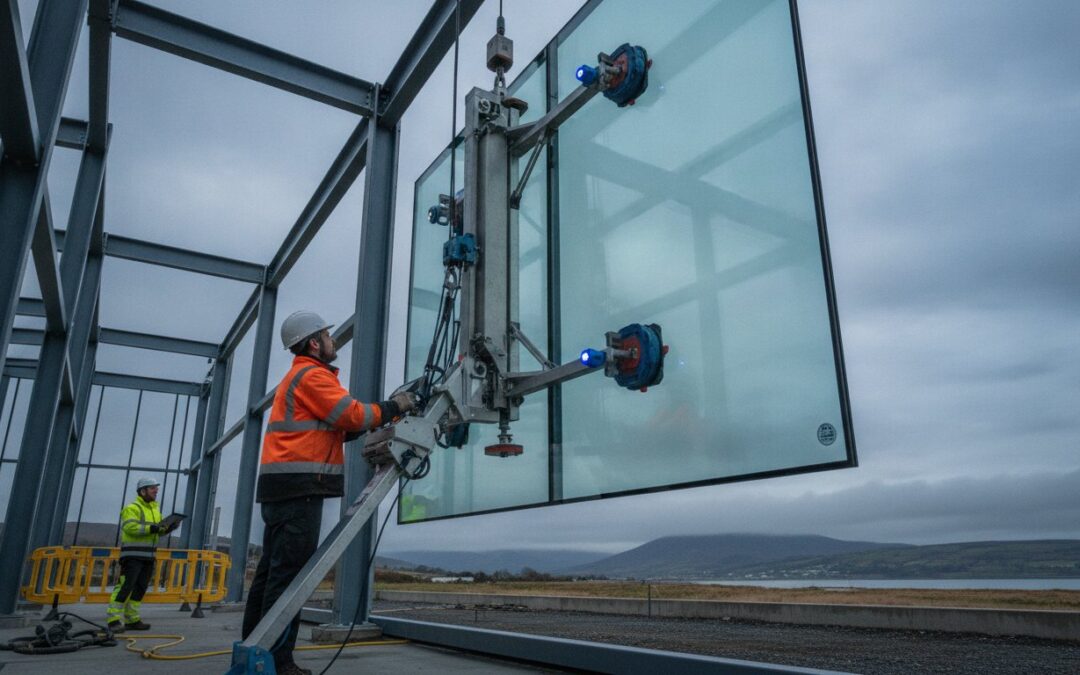
A sudden 40mph gust across an exposed Ayrshire building site can turn a routine glass installation into a high-stakes recovery mission in seconds. You know that the margin for error when handling structural glazing is razor-thin. The fear of a dropped load or a shattered pane is a constant pressure; it’s even harder when you’re trying to cross-reference a vacuum lifter safety checklist against strict LOLER and PUWER standards. It’s a lot to manage whilst fighting the unpredictable Scottish elements.
This guide provides a comprehensive safety framework designed for 2026 site operations. We’ll help you eliminate the guesswork and ensure every lift is executed with professional precision. You’ll gain a clear path to incident-free performance, moving from pre-start inspections to final placement with total confidence. We’ll cover the essential ‘go/no-go’ triggers, environmental checks, and technical requirements that keep your crew safe and your project on schedule. Whether you’re working in Glasgow or across the coast, these practical steps will help you achieve zero-incident lifting results every time.
Key Takeaways
- Understand why vacuum lifters are classed as critical lifting accessories and how to maintain full compliance with LOLER and PUWER regulations.
- Implement a daily vacuum lifter safety checklist to verify seal integrity and frame stability before every lift.
- Establish clear exclusion zones and communication protocols to protect your ground crew during complex glass installations.
- Learn to identify hidden hazards like material porosity and how safety features like reserve tanks mitigate risk during power failures.
- Gain the confidence of using site-ready equipment backed by the technical expertise of local Ayrshire specialists.
Why Safety Protocols Matter for Vacuum Lifting Operations
Structural glass lifting is a high-stakes operation. There’s no room for “near misses” when you’re suspending half a tonne of glazing over a busy construction site. In the eyes of the UK Health and Safety Executive (HSE), a vacuum lifter is classified as a critical lifting accessory. This isn’t just a technicality. It means your equipment and your operators must adhere to rigorous legal standards to ensure site safety.
A failed lift is rarely a minor incident. Whether you’re working on a residential project in South Ayrshire or a commercial build in Glasgow, the physics of glass handling are unforgiving. A loss of vacuum integrity leads to catastrophic load failure. This is why a robust vacuum lifter safety checklist is the foundation of every successful lift. It transitions safety from a vague concept into a repeatable, professional process.
Understanding LOLER and PUWER Compliance
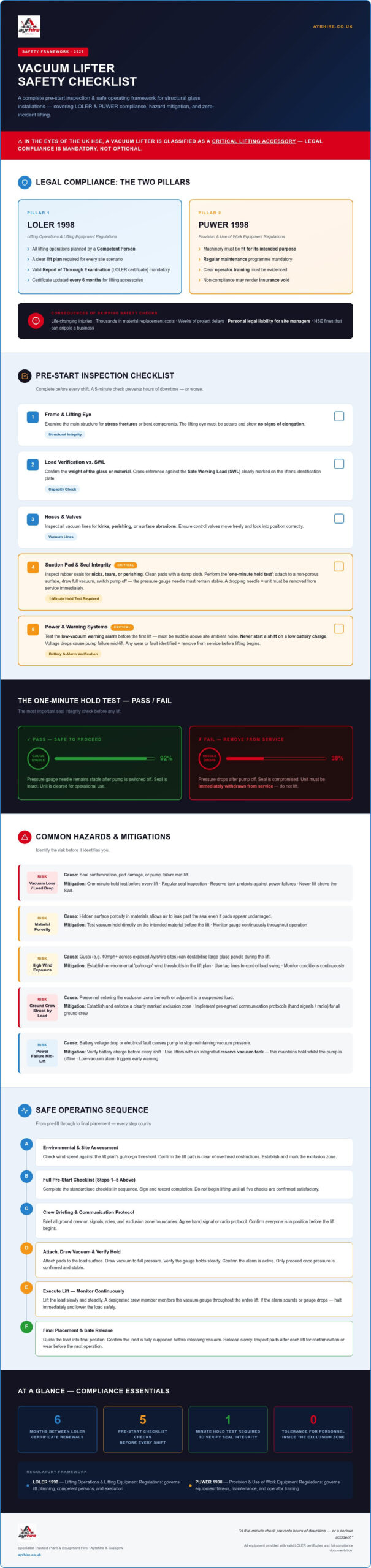
Compliance is built on two primary pillars: LOLER and PUWER. The Lifting Operations and Lifting Equipment Regulations (LOLER) 1998 focus on the planning and execution of the lift. It requires that all lifting operations are planned by a “Competent Person” and carried out in a safe manner. For glazing contractors, this means having a clear lift plan for every specific site scenario. Safety isn’t a suggestion. It’s a legal requirement.
The Provision and Use of Work Equipment Regulations (PUWER) 1998 ensure the machinery is fit for its intended purpose. It mandates regular maintenance and clear operator training. To remain compliant, you must hold a valid Report of Thorough Examination, often called a LOLER certificate. This document must be updated every six months for lifting accessories. Without it, your site is legally exposed and your insurance may be void. We ensure every lifter we provide meets these strict benchmarks before it reaches your site.
The Consequences of Inadequate Safety Checks
Skipping a step on your vacuum lifter safety checklist carries heavy penalties. Beyond the immediate risk of life-changing injuries, the financial fallout is immense. A single shattered structural pane can cost thousands in material replacement and lead to weeks of project delays. Site managers also face personal legal liability. If an incident occurs and the HSE finds that safety protocols were ignored, the resulting fines can cripple a business. Using professional-grade, well-maintained equipment is the only way to mitigate these risks effectively and keep your project moving.
Pre-Start Inspection: The Ultimate Vacuum Lifter Safety Checklist
Before any glass leaves the ground, a rigorous pre-start inspection is mandatory. This isn’t a formality. It’s the primary defence against equipment failure. Every operator should work through a vacuum lifter safety checklist at the start of each shift to verify that the machinery is in peak condition. Using a standardised vacuum lifter safety checklist ensures that no critical component, from the battery to the suction pads, is overlooked during the morning rush. A five-minute check prevents hours of downtime or a serious accident.
- Frame and Lifting Eye: Examine the main structure for stress fractures or bent components. The lifting eye must be secure and show no signs of elongation.
- Load Verification: Confirm the weight of the glass or material. Check this against the Safe Working Load (SWL) clearly marked on the lifter’s identification plate.
- Hoses and Valves: Inspect all vacuum lines for kinks, perishing, or surface abrasions. Ensure control valves move freely and lock into position correctly.
Suction Pad and Seal Integrity
The suction pads are the only point of contact between the lifter and the load. Any contamination or damage here creates an immediate hazard. Inspect the rubber seals for nicks, tears, or signs of perishing. Clean the pads with a damp cloth to remove site dust, grease, or oils. Perform a ‘one-minute hold test’ by attaching the lifter to a non-porous surface, drawing a full vacuum, and switching the pump off. The pressure gauge must remain stable. If the needle drops, the seal is compromised and the unit must be removed from service.
Power and Warning Systems
Modern lifters rely on integrated electrical systems to maintain pressure and alert the crew to danger. Test the low-vacuum warning alarm before the first lift. It must be audible amongst the ambient noise of a busy site. Battery management is equally critical. Voltage drops can lead to pump failure mid-lift, so never start a shift on a low charge. If you identify any wear or technical faults during these checks, opting for professional vacuum lifter hire ensures you receive equipment that has been fully maintained and LOLER-tested for immediate site readiness.
Safe Operating Procedures for Glass and Material Handling
Moving from the pre-start vacuum lifter safety checklist to the actual lift requires total site control. You must establish a clear exclusion zone beneath the entire lifting path. This isn’t just a recommendation; it’s a fundamental safety requirement. The zone must account for the potential “swing” radius of the load if it were to detach. Cordon off the area with physical barriers or tape. Ensure no personnel enter this space whilst the load is suspended. Site safety is a collective effort, but the lift supervisor must have the final say on zone integrity.
Communication is the backbone of a safe operation. The relationship between the crane operator and the banksman must be seamless. Use standardised hand signals or dedicated, clear radio channels. If the banksman loses sight of the load or the operator, the lift must stop immediately. There’s no room for guesswork. Secondary safety measures are equally vital. Always use safety straps or mechanical slings as a backup once the load is clear of its stillage. This provides a mechanical failsafe should the vacuum pressure fluctuate unexpectedly.
Environmental Factors: Wind and Rain in Scotland
Scottish weather is notoriously unpredictable. High winds turn large glass panes into sails, putting immense strain on the lifting equipment and the crane. Most manufacturers set a maximum wind speed threshold of 18mph for safe operations. You should always check local forecasts before starting. Rain also presents a significant risk. Wet glass reduces the friction coefficient of the suction pads, making “slippage” more likely. If the rain is heavy enough to compromise the seal, stop the lift. Cold weather is another factor. Low temperatures make rubber seals less pliable, which can prevent a perfect vacuum from forming on the first attempt.
Load Management and Positioning
Correct positioning is essential to prevent “peeling” forces. You must identify the centre of gravity for every load, especially with irregular or oversized structural glass. If the lifter is off-centre, the load will tilt. This puts uneven pressure on the suction pads and increases the risk of a seal breach. Always perform a formal ‘test lift’. Raise the material just a few inches off the ground and hold it for at least ten seconds. During this time, check the vacuum gauges and ensure the load is perfectly balanced. Only proceed with the full move once you’re certain the vacuum lifter safety checklist requirements are fully met and the load is stable.
Common Vacuum Lifter Hazards and How to Mitigate Them
Even the most experienced crews face hidden hazards on site. Identifying these risks before they escalate is a core part of your vacuum lifter safety checklist. Hazards range from technical equipment failure to human error caused by site fatigue. When lifting becomes routine, operators may skip secondary checks or ignore subtle warning signs. Stay sharp. Understanding the “why” behind every safety protocol allows you to react with speed and precision when things don’t go to plan. It’s about maintaining a proactive stance on safety rather than a reactive one, especially whilst working in the challenging conditions of a Scottish building site.
Material Compatibility and Surface Prep
Not all glass is created equal. Porous materials, such as certain textured or sandblasted architectural glass, allow air to seep through the material itself. This prevents a secure vacuum from forming. You must test surface porosity before committing to a lift. If the vacuum gauge struggles to reach the green zone, the material is likely too porous for standard pads. You may need specialised closed-cell foam pads for these surfaces. Cleaning is equally vital. Site dust, grease, or morning dew can contaminate the seal and act as a lubricant. The Coefficient of Friction is the measure of grip between the suction pad and the material surface that prevents the load from sliding or peeling away. Always use approved solvents that won’t degrade the rubber pads to keep this grip at its maximum.
Emergency Procedures and Fail-Safes
If the audible low-vacuum alarm sounds mid-lift, you have a limited window to act. This is where the reserve tank becomes critical. It stores enough vacuum pressure to hold the load for several minutes, allowing for a controlled descent. Never attempt to “beat” the alarm or finish the move. Lower the load to the nearest stable surface immediately. Once the load is safe, you must conduct a thorough investigation into the cause of the pressure drop. If a near-miss occurs, the equipment should be taken out of service and re-certified by a competent person. For equipment you can trust, choose vacuum lifter hire from specialists who prioritise rigorous maintenance and safety fail-safes.
Professional Vacuum Lifter Hire: Ensuring Compliance in Ayrshire & Glasgow
Ayr Tracked Plant & Equipment Hire provides more than just machinery. We operate as a specialist division of Structural Glass Design Ltd. This means our team possesses deep technical expertise in structural glazing that general plant hire firms cannot replicate. We deliver equipment that is fundamentally ready for the demands of a professional site. Our flexible hire terms accommodate the shifting timelines of construction projects, offering both daily and weekly options. This ensures you only pay for the equipment when it’s actively contributing to your project’s progress. We understand the “get the job done” attitude required on modern sites and provide the reliable tools to make it happen.
Inspecting Hired Equipment on Arrival
Your vacuum lifter safety checklist begins the moment the delivery driver arrives. You must immediately verify the LOLER Report of Thorough Examination provided with the machine. Ensure the document is in date and that the serial number on the certificate matches the ID plate on the lifter’s frame. Inspect the unit for any transit damage, such as dented frames or kinked vacuum lines, before it enters service. Check that the suction pads are clean and free from perishing or site debris. Using a standardised vacuum lifter safety checklist ensures that your team follows a repeatable safety protocol every morning. Site-side verification is a critical final safety barrier that protects your project and your crew.
Local Specialist Support for Complex Sites
Regional commitment is a core part of our service. We provide rapid equipment deployment and on-site technical support across South Ayrshire, North Ayrshire, and Glasgow. Our reach also includes project sites in Dumfries & Galloway. This local presence allows us to respond quickly if site conditions change or if you require additional equipment at short notice. For complex installations, our lifters integrate perfectly with mini spider crane hire North Ayrshire. This ensures your crew has the stability and reach required for heavy structural glass. Contact Ayr Tracked Plant & Equipment Hire for a specialist lifting solutions Scotland consultation to ensure your next lift is fully compliant and safe.
Secure Your Site Operations for 2026
Safety in structural glazing isn’t about luck; it’s about a disciplined approach to every lift. By implementing a rigorous vacuum lifter safety checklist, you protect your crew and your project’s reputation. We’ve detailed the necessity of LOLER compliance, the importance of pre-start inspections, and how to manage the unique challenges of the Scottish climate. These steps turn potential hazards into manageable, professional processes that keep your site productive and incident-free.
Don’t leave your site safety to chance with unverified equipment. As a specialist division of Structural Glass Design Ltd, Ayr Tracked Plant & Equipment Hire is managed by experts who understand the technical demands of your job. Our fleet is fully LOLER compliant and maintained to ensure immediate site readiness. With local delivery across Ayrshire and Glasgow, we provide the reliable support you need to maintain consistent performance. Enquire about Vacuum Lifter Hire in Ayrshire and Glasgow today to secure the right tools for your next project. We’re ready to help you get the job done with total confidence.
Frequently Asked Questions
How often should a vacuum lifter be inspected for safety?
Vacuum lifters must undergo a formal thorough examination every six months under LOLER regulations because they are lifting accessories. However, the operator should complete a vacuum lifter safety checklist before the start of every shift. This daily inspection identifies immediate wear or damage that may have occurred during transit or previous use. Maintaining a consistent log of these daily checks is essential for site compliance and provides a clear audit trail for health and safety officers.
Can I use a glass vacuum lifter to lift other materials like stone or metal?
You can lift other non-porous materials like polished stone or flat metal sheets, but you must verify the surface texture first. Standard glass pads are designed for perfectly smooth surfaces. If the material is textured or slightly porous, the vacuum will bleed away, causing the load to drop. Always check the manufacturer’s specification for the specific model. Using the wrong pad type for stone can damage the seals and compromise future glass lifting operations.
What should I do if the vacuum alarm sounds whilst a load is in the air?
Lower the load to the nearest stable surface immediately when the alarm sounds. The integrated reserve tank provides a vital safety buffer, holding the vacuum for several minutes after a power failure or leak. Do not attempt to complete the planned move or reposition the load. Once the glass is safely on the ground or a stillage, keep the exclusion zone clear and investigate the cause of the pressure drop before attempting another lift.
Is it safe to use a vacuum lifter in the rain on a Scottish site?
Lifting in light rain on a Scottish site is possible but requires extra caution to prevent the load from sliding. Water acts as a lubricant, significantly reducing the friction between the rubber pads and the glass surface. You must ensure both the suction pads and the contact points on the material are as dry as possible before attachment. If the rainfall is heavy or persistent, it’s safer to stop operations until the weather clears to avoid a catastrophic seal breach.
What is the maximum wind speed for safe vacuum lifting operations?
Most manufacturers set the maximum wind speed for safe lifting at 18mph, which is approximately 29kph. Large glass panes act like sails in high winds, putting dangerous lateral pressure on the vacuum seals and the crane’s structure. You should monitor local Ayrshire weather forecasts and use a handheld anemometer for real-time site data. If gusts exceed the rated limit for your specific equipment, you must suspend all lifting operations until the wind speed drops to a safe level.
Do I need a special qualification to operate a vacuum lifter?
You must be trained and designated as a competent person to operate a vacuum lifter on a UK construction site. Whilst there isn’t one single legal licence, most major contractors require a CPCS A09 category or equivalent manufacturer-led training. The operator must understand the equipment’s limitations, the specific vacuum lifter safety checklist procedures, and how to interpret the vacuum gauges correctly. Training ensures that the operator can react safely during an emergency or technical failure.
What is the difference between a vacuum lifter and a suction cup?
A suction cup is typically a manual, handheld tool used for positioning or carrying light panes by hand. In contrast, a vacuum lifter is a powered lifting accessory designed to be suspended from a crane or hoist. Vacuum lifters feature integrated pumps, reserve tanks, and audible warning systems to handle significantly heavier loads. Because they are mechanical lifting accessories, vacuum lifters fall under strict LOLER 1998 regulations, whereas manual suction cups are generally covered under PUWER guidelines.
How do I check if a vacuum lifter is LOLER compliant?
Check the physical Report of Thorough Examination (the LOLER certificate) that should accompany the machine. This document must be less than six months old for any lifting accessory. Ensure the serial number on the certificate matches the ID plate on the lifter’s frame. You should also look for a current inspection tag or colour-coded sticker on the unit itself. If the paperwork is missing or out of date, the equipment is not compliant and must not be used.