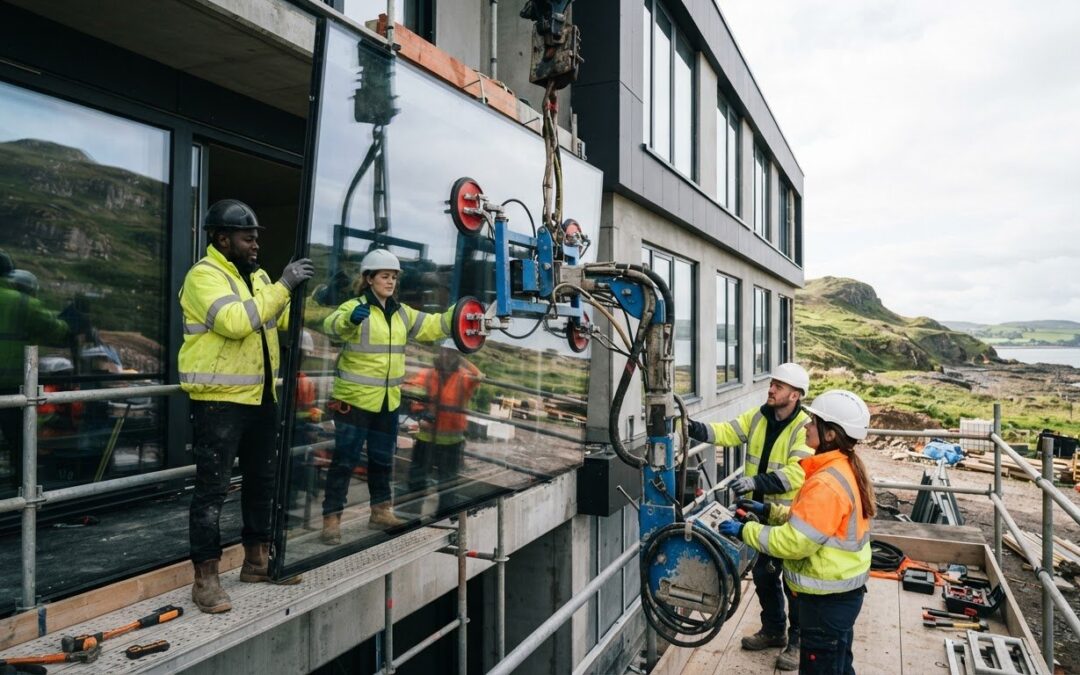
A glass suction lifter grips a panel with vacuum pads, helping a team position and install glass without relying on a manual hold alone. For heavy glass panel lifter rental in South Ayrshire, the right equipment depends on the panel’s weight, size, surface and the route into position. The lifter must suit the load and the conditions on site.
Look beyond the hire rate: delivery, hire duration and the lifting equipment required all affect the total cost. This guide explains how vacuum lifters work, what to consider when planning a glass installation, and what to include when requesting a rental quote.
Plan access, prepare the lifting area and arrange collection as part of the job. The aim is to help you choose a suitable lifting approach and understand the hire process before the panel arrives on site.
Key Takeaways
- Understand how vacuum pads grip glass and why the panel’s weight, size and surface matter when selecting lifting equipment.
- Plan the lift around the route, working space and final position so the panel can be moved and installed in a controlled sequence.
- Prepare access and site logistics before arranging delivery, then factor collection and off-hire into the job plan.
- Assess rental costs by considering the equipment required, hire duration, delivery and collection arrangements, and the demands of the site.
- See how vacuum lifter hire can support glass-handling work, and when a tracked multi-loader or mini excavator may help with site access.
What is a Glass Suction Lifter?
A glass suction lifter uses vacuum pads to grip a glass panel during lifting and positioning. The equipment can be manual, machine-mounted or part of a glazing robot, depending on the panel and installation route.
Glazing and construction applications
On a glazing project, vacuum pads hold glass securely enough for a crew to guide it towards a frame or façade opening. Construction teams use lifters for windows, curtain-wall sections and internal partitions. In manufacturing, similar equipment moves glass between workstations, storage racks and production lines. The key checks are panel dimensions, weight, surface condition and the space available for the lifting head.
For example, a wide shopfront pane may need a different pad arrangement from a smaller internal door panel. Matching the lifter to the task helps keep the panel controlled from collection at the rack to final alignment.
Heavy panel and structural glazing lifts
Structural glazing places panels within a façade system, where accurate positioning matters. A vacuum lifter can hold a panel while installers align it with the supporting structure and prepare its final fixing. Plan for the panel’s centre of gravity, orientation and route. Narrow access or a restricted working area can affect which machine and lifting head suit the task.
Heavy panels may need machine-assisted lifting rather than a manually handled device. The vacuum pads must sit on a suitable, clean area of glass, and the lifting head must suit the panel’s shape. For an unusual façade pane, the lifting arrangement should allow controlled adjustment during placement.
Glazing robots can work indoors or outdoors, depending on their design and site conditions. Indoor models can manoeuvre through building spaces, while outdoor units may reach façade openings from outside. Their compact chassis and articulated lifting arms can help position panels where a larger machine cannot work. Check the access route, floor or ground conditions, working height and space to turn.
Rented lifter types and panel capacity
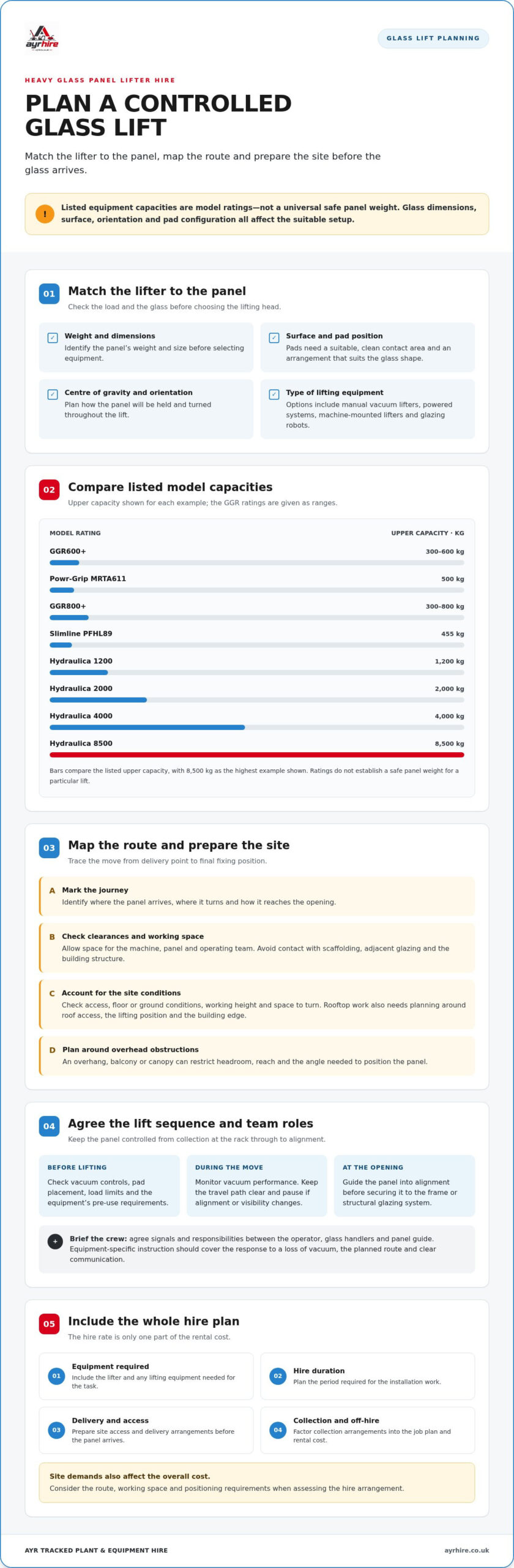
Hire equipment ranges from compact manual vacuum lifters to powered systems and glazing robots. Stated capacities vary by model: the GGR600+ is rated from 300 kg to 600 kg, while the GGR800+ ranges from 300 kg to 800 kg. Other examples include the Powr-Grip MRTA611 at 500 kg and the Hydraulica 1200 at 1200 kg.
Higher-capacity examples include the Hydraulica 2000 at 2000 kg, Hydraulica 4000 at 4000 kg and Hydraulica 8500 at 8500 kg. These figures describe equipment capacities, not a universal safe panel weight. The glass dimensions, surface, orientation and pad configuration all affect the suitable setup.
Where can you rent a heavy glass panel lifter in South Ayrshire? Look to specialist lifting-equipment hire firms and plant-hire companies serving the area, including Ayr, Prestwick and Troon. Which companies serve those towns? The relevant providers are those hiring vacuum lifters or machine-mounted glass-handling equipment, rather than general plant alone.
If no glass panel lifter is available locally, alternatives include a glazing robot or a suitable crane fitted with a compatible glass vacuum attachment. The choice depends on panel weight, access and the positioning required.
Heavy glass panel lifting and installation
Plan a route from the delivery point to the final fixing position for every lift. Panel orientation, access and surrounding structures shape the equipment choice and the sequence of work.
Rooftop and floor-level lifting
At floor level, a lifter may move a panel across a prepared surface before raising it into a frame. The route needs enough clearance for the machine, panel and operating team. Rooftop glazing adds different constraints: roof access, the lifting position and the building edge all affect the approach. Mark where the panel arrives, where it turns and how it reaches the opening.
Vacuum lifting technology
Vacuum pads create a seal against the glass, while the lifting head connects to a compatible handling machine. The pad arrangement must suit the panel’s shape and surface. Before lifting, check that the contact area is clean and that the pads sit correctly. Raise and guide the panel towards its frame, monitoring vacuum performance during the move.
For a heavy façade panel, follow a clear lifting sequence. Identify the panel’s weight, dimensions and centre of gravity, then match the lifting head and machine to the load and site access. Position the machine so the panel can travel without striking scaffolding, adjacent glazing or the building structure. A spotter can help the operator judge clearances and alignment.
Lifting glass below an overhang calls for particular attention to headroom and reach. A projecting roof, balcony or canopy can block a direct approach from above. Account for the space beneath the obstruction and the angle needed to bring the panel into position. A compact glazing robot or articulated lifting arm may suit some layouts, depending on reach and ground conditions.
Operators need practical, equipment-specific instruction. Training should cover vacuum controls, pad placement, load limits, pre-use checks and the response to a loss of vacuum. Operators also need to understand the planned route and communicate clearly with the glazing team. In the UK, competence relates to the machine, attachment and lifting task, rather than a single certificate covering every setup.
Before work starts, agree signals and responsibilities between the machine operator, glass handlers and the person guiding the panel. Keep the travel path clear, and pause the lift if alignment or visibility changes. At the opening, installers can guide the panel into position before securing it to the frame or structural glazing system.
The Slimline PFHL89 glass vacuum lifter has a stated capacity of 455 kg, while the Hydraulica 1650 glass vacuum lifter has a stated capacity of 1650 kg. These figures can help narrow equipment options, but the selected lifter must still match the panel and the planned lift.
Check the capacity against the panel’s weight and the configuration being used, and confirm the equipment is appropriate before moving the glass. Keep the lift within the stated capacity throughout the operation, with the route and fixing position considered as part of the same plan.
Delivery, collection and off-hire arrangements
Plan equipment delivery alongside the glass lift. The delivery vehicle, unloading point and site route all need to suit the lifter and work area.
Hire periods are agreed for the booking, whilst any deposit and booking lead time are set by the rental terms and equipment schedule. Delivery distance, transport requirements and site access shape the arrangements.
Before delivery, provide the site address, an access description and the intended unloading area. For a project in Ayr, Prestwick or Troon, note narrow entrances, restricted turning space, uneven ground or height limits. These details help establish where the vehicle can stop and how the equipment can reach the work zone.
Plan unloading as a separate task. A vacuum lifter may arrive as a standalone unit or need a compatible carrier, such as a crane, for the planned lift. Keep the unloading area clear and the route from the drop-off point free of stored materials, parked vehicles and other obstructions.
- Before delivery: share the site address, access restrictions and intended operating area.
- At arrival: identify the unloading point and confirm the route to the glass installation.
- Before collection: return the equipment to the agreed collection point and report any issue affecting its condition.
Collection needs the same access planning as delivery. A lifter left behind fencing, inside a restricted building area or beyond a blocked route can delay removal. Keep the collection point accessible and coordinate collection around site activity, particularly where cranes or other lifting equipment occupy the working area.
Off-hire means notifying the hire provider that the equipment is no longer required, in line with the agreed rental terms. Arrange this when the installation schedule changes or the final panel is in place. Record the condition of the lifter and its attachments, and keep the collection area clear until removal.
For a job with several phases, set out the expected use period and likely finish point before booking. A delayed façade installation, late glass delivery or restricted access can alter the sequence. Communicate programme changes promptly so equipment use, collection timing and the hire period can be coordinated.
Keep the handover details with the site plan. Include the delivery address, unloading instructions, access notes, off-hire process and collection point. This gives the site team a practical reference if the glass lift moves to another area or the installation schedule changes.
Handling and installing heavy glass panels
A planned sequence keeps the panel controlled from unloading to final fixing. The route, ground, lifting equipment and installation point all affect how the work proceeds.
A glass lifter needs a clear route, firm and suitable ground, and enough space to manoeuvre. Its power supply depends on the machine: battery-operated equipment needs a charged battery, whilst mains-powered equipment needs a suitable supply and cable route.
Before delivery, map the path from unloading to installation. Mark doorways, corners, slopes, floor transitions and overhead obstructions. A narrow entrance, for example, may prevent a carrier turning with a panel attached. Check that the working surface can support the machine and load, and identify soft ground, loose coverings or floor openings.
Prepare the glass and work area before lifting. Keep the intended vacuum-pad contact surfaces clean and dry, and clear obstacles from the travel path. Check the panel identification and lifting plan against the unit being handled. A panel with an off-centre weight may need a different pad arrangement or orientation from a balanced pane.
Safety checks and a task-specific risk assessment should cover the load, equipment, route, ground, weather exposure and people nearby. Inspect pads, hoses, controls, power and vacuum indicators before the lift. Agree communication signals and keep people clear of the suspended panel’s path.
Use a steady process. Position the lifter at the planned pick-up point, align the pads as directed for the equipment, then establish the vacuum grip. Check the indicators before raising the pane. Lift only enough to confirm a secure hold, then move along the agreed route without sudden changes in direction.
At the opening, guide the panel into alignment with the frame or façade support. The operator makes controlled adjustments while installers check the edges and fixing points. Avoid using hands between glass and frame to correct alignment. Once the panel is supported and secured as planned, release the vacuum pads using the equipment controls.
For outdoor work, consider wind exposure, rain and changing ground conditions. Wind can affect a large panel’s movement, while wet or soft ground can alter machine stability. Pause and reassess if conditions change or the planned route becomes blocked.
Keep the installation area organised. Set aside a clear place for tools, packing and protective materials, away from the lifter’s route. After the lift, inspect the panel and work area for damage or debris, then prepare the machine for its next move or collection.
Glass vacuum lifter rental prices
There isn’t one standard hire price for every glass vacuum lifter. The equipment, hire period and delivery arrangements all affect the quote, so compare the full job cost rather than a headline rate.
The price depends on the case and is given after a quote request; key cost factors include the lifter type, required capacity, hire duration, transport distance and site access. A compact manual lifter for a straightforward ground-floor installation has different requirements from powered equipment needed for a restricted façade lift.
Start with the panel and the task. The glass dimensions, weight, orientation and lifting route determine the equipment required. A clear unloading point may simplify transport arrangements compared with narrow access, a long carry or a rooftop installation. Include these details in your quote request so it reflects the equipment and delivery plan.
Hire duration also matters. A single planned installation differs from work spread across several project stages. If glazing is delayed, the equipment may be needed longer than expected. Give Ayr Tracked Plant & Equipment Hire a realistic schedule, including the intended start, likely completion and collection arrangements, so you can discuss how a programme change affects the hire.
Check what the written quote includes. Compare the same items across estimates, rather than treating the equipment rate as the total. Look for clear details on:
- Equipment hire and the agreed hire period.
- Delivery to the South Ayrshire site and collection after off-hire.
- Transport or access requirements for the machine.
- Any charges linked to extending the hire period.
Ask for the quote to reflect the actual lifting plan. Describe whether the work involves a shopfront, internal partition or structural glazing, and explain how the panel moves from unloading to installation. Include access restrictions and the intended lifting position. A precise description helps ensure the quote accounts for the equipment and site arrangements required.
Before booking, read the hire terms for deposit arrangements, payment timing, cancellation and off-hire notification. Check how the end of the hire period is determined, especially if collection depends on site access. Keep the written quote and agreed terms with the job schedule so the site team can manage changes consistently.
For a clear quote, set out the panel details, lifting route, site access and expected hire period together. Request a glass lifter hire quote with those job details to establish the equipment and arrangements required.
Hire periods should reflect the planned work, including the intended start, likely completion and collection arrangements; charges may be affected if the hire needs to be extended. Check the written hire terms for deposit arrangements and payment timing. The booking lead time is not established here.
Ayr Tracked Plant & Equipment Hire: FORST TR8 8″ Tracked Wood Chipper
Ayr Tracked Plant & Equipment Hire provides Vacuum Lifter Hire for glass-handling work, helping you match lifting equipment to the panel and site plan. It’s the natural next step when the lift requires vacuum equipment and you’re arranging a project in South Ayrshire.
For wider site requirements, the KUBOTA Mini Excavator / Digger and ALMA Crawler Multi-Loader address different plant and access needs. The FORST TR8 8″ Tracked Wood Chipper is a separate option for projects that also involve vegetation clearance. Choose equipment around the work involved, rather than treating unrelated machinery as part of the glass lift.
Share the panel-handling task and site requirements when arranging hire. Call Ayr Hire today or request a quote online for vacuum lifter hire.
Plan the next move on site
Before arranging heavy glass panel lifter rental in South Ayrshire, turn the installation plan into a clear equipment brief. Include the panel details, access route and intended lifting position. This gives your hire request a practical starting point and connects the glass-handling task with the wider work on site.
Ayr Tracked Plant & Equipment Hire offers Vacuum Lifter Hire for glass handling. For separate site requirements, its equipment includes the FORST TR8 8″ Tracked Wood Chipper, KUBOTA Mini Excavator / Digger and TMC25/BG250 Mini Spider Crane. Each has a different role, so describe the job rather than treating unrelated machinery as part of the glass lift.
Keep the next step simple. Contact Ayr Tracked Plant & Equipment Hire with your project requirements and discuss the equipment that fits the work. A clear plan helps you move from preparation to installation with confidence.
Frequently Asked Questions
How much does it cost to hire a glass panel lifter in South Ayrshire?
The rate depends on the hire period and delivery arrangements. For a quote for heavy glass panel lifter rental in South Ayrshire, provide the planned hire dates and site details so the quote reflects the job.
Are delivery, collection and operator services available locally, and what do they cost?
Next day delivery is available for vacuum lifters, with free delivery within 10 miles of Ayr; delivery charges apply outside that area. The lifter rates exclude delivery charges and include VAT separately. These are crane hire rates, not vacuum lifter rates.