
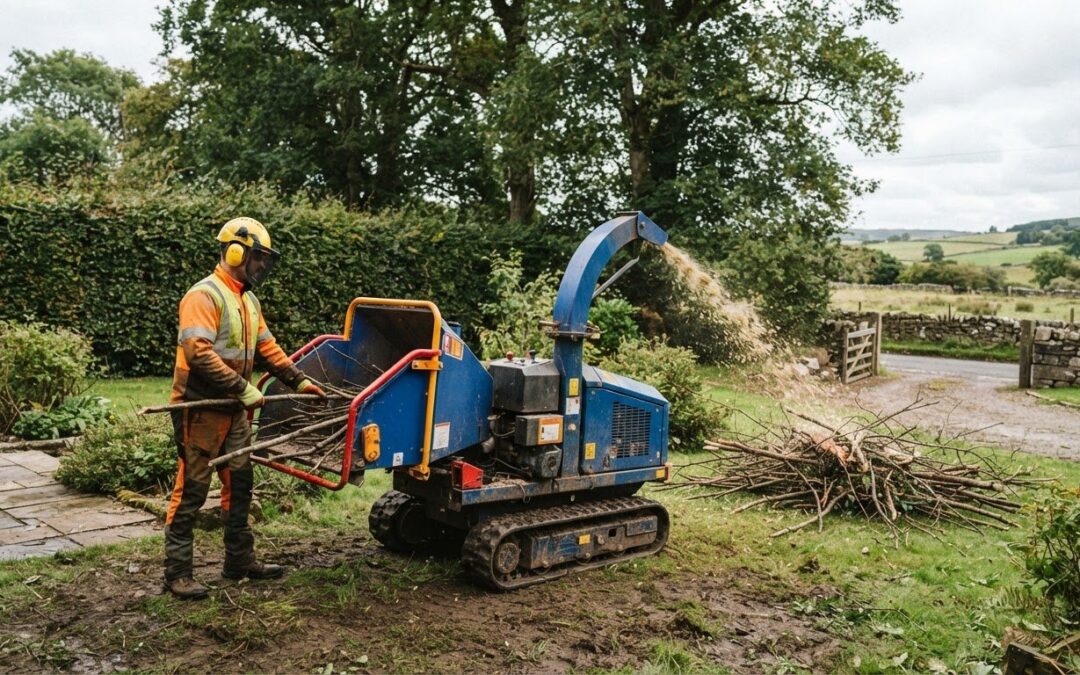
What if the best chipper for a large garden isn’t simply the biggest one you can hire? Hiring a wood chipper for a large garden works best when the machine suits the material, workload and route into the site. A pile of woody branches, a narrow entrance or uneven ground can all affect what’s practical.
If you’re unsure whether your cuttings justify a hire, how you’ll feed material through the machine or where the finished chips will go, a little planning can make the work more straightforward. This guide explains how to compare chipper types, estimate the workload and assess access before choosing equipment.
You’ll also find practical steps for organising the garden and chip handling before the hire period begins. For substantial clearance work in South Ayrshire, North Ayrshire, East Ayrshire, Dumfries & Galloway or Glasgow, Ayr Tracked Plant & Equipment Hire offers the FORST TR8, an 8-inch tracked wood chipper. This guide explains how a tracked option fits into the decision, while keeping the focus on your site and the material you need to process.
Key Takeaways
- Choose a chipper around the branches and cuttings you need to process, not the garden’s size alone.
- When hiring a wood chipper for a large garden, compare workload, material, access and working location before choosing a machine.
- Measure gates and note slopes, soft ground, turning space and overhead obstructions to plan a workable route into the garden.
- Prepare by sorting suitable woody material, staging branches safely and deciding where the finished chips will go.
- Ayr Tracked Plant & Equipment Hire offers the FORST TR8 8-inch tracked wood chipper for substantial garden-clearance projects across Ayrshire and nearby areas.
Hiring a Wood Chipper for a Large Garden: What Does the Job Involve?
A large garden can mean more than one substantial pile of branches. You may have mixed cuttings, long distances between work areas and separate clearance points around the property. That affects how material is gathered and moved, as well as the machine you need. Garden size alone isn’t enough to make a good choice. Assess the volume and type of material, the workload and the route to each working area.
A wood chipper breaks suitable woody material into smaller chips, helping you process branches as part of garden clearance. It won’t turn every kind of garden waste into chip. Woody branches and some hedge cuttings may be suitable, depending on the machine’s operating guidance. Keep leaves, soil, roots and other waste separate unless the guidance specifically allows them. For background on types of wood chippers and their mechanisms, see this overview.
Estimate the material before choosing a wood chipper
Start with the work, not the garden’s acreage. Estimate the size of each branch pile, the amount of hedge cutting and how many separate areas need clearing. A few concentrated piles create a different handling job from smaller quantities spread across several distant parts of the garden.
Consider the condition of the branches, too. Dry, tangled or irregular cuttings may need sorting and preparing before they can be fed safely and steadily. Separate suitable woody material from leaves, soil and other garden waste. This gives you a clearer picture of what the chipper needs to process and helps prevent unsuitable material from being mixed into the feed pile.
Decide what should happen to the wood chip
Before work starts, choose a collection or storage area that’s practical to reach from the chipper and useful for the next stage. Depending on the garden and the resulting material, you might use suitable chip as mulch around planting or as a path surface. Keep the intended use in mind when deciding where to collect it.
Plan for more than the machine’s output. A chipper processes suitable material, but it doesn’t resolve every disposal need. If some cuttings aren’t appropriate to chip, decide how you’ll handle them separately. Sorting the material and choosing a destination for the chip helps you make a realistic hire choice and organise the clearance around the garden’s layout.
How to Match a Wood Chipper to Garden Waste and Workload
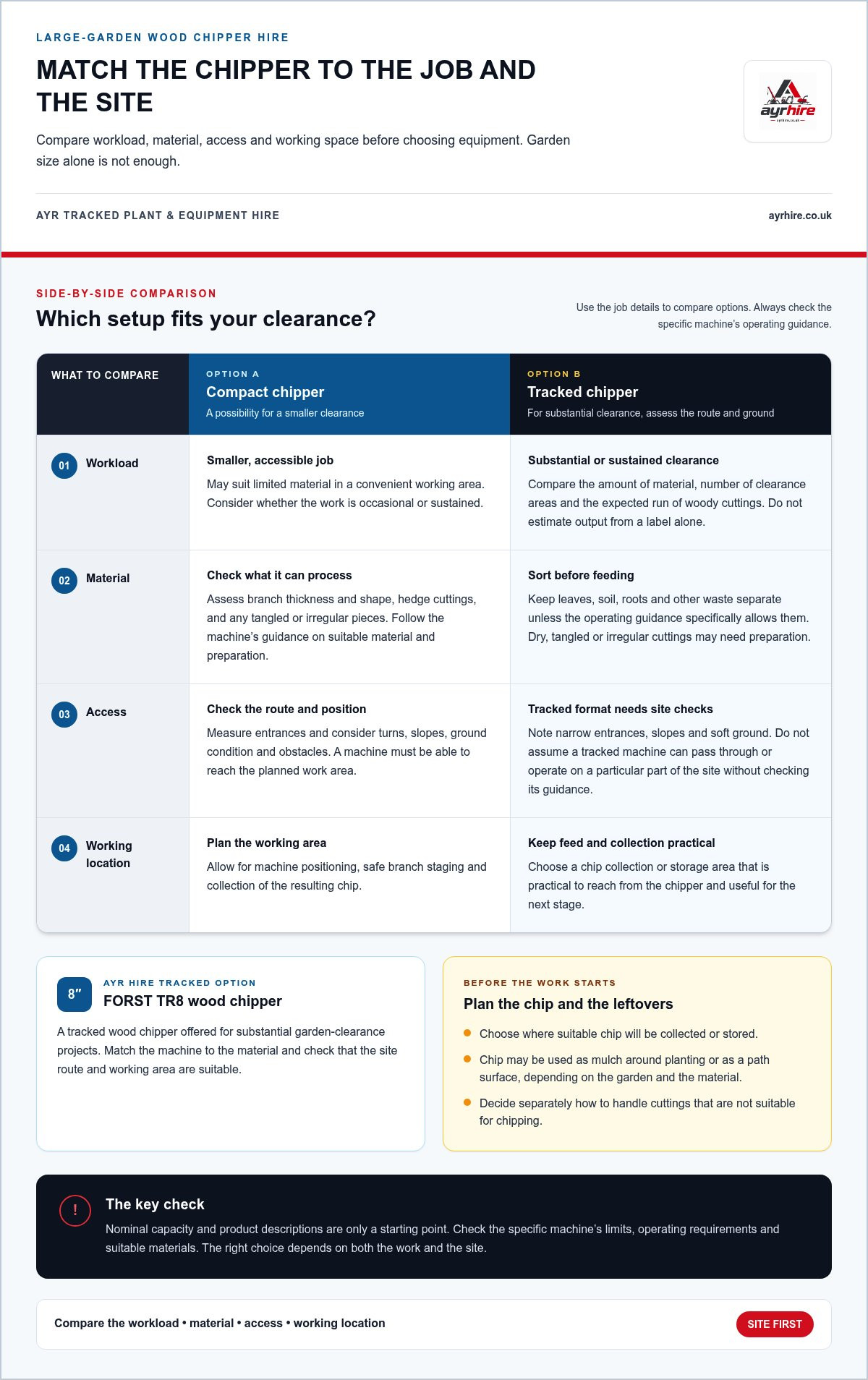
Start your comparison with the work you need to complete, not a machine label. Light pruning in one accessible area is a different task from processing substantial woody material across several parts of a garden. The right chipper must suit both the material and the site.
| Job factor | What to assess | How it affects your comparison |
|---|---|---|
| Workload | Amount of material, number of clearance areas and whether processing is occasional or sustained. | Small, scattered piles may call for a different approach from a continuous run of substantial woody cuttings. |
| Material | Branch thickness and shape, hedge cuttings, and any tangled or irregular pieces. | Check the machine’s operating guidance for suitable material and preparation. Don’t assume every type of green waste can be fed in. |
| Access | Entrance width, turns, slopes, ground condition and obstacles along the route. | A machine’s working capability is only useful if it can reach the planned work area. |
| Working location | Space to position the machine, stage branches and collect the resulting chip. | A suitable setup can reduce unnecessary movement between the pile and the machine. |
Nominal capacity and product descriptions are a starting point, not a substitute for operating guidance. Check the limits and requirements for the specific machine, including the material it is designed to process. This is particularly important if the job shifts from occasional light pruning to sustained processing of larger quantities of woody material. Don’t estimate output from a label alone.
When a compact chipper may suit a garden project
For a smaller clearance with limited material and convenient access, a compact chipper may be worth comparing with larger equipment. Smaller doesn’t automatically mean easier or safer for every user, though. Consider how you’ll position it, feed the material and collect the chip, and follow the manufacturer’s operating guidance. The overall workload matters more than the machine’s size in isolation.
When to consider a tracked wood chipper
For substantial clearance work, Ayr Tracked Plant & Equipment Hire hires the FORST TR8, an 8″ tracked wood chipper. Its tracked format makes the route and ground conditions important parts of the decision. Measure entrances, note slopes and soft ground, and identify a suitable working area. Don’t assume the machine can pass through or operate on a particular part of the site without checking its guidance. Read the FORST wood chipper hire guide for more detail, or explore wood chipper hire with Ayr Tracked Plant & Equipment Hire as you plan the job.
Large-Garden Chipper Hire: Compare Access, Setup and Practical Constraints
A chipper’s working capability is only part of the decision. It also needs a suitable route into the garden, enough room to operate and a practical way to move branches to the feed area and collect the output. When hiring a wood chipper for a large garden, map these factors before settling on a setup. A tracked machine still has site limits, so don’t assume it can cross every surface or reach every work area.
Access point
Measure gates and other narrow points. Where are the tight turns or pinch points?
Changes in level
Note steps, slopes and uneven areas. Which route avoids difficult changes in level?
Ground and turning space
Identify soft ground and confined corners. Is there room to move and position the machine?
Overhead clearance
Look for branches, wires or other obstructions. Is the route and work area clear?
Work area
Allow for feeding, operator position and chip collection. Can household access and other garden tasks continue safely?
Check the route from the entrance to the work area
Walk the full route, not just the entrance. Record the narrowest gates, sharp turns, changes in surface and any steps or slopes. Note soft ground that could affect movement, as well as overhead obstructions along the way. A simple sketch can show where the machine could travel and where branches are waiting.
Choose a working position that doesn’t block a household entrance or cross the route for other garden jobs. Check the equipment’s current operating guidance for access, movement and site restrictions. The dimensions and requirements of the specific machine matter. Don’t estimate them from its category or assume a route is suitable by appearance alone.
Plan safe working space and material flow
Mark out separate areas for the branch pile, feed position, operator and chip output. Keep household or public routes apart from the work zone, and avoid placing the output where it blocks a path or creates repeated handling. Stage branches close enough to reduce carrying back and forth, but keep the feed area organised and clear.
Think through the full journey: branches from the clearance area to the staging point, into the chipper, then from the output to storage or its intended use. If cuttings are spread across the garden, decide whether to bring them to one work area or use more than one staging point. Follow the machine instructions and applicable safety guidance when setting up and working. A clear layout helps you judge whether the garden can accommodate the equipment and the task without relying on guesswork.
Prepare a Large Garden for Wood Chipper Hire
A clear work plan helps you make effective use of the hire period. Before hiring a wood chipper for a large garden, work through these steps and follow the machine’s current manufacturer instructions and safe operating practices. They take priority over general advice.
- 1. Assess the material. Estimate the branch piles and hedge cuttings, and identify separate clearance areas. Sort suitable woody material from leaves, soil and anything unsuitable or unverified. Use the machine guidance to determine what can be processed.
- 2. Plan access. Walk the route from the entrance to the work area. Note gates, turns, steps, slopes, soft ground and overhead obstructions, then choose a practical place to position the machine.
- 3. Clear the work area. Remove obstacles and unrelated garden items from the planned setup area. Keep people, pets and other garden activity away from the designated work zone.
- 4. Stage branches. Group branches by approximate size and condition, following the machine’s operating guidance. Keep the staged material stable and uncluttered, with a clear route to the feed area.
- 5. Plan chip handling. Choose a collection or storage point for processed chips before work begins. Keep it accessible without blocking paths or household access.
Sort branches and organise the work area
Prepare branches in manageable groups rather than building one mixed pile. Set questionable items aside instead of assuming they can be chipped. Keep staged material and finished chip in stable, uncluttered areas, and leave the operator’s working space clear. Make sure household routes and unrelated garden tasks stay separate from the work area throughout the job.
Plan a practical hire schedule
Allow time for preparation, processing and tidy-up as separate parts of the project. Counting only machine operating time can leave too little room for sorting branches, moving material between work areas or clearing the site afterwards. Weather may affect ground conditions, while access constraints and the condition of the cuttings can change the order of tasks.
Plan the hire timing around the full sequence, not just the chipping itself. Ayr Tracked Plant & Equipment Hire offers flexible daily or weekly hire terms for its FORST TR8 8″ tracked wood chipper. Read the tracked wood chipper hire guide for Ayrshire for more specialist context, then explore wood chipper hire with Ayr Tracked Plant & Equipment Hire as you organise the project.
Choosing Ayr Hire for a Large-Garden Wood Chipper Project
Ayr Hire provides specialist plant and equipment hire across South Ayrshire, North Ayrshire, East Ayrshire, Dumfries & Galloway and Glasgow. For a substantial garden-clearance project, Ayr Hire offers the FORST TR8 8″ tracked wood chipper. Match the machine to the cuttings and assess the site before planning the work.
Why local specialist hire can fit a garden-clearance plan
Tracked equipment may suit a project where material and working areas need careful planning, but the machine still has to fit the route and setup space. Base your decision on the branches to process, the scale of the workload and the ground and access conditions. Ayr Hire offers flexible hire terms for the FORST TR8. For projects involving wider equipment considerations, read the specialist plant hire guide for Ayrshire.
Turn the assessment into a clear next step
Before arranging hire, bring your project plan together. Be ready to outline:
- The type and approximate quantity of woody material, and any items you’ve separated as unsuitable or uncertain.
- The route into the garden, including gates, turns, slopes, soft ground and overhead obstructions.
- Where the machine can work, where branches will be staged and how the area will be kept clear.
- Where processed chip will go, and how you’ll handle material that isn’t suitable for chipping.
This gives you a practical basis for matching the equipment to the job. If access is tight, the ground is uneven or branches are spread across several areas, include those details in your planning rather than relying on garden size alone. Check the machine’s current operating guidance as part of your preparation.
With material, workload, access and chip handling considered, you can move from a rough idea to a clearer hire plan. Explore wood chipper hire with Ayr Hire.
Make Your Garden-Clearance Plan Ready to Go
Hiring a wood chipper for a large garden is easier to plan when you focus on the job, not the garden’s size alone. Estimate the woody material and workload, check the route and working space, then decide where the finished chip will go. A clear preparation and timing plan helps you make practical use of the hire period.
Ayr Hire offers the FORST TR8 8″ tracked wood chipper for garden-clearance projects across South Ayrshire, North Ayrshire, East Ayrshire, Dumfries & Galloway and Glasgow. Assess your branches and site against the machine’s operating guidance, then take the next step with a clear picture of what your project needs.
Explore wood chipper hire with Ayr Hire and get your garden-clearance plan moving. With the right preparation, you can approach the work with confidence.
Frequently Asked Questions
Is a wood chipper suitable for clearing a large garden?
Yes, a wood chipper can help process suitable woody cuttings during a large garden clearance. Hiring a wood chipper for a large garden makes most sense when you’ve assessed the quantity and type of branches, how spread out the work areas are and where the machine can operate. It won’t process every kind of garden waste, so sort material and plan for unsuitable items separately.
What size wood chipper do I need for a large garden?
Choose based on the material, workload and site, not garden size alone. Light pruning in one accessible area differs from sustained processing of substantial woody cuttings. Ayr Hire offers the FORST TR8 8″ tracked wood chipper for hire. The 8″ description isn’t a substitute for checking what the machine can process: use its current operating guidance for material limits and site requirements.
Can a tracked wood chipper get through a garden gate?
It depends on the gate, route and the machine’s dimensions and operating requirements. Measure the narrowest opening, then note turns, steps, slopes, soft ground and overhead obstructions along the whole route. A tracked design doesn’t guarantee access through every garden entrance or across every surface. Compare your measurements with the current equipment guidance before deciding where the chipper can be positioned.
What garden waste can I put through a wood chipper?
Wood chippers are intended for suitable woody material, such as branches, and some hedge cuttings may also be appropriate. What can be processed depends on the machine, so follow its operating instructions for material type, condition and size. Keep leaves, soil, roots and other garden waste separate unless the guidance specifically permits them. Don’t feed in items simply because they’re part of a garden-clearance pile.
How should I prepare a large garden before hiring a wood chipper?
First, estimate the branch piles and identify each clearance area. Sort suitable woody material from leaves, soil and any unverified items, then check the route into the garden and clear the planned work area. Stage branches in an organised place, keep people and pets away from the work zone, and choose where the chips will go. Allow time for preparation and tidy-up as well as chipping.
What can I do with the wood chips after processing branches?
Depending on the material and your garden, you may be able to use the chips as mulch around planting or as a path surface. Decide on a collection or storage area before work begins, so the output doesn’t obstruct access or create extra handling. A chipper processes suitable branches into chip; it doesn’t handle every kind of garden waste or resolve disposal for unsuitable material.
How much does it cost to hire a wood chipper for a garden?
The cost depends on the hire arrangement and duration, so compare like with like rather than relying on prices for different machine types or regions. Ayr Hire offers flexible daily or weekly hire terms for its FORST TR8 8″ tracked wood chipper. Its local service covers South Ayrshire, North Ayrshire, East Ayrshire, Dumfries & Galloway and Glasgow. Include the time needed for preparation and tidy-up in your project budget.