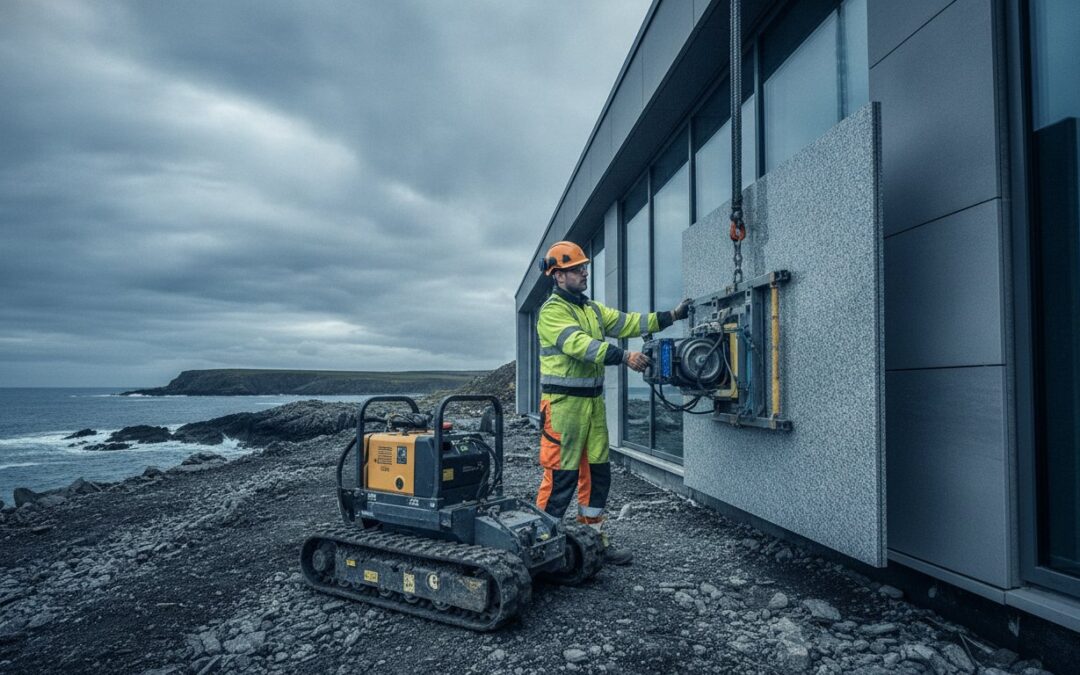
A single hairline fracture in a high-value stone slab doesn’t just ruin the material; it halts the entire project. You know the pressure of moving oversized stone on a restricted site. The constant risk of a costly breakage or a manual handling injury weighs heavy on every lift. Relying on manual labour for these installs is often a gamble you can’t afford to take.
Securing a reliable vacuum lifter for stone panels North Ayrshire contractors can trust is the only way to move beyond these risks. We understand that local projects, from coastal renovations to rural builds, demand precision and stability. This specialist guide shows you how to achieve zero breakages and significantly reduce manual labour costs during your next installation. You’ll learn how the right equipment ensures full compliance with site safety regulations. We’ll also explore how specialised hire solutions overcome the logistical headaches of tight access and difficult terrain common across the region. It’s about getting the job done safely, efficiently, and without the fuss of traditional lifting methods.
Key Takeaways
- Identify the specific vacuum attachments required for the secure handling of architectural stone cladding, granite slabs, and large format paving.
- Ensure site safety by matching equipment capacity to stone porosity and weight, helping you select the right vacuum lifter for stone panels North Ayrshire projects demand.
- Discover practical strategies for navigating restricted access in historic town centres and managing coastal wind speeds during high-rise installations.
- Implement a robust site preparation checklist, focusing on panel cleanliness and cordoning to prevent suction failure or unauthorised site entry.
- Leverage flexible daily and weekly hire terms from a local specialist to align your equipment costs with specific project timelines.
What is a Vacuum Lifter for Stone Panels?
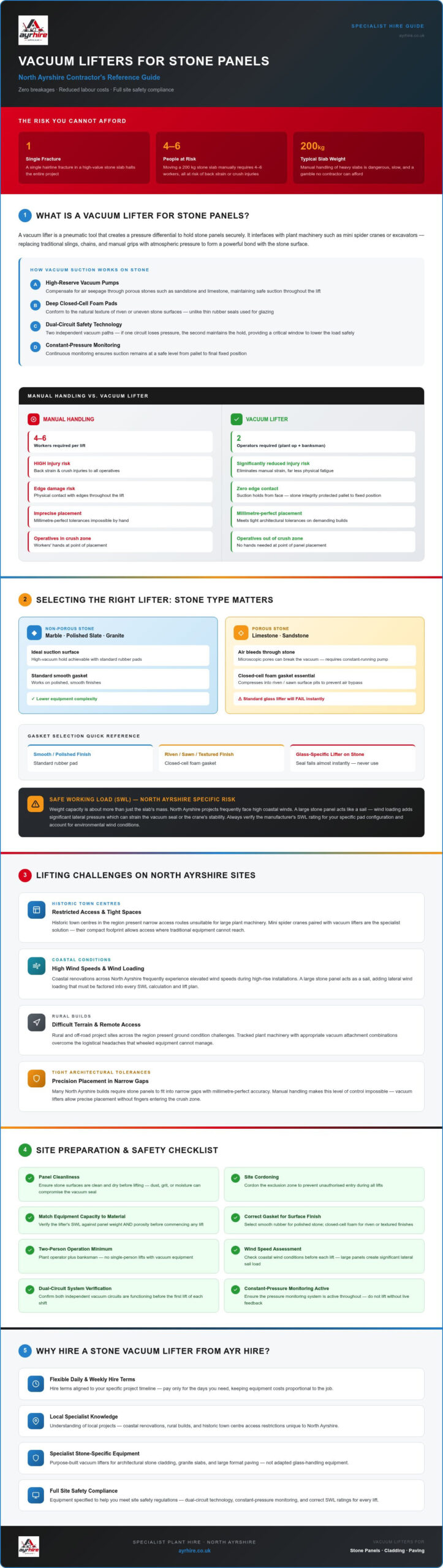
A vacuum lifter is a pneumatic tool that creates a pressure differential to hold stone panels securely. It’s a specialised attachment designed to interface with plant machinery like mini spider cranes or excavators. Instead of relying on traditional slings, chains, or manual grips, this equipment uses atmospheric pressure to create a powerful bond with the surface of the material. For modern construction, it’s the most reliable method for moving heavy, flat loads without risking surface damage.
Using a vacuum lifter for stone panels North Ayrshire contractors hire for cladding or landscaping is now industry standard. It’s essential for architectural stone cladding, large format paving, and heavy granite slabs. These materials represent a significant project investment. They’re also prone to edge damage if handled incorrectly. Mechanical suction eliminates the need for physical contact with the edges, protecting the stone’s integrity from the moment it leaves the pallet until it’s fixed in place.
How Vacuum Suction Works on Stone
Stone presents different challenges compared to glass. Whilst glass is non-porous, many stones like sandstone or limestone have microscopic pores that can bleed air. A professional vacuum lifter for stone panels North Ayrshire projects utilise features high-reserve vacuum pumps. These pumps work alongside constant-pressure monitoring systems to ensure the suction remains at a safe level throughout the lift.
The vacuum pads are specifically engineered for masonry. Unlike the thin rubber seals used for glazing, stone-specific pads often use deep, closed-cell foam. This material conforms to the natural texture of the stone, creating a tight seal even on riven or slightly uneven surfaces. Safety is guaranteed through dual-circuit technology. These systems use two independent vacuum paths; if one circuit experiences a pressure drop, the second circuit maintains the hold, providing a critical window to lower the load safely.
Benefits Over Manual Stone Handling
Manual handling remains a primary cause of site injuries and lost man-hours. Moving a 200kg stone slab by hand isn’t just slow; it’s dangerous. It typically requires a team of four to six people, all of whom are at risk of back strain or crush injuries. Switching to a vacuum lifter reduces labour requirements to a two-person operation: one plant operator and one banksman to guide the panel.
Precision is another distinct advantage. Many North Ayrshire builds involve tight architectural tolerances where stone panels must fit into narrow gaps. Manual handling makes this level of control impossible. A vacuum lifter allows for millimetre-perfect placement without fingers getting in the way. It keeps groundworkers out of the “crush zone” and ensures the job is completed faster and with far less physical fatigue.
Selecting the Right Lifter: Stone Porosity and Weight
Choosing a vacuum lifter for stone panels North Ayrshire site managers can rely on starts with the material surface. A common mistake is assuming a standard glass lifter can handle masonry. Glass is perfectly smooth and non-porous. Stone is rarely either. If you try to lift a textured slab with a glass-specific tool, the seal will fail almost instantly. You need equipment designed for the specific density and finish of your material.
Porous vs. Non-Porous Stone Lifting
Dense materials like marble, polished slate, or granite provide an ideal surface for suction. These non-porous stones allow for a high-vacuum hold with standard rubber pads. However, porous stones like limestone or sandstone are different. These materials breathe. Air pulled through the stone itself can break the vacuum. This is why you need a lifter equipped with a constant-running vacuum pump. These units work harder to compensate for air seepage, maintaining a safe grip throughout the move.
Surface texture also dictates your choice of gasket. Smooth pads work on polished finishes, but riven or sawn stone requires “closed-cell” foam gaskets. These thick, pliable seals compress into the natural pits and valleys of the stone surface. They create a physical barrier that prevents air from bypassing the suction zone. Without this specific hardware, lifting textured architectural stone is unsafe and inefficient. It’s the difference between a secure hold and a catastrophic drop.
Load Capacity and Safety Factors
Weight capacity is about more than just the slab’s mass. You must calculate the Safe Working Load (SWL) by considering the panel dimensions and the environmental conditions. North Ayrshire projects often face high coastal winds. A large stone panel acts like a sail. Wind loading adds significant lateral pressure, which can strain the vacuum seal or the crane’s stability. Always check the manufacturer’s SWL rating for the specific pad configuration you’re using.
To manage these heavy loads, the lifter must be paired with the right plant. Our mini spider crane hire North Ayrshire service provides the stable platform needed for these precise stone installations. These cranes offer the reach and hydraulic control to position heavy panels exactly where they’re needed, even on sites with restricted access. It ensures the weight is distributed safely across the machine’s footprint.
Selecting the right equipment ensures your project stays on schedule and your team remains safe. If you’re unsure which capacity you need for your specific material, you can view our full lifting inventory to find the ideal match for your site requirements.
Lifting Challenges on North Ayrshire Construction Sites
North Ayrshire presents a unique set of logistical hurdles. From the tight, historic streets of Largs to the exposed coastal developments in Saltcoats, every site requires a tailored approach. Using a vacuum lifter for stone panels North Ayrshire contractors hire needs to account for these environmental variables. Standard national guidance often misses the nuances of Scottish coastal weather and the physical constraints of our older town centres. Success depends on matching the equipment to the specific geography of the project.
Logistics also play a major role in project efficiency. Coordinating the arrival of expensive stone shipments with the delivery of lifting plant is a delicate timing exercise. Relying on suppliers from outwith the region often leads to delays caused by motorway congestion or scheduling conflicts. A local partner provides the “no-nonsense” reliability needed to ensure the equipment is on-site before the first pallet of stone is even unloaded.
Coastal Weather and Lifting Safety
Wind is the primary enemy of safe vacuum lifting. In coastal regions, gusts can escalate quickly, turning a large stone panel into a sail. This creates lateral forces that can compromise suction if the equipment isn’t properly rated for the conditions. Site managers must monitor wind speeds constantly. If gusts exceed the manufacturer’s safe limit, lifting must stop immediately to prevent the load from shifting or detaching.
Salt spray and coastal moisture also affect surface adhesion. Dust mixed with salt can create a film on stone panels that interferes with the vacuum seal. We recommend cleaning every panel surface immediately before the suction pads are applied. If suction levels drop unexpectedly, the dual-circuit emergency systems provide the critical time needed to ground the load safely.
Tight Access and Narrow Sites
Residential developments in areas like Irvine often have restricted footprints. Moving heavy stone slabs through narrow gated entries or between existing structures is a high-risk task without the right gear. Compact, tracked machinery is the solution here. It allows for manoeuvrability in spaces where a standard lorry-mounted crane simply cannot reach.
For transporting panels across the site before the final lift, combining a vacuum unit with an ALMA multi-loader hire ensures the material reaches the install point without manual strain. These tracked carriers handle uneven rural terrain and narrow paths that would stop a standard forklift. This combination of compact plant ensures that even the most restricted North Ayrshire sites can benefit from professional lifting standards without the need for expensive site modifications.
Site Preparation and Safety Checklist
Safety isn’t an afterthought; it’s the foundation of a successful install. Before the first slab leaves the pallet, a rigorous site check is mandatory. Using a vacuum lifter for stone panels North Ayrshire projects require means following a strict protocol to prevent mechanical failure or site accidents. Equipment reliability is only effective when paired with disciplined site management.
Cordon off the lifting zone immediately. Unauthorised personnel should never enter the “fall path” of a suspended stone panel. Establish a clear communication plan before the machinery starts. The operator and the banksman must use standardised hand signals or radio contact. In noisy environments or high-wind coastal sites, clear signals are the only way to ensure the panel is placed safely without risking crush injuries or finger-trap hazards.
Panel Preparation
Surface cleanliness is non-negotiable. Dust, salt spray, or moisture act as a barrier between the stone and the vacuum pad. Wipe every contact point with a clean, dry cloth. Even a thin layer of grit can cause a slow vacuum leak that compromises the hold. Inspect the stone itself for hidden fissures. Natural slabs often have structural weaknesses that aren’t visible at a glance. If a panel cracks under suction, the result is catastrophic. Temperature also matters. In freezing North Ayrshire winters, rubber pads become less pliable. Ensure the equipment is stored in a temperate environment before use to maintain seal flexibility.
Machinery Integration
The lifter is only as stable as the machine carrying it. Attaching the unit to a mini spider crane provides the necessary hydraulic control for high-precision work. Before lifting, ensure the crane is perfectly levelled on its outriggers. Even a slight incline can shift the centre of gravity of a heavy stone panel, putting unnecessary strain on the vacuum seal.
Perform a dry run with every new attachment. Test the powered swivel and tilt mechanisms under a low-height test load. This confirms the hydraulics are responsive and the vacuum seal is holding steady during movement. Verify the battery charge and check the vacuum gauge readings before every lift. Most modern units feature visual and audible alarms; ensure these are functional and clearly visible to the operator. Following this checklist ensures your vacuum lifter for stone panels North Ayrshire hire performs exactly as expected on every lift.
Ready to secure your site? Contact Ayr Hire today to arrange your specialised lifting equipment and ensure a safe, efficient installation.
Why Hire a Stone Vacuum Lifter from Ayr Hire?
Local projects deserve local accountability. When you secure a vacuum lifter for stone panels North Ayrshire contractors can rely on, you aren’t just hiring a machine; you’re partnering with a team that knows the regional terrain. We focus specifically on the Ayrshire and Glasgow construction markets. This regional focus ensures we provide the exact plant required for the unique architectural and environmental challenges of the West of Scotland. We aren’t a faceless national firm; we’re a dependable local specialist.
Flexibility is at the core of our service. Construction timelines are rarely static. Weather delays or supply chain issues can shift your start date at a moment’s notice. We offer flexible daily and weekly hire terms that adapt to your project’s pace. This ensures you only pay for the equipment when it’s actively working on your site. Our inventory is strictly maintained and ready for immediate deployment. This reduces the risk of mechanical downtime during critical installation windows. Reliability is our standard.
The Local Advantage in North Ayrshire
Choosing a local supplier provides immediate logistical benefits. National hire firms often charge significant delivery fees to transport heavy plant from distant depots. By working with us, you benefit from reduced transport costs and faster response times. We have a deep understanding of local site logistics. We know the narrow streets of Largs and the rural access routes of the Garnock Valley. We get the gear to your site without the fuss associated with national haulage.
Direct access to expert advice is part of the package. If you have questions about pad configurations for specific stone types or need to integrate your lift with other machinery, we provide straightforward, practical solutions. Our support for specialist plant hire Ayrshire ensures you have a single point of contact for all your niche lifting requirements. We’re here to help you solve logistical problems, not just rent you a machine.
Ready to Organise Your Hire?
Getting the right gear on site is a straightforward process. We provide transparent quotes tailored to your specific project duration and equipment needs. Whether you require a standalone vacuum unit or a complete lifting package including a mini spider crane, we can accommodate your requirements. We prioritize clarity and readiness in every hire agreement.
We offer both operator-led and self-drive hire options to suit your team’s expertise. Our goal is to provide the tools that allow you to get the job done safely and efficiently. Contact Ayr Hire today for your lifting requirements to discuss your upcoming stone installation and secure your booking. Let’s get your project moving.
Streamline Your Stone Installations Today
Mastering heavy stone installations requires more than just brute force. It’s about combining technical precision with the right local support. You’ve seen how matching equipment to material porosity and implementing a rigorous safety checklist eliminates the guesswork from your next project. Precision and planning are the keys to avoiding costly breakages and ensuring site safety.
Securing a reliable vacuum lifter for stone panels North Ayrshire contractors can depend on ensures your materials remain intact and your team stays safe. Whether you’re navigating a tight residential site or an exposed coastal development, specialised lifting gear makes the difference. We provide local delivery across Ayrshire and Glasgow with flexible hire terms tailored for both trade and DIY projects. Our fleet is specifically maintained to overcome the challenges of difficult access sites and demanding schedules.
Enquire about Vacuum Lifter Hire in North Ayrshire today to streamline your site operations. We’re ready to support your next successful installation with the professional tools and local expertise your project demands. Let’s get the job done right.
Frequently Asked Questions
Can a vacuum lifter be used on all types of stone?
Suction can be used on most stone types, provided the equipment matches the material’s porosity. Dense stones like polished granite or marble offer an ideal seal for standard pads. Porous stones such as sandstone or limestone require lifters with constant-running vacuum pumps to compensate for air seepage through the material. For riven or textured finishes, we utilise specialised closed-cell foam gaskets that compress into surface irregularities to maintain a secure hold.
How much weight can a stone vacuum lifter handle?
Lifting capacity depends on the specific machine and pad configuration. Standard units typically handle between 300kg and 600kg, whilst heavy-duty models can exceed 1,000kg. It’s vital to check the Safe Working Load (SWL) against your panel’s dimensions and weight. When using a vacuum lifter for stone panels North Ayrshire projects often involve large architectural slabs, so always account for the extra lateral pressure caused by coastal wind speeds during your calculations.
Do I need a crane to use a vacuum lifter for stone panels?
A vacuum lifter is a specialised attachment, not a standalone machine. It must be suspended from a host vehicle with sufficient lifting capacity and hydraulic control. Most contractors pair these units with a mini spider crane or a mini excavator to manage the load. Our TMC25/BG250 mini spider cranes are ideal for this task. They provide the stability and precision needed to position heavy stone cladding panels exactly into place on restricted sites.
What happens if the power fails whilst a stone panel is in the air?
Safety is maintained through dual-circuit vacuum technology and non-return valves. If the pump loses power, the reserve tanks hold the suction for a period, preventing an immediate drop. Visual and audible alarms alert the operator instantly to the pressure change. This safety window allows the team to lower the stone panel to the ground in a controlled manner. You should never work under a suspended load, regardless of these built-in safety features.
Is it better to hire a vacuum lifter daily or weekly in North Ayrshire?
Choosing between daily and weekly hire depends on your project timeline. Weekly hire is generally more cost-effective for large-scale architectural cladding where the equipment is needed for several consecutive days. For smaller landscaping tasks or one-off granite slab placements, daily hire offers better flexibility. We provide both options across North Ayrshire to ensure your equipment costs align with your project’s specific duration, helping you manage site budgets effectively without unnecessary overheads.
Can I use a glass vacuum lifter for stone cladding?
Using a glass lifter for stone is dangerous and often ineffective. Glass lifters are designed for perfectly smooth, non-porous surfaces. Stone panels are often porous or have textured finishes that prevent a standard thin rubber pad from sealing correctly. Stone-specific lifters feature high-reserve vacuum tanks and thicker, pliable foam gaskets. These components are essential for handling the air seepage and surface irregularities common in natural masonry and architectural stone cladding panels.
What site conditions are required for safe vacuum lifting in Ayrshire?
Safe lifting requires level ground and stable footing for the host machinery, such as a mini spider crane. The stone panels must be dry and free from dust or salt spray to ensure maximum suction. In coastal Ayrshire, wind speed is a critical factor. Lifting must stop if gusts exceed the manufacturer’s safe operating limits. Additionally, the lifting area must be clearly cordoned off to keep unauthorised personnel away from the fall zone.
Do you provide delivery to sites in North Ayrshire?
We provide direct delivery to sites throughout North Ayrshire and the wider region. Our local transport network covers towns like Irvine, Kilwinning, and Largs, as well as rural developments across the Garnock Valley. By choosing a local partner, you benefit from reduced haulage costs and more reliable delivery windows compared to national suppliers. We ensure your specialised lifting plant arrives ready for work exactly when your project schedule requires it.