Could a crane reach the roof and still be the wrong choice for the lift? Choosing a spider crane for rooftop installations Dumfries involves more than checking the load’s weight. Consider how the crane will reach the building, where it can be set up, whether the supporting surface can take the imposed loads, and how height and working radius affect lifting capacity. These details matter particularly when access is tight.
This guide explains how to assess the lift, site and access together. You’ll learn what information to gather, how a spider crane compares with other lifting approaches, and what to include in a clear hire enquiry. Ayr Tracked Plant & Equipment Hire hires the TMC25/BG250 Mini Spider Crane in Dumfries & Galloway. Start with the lift itself: what needs moving, where it needs to go, and what lies between the crane and the roof.
Key Takeaways
- Identify rooftop tasks where a compact crane with deployable supports could suit the site, then assess the specific lift before choosing a method.
- For a spider crane for rooftop installations Dumfries, compare the load with the required height and working radius using current load information.
- Assess the crane’s set-up surface separately from the roof receiving the load. Each has different loading considerations.
- Compare spider cranes with mobile cranes, pick-and-carry methods and manual handling by looking at access, reach, set-up space and disruption.
- Record route widths, overhead clearances, surface conditions, set-up locations and receiving arrangements to make your hire enquiry more useful.
When rooftop installations in Dumfries need a spider crane
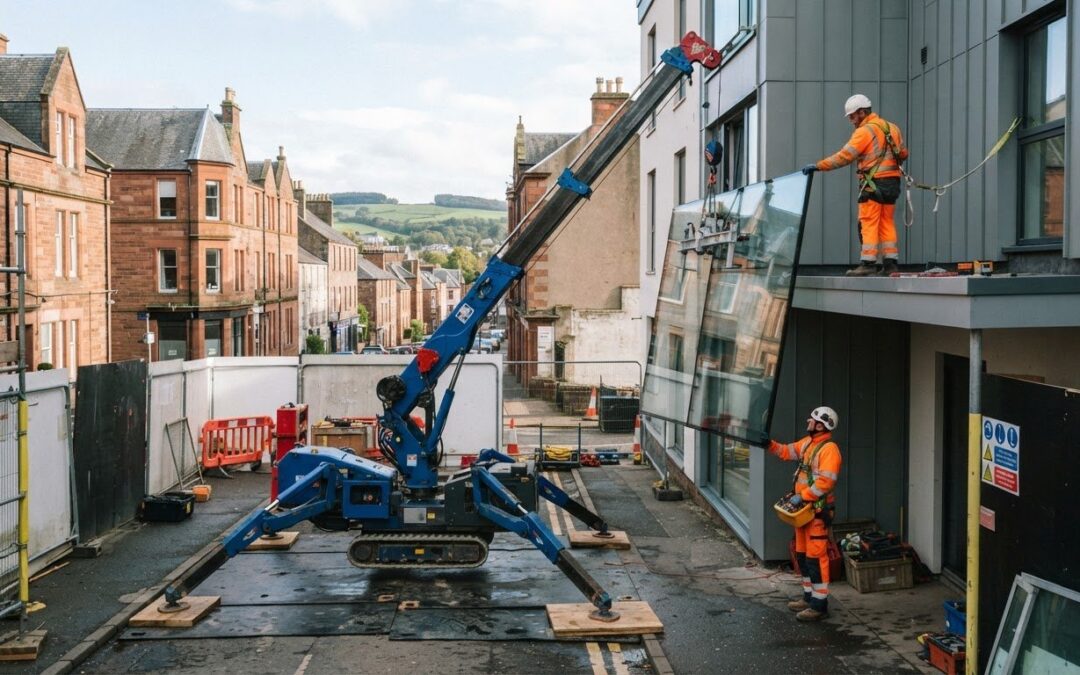
A spider crane is a compact lifting machine with deployable supports that help stabilise it during a lift. Its compact format may suit rooftop work where access or working space is restricted. But a small footprint alone doesn’t make a crane suitable. The load, lifting route, required reach and surface beneath the crane all matter.
Rooftop work can involve lifting glazing, placing plant equipment or raising construction materials. Assess each lift as a complete operation, rather than matching the load’s weight to a crane in isolation. The key considerations are access, load, reach and the supporting surface. The Lifting Operations and Lifting Equipment Regulations 1998 (LOLER) provide an overview of rules relevant to lifting equipment. The practical lift still needs to be assessed for the specific site.
What makes rooftop lifting different from a ground-level lift?
Height and working radius affect the crane’s available capacity. Parapets, roof edges, nearby buildings and overhead obstructions can restrict the route. A load may need to clear an obstacle or be positioned precisely into an opening. These details shape the lift plan and can determine which set-up position will work.
Lifting a load to a roof is different from moving the crane itself onto the roof. Moving the crane onto a roof involves a separate equipment movement, with its own access and structural considerations. In either case, assess the crane’s set-up surface separately from the roof receiving the load. A roof’s appearance or apparent sturdiness is not enough to establish its capacity.
Which Dumfries rooftop projects may suit a spider crane?
A spider crane may suit glazing installations, rooftop plant placement or construction materials when the access route and lift geometry work for the machine. Limited ground space or restricted urban access can make a larger crane’s approach or set-up footprint difficult to accommodate. Buildings and site conditions vary, so assess each lift on its own requirements.
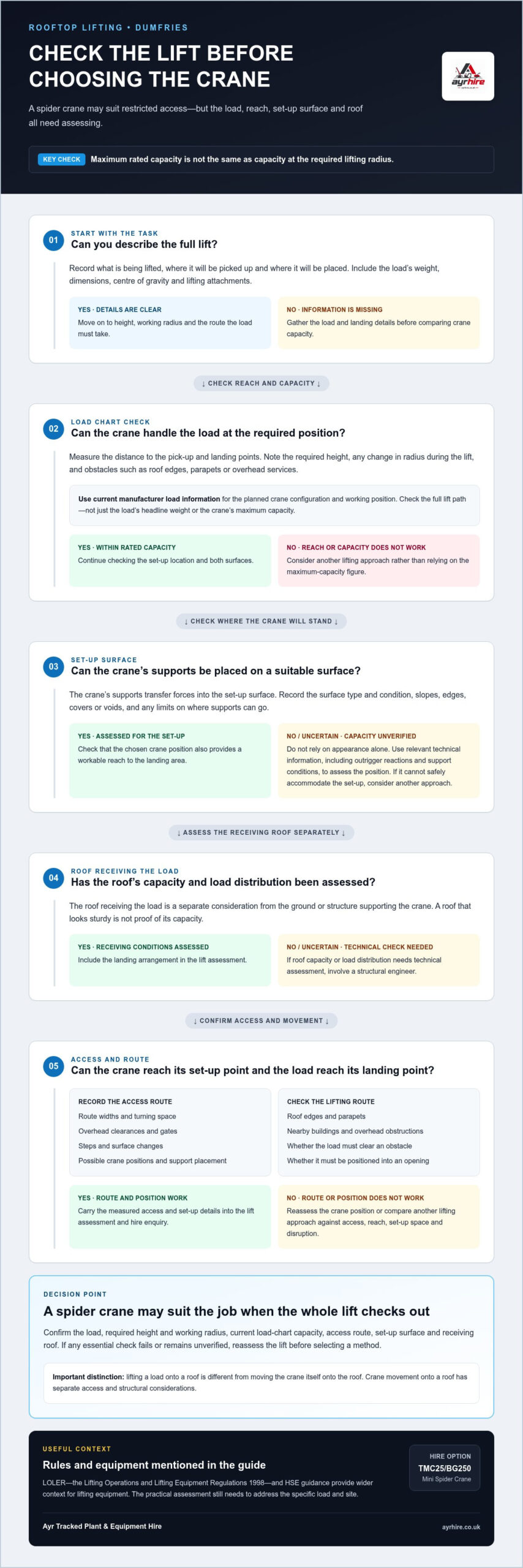
First define the task: what is being lifted, where it will be placed, and what obstacles lie between the set-up point and the roof. Record access restrictions and possible crane positions. Then compare the required height and radius with current load information. If the crane cannot reach the landing point within its rated capacity, or the supporting surface cannot safely accommodate the set-up, consider another lifting approach. This assessment helps determine whether the compact format suits the job.
Spider crane rooftop lifting: match capacity, reach and roof loading
A suitable lift depends on more than the load’s headline weight. The crane’s configuration, position and working radius all affect whether it can handle the load at the required point. Use current manufacturer load data for the planned set-up, rather than selecting a crane by its maximum capacity alone.
Maximum rated capacity is not the same as capacity at the required lifting radius. Available capacity can reduce as the load moves further from the crane. The load chart sets out limits for specific configurations and working positions. Check it against the full lift path, including the pick-up point and the place where the load will be landed.
How do load, height and working radius affect crane selection?
Build a clear description of the load before comparing crane capacity. Include its weight, dimensions and centre of gravity, as well as the lifting attachments. A wide or unevenly balanced item may need a different approach from a compact load of similar weight. Include attachments in the lift assessment.
Measure the distance from the crane’s planned position to the pick-up and landing points. Record the required height, any changes in radius during the lift, and obstacles such as roof edges, parapets or overhead services. Consult the manufacturer’s load chart for the crane’s planned configuration. The Health and Safety Executive (HSE) guidance on LOLER explains wider requirements for lifting equipment. The site-specific assessment must still address the actual load and lift.
How should roof and set-up surface conditions be assessed?
Assess two separate surfaces: the ground or structure supporting the crane, and the roof receiving the load. The crane’s supports transfer forces into its set-up surface. The roof must accommodate the load being placed there and how that load is distributed. A surface that looks strong is not proof of its capacity.
A competent project assessment should consider the roof structure and imposed loads. If the roof’s capacity or load distribution needs technical assessment, involve a structural engineer. For the crane position, record the surface type and condition, slopes, edges, covers or voids, and any restrictions that could affect support placement. Use relevant technical information, including the crane’s outrigger reactions and support conditions, to assess the set-up. Don’t assume that a firm-looking yard, pavement or slab can take the forces involved.
Access measurements complete the picture. Note route widths, turning space, overhead clearances, gates, steps and surface changes between the delivery point and set-up location. Mark possible crane positions and check whether each gives a workable reach to the landing area. These details make a hire enquiry more specific. For a Dumfries project, view Ayr Tracked Plant & Equipment Hire’s TMC25/BG250 Mini Spider Crane hire option while assembling the information for your lift.
Spider crane or another method for a Dumfries rooftop installation?
No single lifting method suits every rooftop. Compare the access footprint, reach, set-up needs, load path and likely disruption against the actual site. A method that looks straightforward on a drawing may prove impractical if the crane cannot get into position, the load cannot clear an obstacle or the supporting surface is unsuitable.
- Spider crane: Consider one where access or set-up space is restricted, then check the required lift against the crane’s load chart and site conditions.
- Conventional mobile crane: May suit a site with a suitable approach and clear set-up position, provided it can meet the reach and capacity requirements.
- Pick-and-carry equipment: Can move a load along a route within its operating limits, but still needs a workable path and suitable surface. It may help with rooftop transport after landing, rather than replace the crane needed to lift the load onto the roof.
- Manual handling: May be appropriate for manageable loads and routes where a risk assessment supports it. Don’t assume it is the simpler option for awkward or elevated lifts.
When is a spider crane the more practical option?
A spider crane is worth assessing where a narrow access route, limited ground space or nearby obstacles restrict other set-up choices. Its compact form can help, but does not prove it can complete the lift. The planned position must provide adequate reach, the load chart must support the load and configuration, and the surface beneath the crane needs assessment.
For context on compact lifting options, Ayr Tracked Plant & Equipment Hire’s guide to mini spider crane hire in North Ayrshire covers a related regional application. For a Dumfries site, compare the route in, available set-up locations and load path rather than choosing equipment on footprint alone.
When might another lifting approach fit better?
A conventional crane may suit a site that allows a suitable lifting position and provides a clear route to the landing point. Pick-and-carry equipment addresses movement along a route, not necessarily the initial lift to roof level. Scaffolding can provide access or support material handling, but it is not automatically a substitute for a crane. Manual handling depends on the load, route and risk assessment.
Use UK guidance and site-specific planning to inform the decision. The US-based OSHA standards for cranes and derricks in construction cover crane safety topics, but are not a substitute for applicable UK requirements. Choose the method that fits the assessed lift and site constraints, without avoidable conflicts between equipment, access and other work.
Once you’ve recorded the load, access route, possible set-up position and landing point, you’ll have a clearer basis for comparing methods. Discuss a Dumfries rooftop lift with Ayr Tracked Plant & Equipment Hire and share those details to focus your hire enquiry.
Prepare a Dumfries rooftop site for a spider crane lift
A clear pre-hire brief can reveal access issues and unanswered questions before equipment arrives. For a spider crane rooftop installation in Dumfries, gather details about the load, route in, set-up area and how the lifted item will be received. Dumfries sites differ, so include the building’s delivery arrangements and any coordination with other work on site.
What information should you gather before arranging hire?
Start with the item being lifted and its destination. Record its weight, dimensions and lifting points, along with the required height and working radius. Add photographs or drawings showing the access route, obstructions, possible set-up positions and roof landing area. Measured, clearly marked information makes the hire discussion more useful.
- Describe the load. Note its weight, size, shape, lifting points and any attachments forming part of the lift.
- Map the lift. Record the destination height, distance to the landing point and any changes in radius along the intended route.
- Measure access. Note route widths, turning space, gates, steps and overhead clearances. Include restrictions on delivery vehicle access or unloading.
- Document surfaces. Describe the type and condition of the ground at potential set-up locations, along with the roof area where the load will land. Flag slopes, edges, covers or other visible constraints.
- Share visual information. Provide site photographs or drawings from useful viewpoints. Mark the proposed crane position, obstacles, load pick-up point and receiving area.
- Set out logistics. Explain building access, delivery arrangements, relevant site contacts and timing constraints that could affect coordination with other work.
How can you prepare the rooftop and surrounding work area?
Use the information gathered to coordinate the working area with the project team. Keep the proposed route and set-up location clear for assessment, and agree how access and communication will be managed during the lift. Identify where the load will be received and how it will be moved after landing. Scaffolding or other site equipment can affect access, so include it in the site information.
Roof capacity and load distribution may need technical review, as may the ground or other surface supporting the crane. Arrange an appropriate assessment where required, including input from a structural engineer if roof capacity needs evaluating. Lift planning and compliance depend on the project and applicable requirements, so establish what applies to the specific work rather than relying on a generic checklist.
With the load, route, set-up and receiving arrangements documented, you can make a more informed hire enquiry and address practical gaps early. Share your Dumfries rooftop lift details with Ayr Hire to discuss the mini spider crane for your project.
Hire a spider crane for rooftop installations in Dumfries with Ayr Hire
Ayr Tracked Plant & Equipment Hire offers the TMC25/BG250 Mini Spider Crane for hire. For rooftop work, start with a clear description of the job, not an assumption about what a crane can lift. Share the load, destination, required lifting path, access and surface details. This gives the hire discussion a practical basis for considering the equipment against your project requirements.
What should a rooftop crane hire enquiry include?
For a spider crane for rooftop installations Dumfries enquiry, include the project location and explain what needs lifting, where it must go and how it needs to get there. Details about the load and route clarify the task. Site images and measurements can show constraints that are difficult to explain in a short description.
- Installation task: Describe what’s being installed and the intended landing position on the roof.
- Load information: Share the load’s weight, dimensions, lifting points and any attachments that will be used.
- Lift geometry: State the destination height, required working radius and planned route from pick-up to landing.
- Access details: Record route widths, turning space, overhead clearances, delivery access and any restrictions on bringing equipment to the set-up area.
- Surface information: Describe the ground or other surface at potential set-up positions, and flag known roof constraints or areas needing technical review.
- Supporting material: Include relevant photographs or drawings marked with access routes, possible set-up locations, obstacles and the receiving area.
- Site coordination: Give the Dumfries project location and any scheduling constraints or arrangements affecting building access and other site activity.
How can Ayr Tracked Plant & Equipment Hire support a more informed equipment decision?
These details keep the conversation focused on the specific lift and Ayr Tracked Plant & Equipment Hire’s TMC25/BG250 mini spider crane. They also help identify the information needed to discuss access, reach, load and site surfaces. Equipment suitability depends on project conditions, so describe those conditions rather than relying on general performance assumptions.
Keep the cost question separate from the technical brief. Ayr Tracked Plant & Equipment Hire’s Dumfries spider crane hire guide covers the rental-cost discussion, while its guide to specialist lifting solutions in Scotland provides wider equipment context. For a rooftop enquiry, start with a useful description of the lift and site.
Gather your load details, measurements, photographs and site arrangements, then plan your Dumfries spider crane hire enquiry with Ayr Tracked Plant & Equipment Hire. Clear information is a practical first step towards discussing equipment for your rooftop project.
Set your rooftop lift up for a confident next step
Bring the lifting stage into the wider project sequence. Consider when the load will arrive, who will receive it on the roof and what needs to be ready before the lift begins. Coordinating these details early can help the installation team avoid last-minute changes to access or timing.
If you’re considering a spider crane for rooftop installations in Dumfries, Ayr Hire’s TMC25/BG250 Mini Spider Crane is available for hire across Dumfries & Galloway. Share the site and load details you’ve prepared to focus the enquiry on your lift’s requirements.
A clear brief is a practical starting point. Plan your Dumfries rooftop spider crane hire enquiry with Ayr Hire to discuss your project.
Frequently Asked Questions
Can a spider crane be used for rooftop installations in Dumfries?
Yes. A spider crane can be used for rooftop installations in Dumfries when the access, lift requirements and site conditions suit the equipment. Ayr Hire hires the TMC25/BG250 Mini Spider Crane. For a spider crane for rooftop installations Dumfries enquiry, explain what you’re installing and how the load needs to reach its destination. Assess the specific project before deciding whether the crane is suitable.
How do I know what capacity spider crane I need for a rooftop lift?
Use the load chart for the crane’s planned configuration, not just its headline maximum capacity. Include the item and any lifting attachments in the load assessment. For example, a load may weigh the same throughout the lift but require a greater working radius to clear a parapet before reaching the roof. Share the pick-up and landing positions, then compare the required lift with the manufacturer’s current capacity data.
Will a spider crane fit through a doorway or narrow access route?
That depends on the crane’s transport dimensions and the narrowest point on the route. Measure clear widths and heights, including door frames, lintels and overhead services. Note tight turns, thresholds and changes in level. A route that looks wide enough on a plan may still restrict turning or manoeuvring. Compare your measurements with current equipment information, and include the delivery and unloading route as well as the final set-up position.
Can a rooftop support a spider crane or its outriggers?
Appearance alone cannot establish capacity. The crane’s set-up supports and the load being placed on the roof raise different structural questions. If a crane is to be positioned on a roof, its structure and support reactions need appropriate technical assessment. For a load being landed on the roof, assess the receiving area and how the load will be distributed. Building records and structural engineering input can help evaluate capacity where needed.
What information is needed to plan a rooftop spider crane lift?
Provide the project location, installation task, item details, destination and intended lifting route. Add marked-up photographs or drawings showing the access points, possible crane positions and landing area. Flag occupied entrances, shared access or other site activity that could affect coordination. Ayr Hire hires equipment across South Ayrshire, North Ayrshire, East Ayrshire, Dumfries & Galloway and Glasgow, so include the specific site location in your enquiry.
Is a spider crane better than a mobile crane for rooftop work?
Not in every case. A conventional mobile crane may suit a site with space for set-up and a clear route to the roof. A spider crane may suit more restricted access or working space, provided its capacity and set-up conditions meet the lift requirements. Compare the actual route, reach, set-up footprint and disruption to site activity. The right choice depends on the building and lifting task.