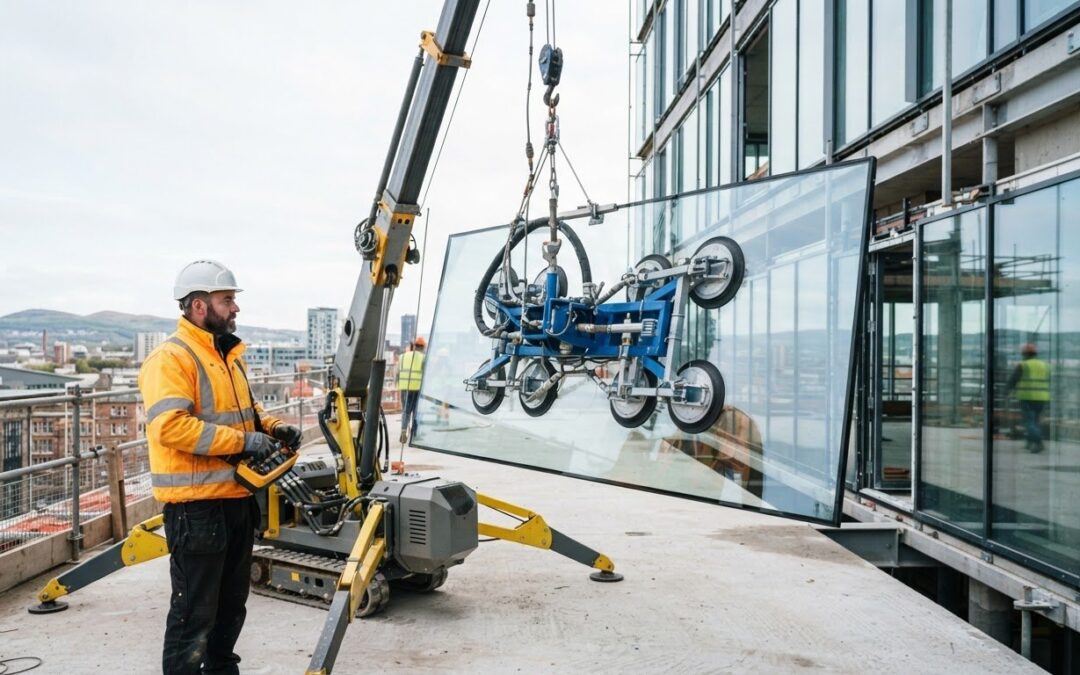
Choosing a vacuum lifter for non-porous materials takes more than checking the material name. Surface finish and condition, pad contact, load shape and weight, and the route the load must travel all affect whether suction can be maintained. These details matter when a load is valuable, fragile or awkward to control.
Non-porous surfaces can be suitable for vacuum lifting, but that does not confirm that a particular load can be lifted safely. The surface, equipment, site access and handling plan all need to be considered together. This guide explains what affects grip, how vacuum lifting compares with other methods, and what to check before moving a load. It also covers operator competence, pre-use checks and practical controls for a planned lift.
Ayr Tracked Plant & Equipment Hire provides vacuum lifter hire and mini spider crane hire for specialist lifting projects across South Ayrshire, North Ayrshire, East Ayrshire, Dumfries & Galloway and Glasgow. Setting out the load, surface and site conditions gives you a practical starting point for matching equipment to the job.
Key Takeaways
- Learn why a smooth, non-porous surface can support suction, and which surface conditions may still affect grip.
- Use load shape, weight, site conditions and lift geometry to assess whether a vacuum lifter for non-porous materials suits your job.
- Compare vacuum lifting with manual handling and crane-supported lifting, and understand why magnets aren’t suitable for every material.
- Follow a practical pre-lift sequence, including checks of the equipment, route and landing position.
- Prepare the details of your load and site to make vacuum lifter hire in Ayrshire or Glasgow a more informed next step.
Vacuum lifters for non-porous materials: what they do and where they fit
A vacuum lifter uses suction pads to grip a compatible load so it can be raised and moved under controlled conditions. Unlike manual carrying, it supports the load through lifting equipment rather than relying on people to hold its weight. Unlike a magnetic lifter, it does not depend on the load being magnetic. That makes vacuum lifting relevant to glass, provided the surface, equipment and planned lift are suitable.
A vacuum lifter for non-porous materials may be used to position glazing or move compatible panels. However, “non-porous” is only one part of the assessment. The term does not confirm that a particular surface will form a reliable seal, or that the load can be handled safely in the planned way.
Which non-porous materials may suit vacuum lifting?
Glass and structural glazing are familiar examples because their surfaces can provide a contact area for suction pads. Smooth sheet materials and panels may also be candidates, depending on their construction and condition. These are examples, not a guarantee of compatibility: the lifter’s design must suit the specific load.
Look beyond the material name. A smooth finish may help pads make contact, while texture, unevenness, dust, moisture, coatings, joints or surface damage can interfere with the seal. Even a material that appears non-porous may have features that make its surface unsuitable for a particular pad arrangement. Assess the actual face that will meet the pads, not just a sample or product description.
How does suction grip a load?
A pad or seal sits against the material and forms a closed contact area. The lifter removes air from that space, creating a pressure difference between the area under the pad and the surrounding air. This difference produces the holding force that allows the equipment to support the load. For a simple explanation of the underlying principle, see Suction Cup Principles.
The pads need suitable contact with the surface for the vacuum to hold. If air leaks into the sealed area, grip may be reduced. The number, position and arrangement of pads vary by lifter design, affecting how the load is supported and controlled. Follow the equipment’s operating instructions for permitted materials, setup and use. Don’t assume that a lifter suitable for one pane or panel will suit another with a different size, finish or shape.
In practice, suitability depends on the match between surface, load and equipment, not on the word “non-porous” alone. Assess both the material face and the handling task before selecting lifting equipment.
What affects a vacuum lifter’s grip on a non-porous surface?
A secure lift depends on more than whether a material is non-porous. Assess four connected factors: the surface where the pads will sit, the load’s weight and balance, the site environment, and the movement needed to place it. Surface suitability and lifting capacity are separate questions. A surface may allow a seal, but the load and lifter must still be suitable for one another.
Surface finish, condition and contact area
A flat, clean area gives pads a better chance of making consistent contact than a textured, uneven or damaged one. Dust can create a gap, while moisture or a coating may affect pad contact. Seams, grooves, curves and edges can interrupt the seal, especially if they cross an intended pad position. Check the full contact area across the load instead of relying on its material label or the appearance of a different part of the surface.
Load weight, shape and centre of gravity
Weight matters, but it does not describe how a suspended load will behave. A long panel may flex or extend beyond the pad arrangement; an off-centre load may tilt or shift as it rises. Consider dimensions, orientation, balance and centre of gravity together. Compare the complete load with the lifter’s instructions and rated capacity. Capacity needs a competent assessment, not an estimate based on weight alone.
Site conditions and lift movement
Restricted access can affect where the lifter can be positioned and whether the load has a clear route. Outdoor conditions may also influence handling, particularly if wind moves a large panel. Plan the full movement: the initial lift, travel, any change of orientation and final placement. Tilting, acceleration or an awkward landing can place different demands on the load and equipment. Avoid sudden movements and follow the operating instructions.
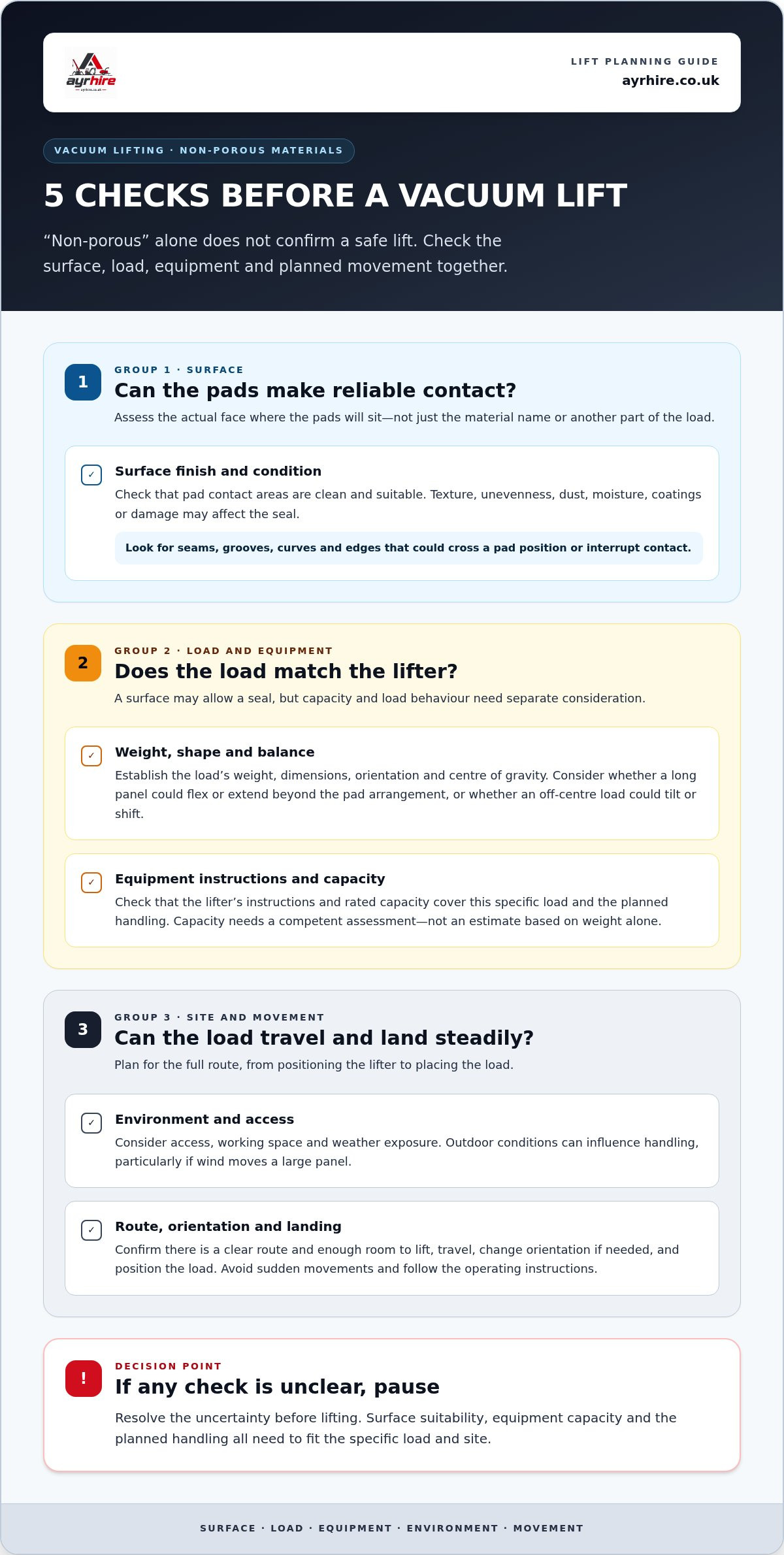
Use this checklist before treating a vacuum lifter for non-porous materials as suitable:
- Surface: Are the pad contact areas clean and free from damage, texture, joints or features that could interrupt the seal?
- Load: Are its weight, dimensions, balance and intended orientation understood?
- Equipment: Do its instructions and capacity cover the specific load and planned handling?
- Environment: Have access, working space and weather exposure been considered?
- Movement: Is there a clear route, with enough room to lift, travel and position the load steadily?
If any answer is unclear, pause and resolve it before lifting. Ayr Hire provides vacuum lifter hire for planned projects. Include the material, load details, access and intended route when arranging equipment, so the job can be considered in context.
Vacuum lifter or another lifting method: how to compare options
No single lifting method suits every load. Compare the material and surface, load size and balance, access to the work area, and the control needed during positioning. A vacuum lifter for non-porous materials may suit a compatible surface that needs careful handling, but the right choice depends on the whole lift plan, not a universal ranking of equipment.
| Method | May suit | Practical strengths and constraints |
|---|---|---|
| Vacuum lifting | Compatible surfaces and loads that need controlled handling or positioning. | Can grip suitable non-porous surfaces without relying on people to hold the load. Surface contact, equipment suitability and the planned movement all matter. |
| Manual handling | Loads that people can handle safely through the full task. | May avoid bringing lifting machinery into a restricted space, but load weight, dimensions, grip and carrying route affect whether it is practical. Don’t assume a load is manageable just because it can be lifted briefly. |
| Crane-supported lifting | Tasks where the load path, reach or positioning calls for lifting support. | A crane can form part of a wider plan, including supporting a vacuum lifter. Site access, set-up space and the route to the landing point need consideration. |
| Magnetic lifting | Materials that are compatible with the magnetic lifting equipment. | It depends on the material being magnetic, so it isn’t a general alternative for glass or other non-magnetic loads. |
When vacuum lifting may be the practical option
Consider vacuum lifting when the load has a suitable contact surface and needs to be held steady during movement or installation. Positioning glazing, for example, involves planning both how the load will be supported and how it will be brought into place. The equipment and arrangement must suit the actual load and task. Don’t assume a particular lifter can handle a specific pane or installation without checking its instructions.
When to consider a crane or another method
Consider a crane or another method if access, reach or the planned load path makes direct handling difficult. A crane may support part of the operation, such as moving lifting equipment and its load into position. This does not remove the need to assess the surface, load and handling controls. Ayr Hire’s specialist lifting solutions in Scotland include information on vacuum lifter and mini spider crane hire.
Compare the options against the same plan: what is being lifted, where it starts, the route it must follow, and exactly where it needs to land. Then consider the equipment instructions, site constraints and the level of control required throughout. This is a more useful basis for choosing than material type or load weight alone.
Plan a safe vacuum lift: checks before moving non-porous materials
A safe lift starts before the pads touch the load. Plan the whole operation, from identifying the material and checking the contact area to moving the load and releasing it at its destination. A vacuum lifter for non-porous materials still needs a suitable load, correctly used equipment and a clear route.
Prepare the load and work area
Check the load itself, not just its description. Confirm its dimensions, condition and intended lifting orientation, then identify where the pads will contact it. The contact area should meet the equipment instructions. Clear the movement route and prepare a stable landing place before lifting begins. Allow enough space to approach, turn or align the load without forcing it past an obstruction.
Check equipment, people and lift controls
Use the supplied operating instructions and follow the specified pre-use inspection process. Make sure the operator is competent to use the equipment and understands its controls and limitations. Before lifting, agree who is directing the movement, how instructions will be given and what everyone should do if the lift needs to stop.
Manage placement and changing conditions
Plan how the load will be approached, aligned and placed before raising it. Keep people clear of the load’s travel path and establish an exclusion area suited to the operation. If the surface, grip, route or site conditions change, stop and reassess rather than continuing with the original plan.
Use this sequence to organise the checks:
- Identify the load. Confirm its material, dimensions, condition and intended orientation. Establish the load details needed to assess whether the equipment is suitable.
- Assess the contact area. Check that the pad positions meet the equipment’s requirements. Prepare the surface as directed and account for features that could affect contact.
- Prepare the route and landing. Clear obstacles, consider access and turning space, and make sure the destination is stable and ready to receive the load.
- Inspect the equipment. Follow the manufacturer’s instructions and pre-use checks. Check the pads, controls and any warning devices as directed, and don’t use equipment if a check raises concern.
- Brief the people involved. Confirm the operator, agree signals and communication, and make sure everyone understands the route, their position and how to pause the operation.
- Move with control. Follow the equipment instructions throughout the lift. Avoid abrupt movements, keep to the planned route and monitor the load and equipment as it travels.
- Place and release deliberately. Align the load with its destination, settle it securely, then release the vacuum only in accordance with the operating instructions.
Surface, load and route checks belong in one lift plan because a suitable seal alone can’t make an unsuitable load or an obstructed journey safe. Ayr Hire provides vacuum lifter hire for projects in Ayrshire and Glasgow. Plan the material, load details, access and intended placement before arranging equipment.
Vacuum lifter hire in Ayrshire and Glasgow: turn the lift plan into action
After assessing the surface, load and route, the next step is to match the equipment to the job. A clear project brief gives the hire decision useful context. It is more helpful than relying on a material name or a general description such as “glass panel”.
What to include in a project brief
Describe the material and the condition of the face where the pads are expected to sit. Include dimensions and estimated weight if known, along with the load’s orientation and any features that may affect handling. If the weight is uncertain, say so rather than presenting an estimate as confirmed. Photos or a simple sketch can help explain the load and its intended position.
- Material and surface: Note the material, finish and visible condition, including any joints, curves or damage at the contact area.
- Load details: Give dimensions, estimated weight and shape, plus any information about balance or the intended lifting orientation.
- Access: Describe entry points, working space, restrictions and any obstacles between the load and its destination.
- Route and placement: Explain where the load starts, how it needs to travel and exactly where it must be positioned.
- Site context: Mention whether the work is indoors or outdoors and any conditions that could affect access or movement.
This information helps distinguish a straightforward move from a lift involving awkward access or careful alignment. It also keeps surface compatibility and load suitability in view as separate parts of the equipment decision.
How local specialist hire supports project planning
Vacuum lifter hire is useful when a project needs specialist lifting equipment and the load has a surface suitable for the equipment being used. Ayr Hire provides vacuum lifter hire across South Ayrshire, North Ayrshire, East Ayrshire, Dumfries & Galloway and Glasgow. A useful brief connects the hire to the actual material, load, site access and intended positioning, so planning starts with the task rather than a generic equipment list.
Some projects need more than one part of a lifting plan considered. Where access, reach or load positioning also calls for crane support, mini spider crane hire in North Ayrshire may form part of the wider plan. The right arrangement depends on the details of the job.
Bring together the surface information, load details, route and landing position before arranging equipment. This gives the lift a clear starting point and keeps the selection grounded in the work to be done.
Ready to plan your project? Discuss vacuum lifter hire with Ayr Hire and outline the load and site conditions.
Make the next lift a planned one
The right equipment is the equipment that fits the real task, not simply the material name. Treat the lift as part of the wider job: a considered plan helps the team prepare, understand how the load will be handled and reduce the likelihood of last-minute changes. If the suitability of a vacuum lifter for non-porous materials is unclear, use the details of your specific load and site to guide the next decision.
Bring the project information together before arranging equipment. Include what the load is, how it needs to move and any practical constraints that could affect access or positioning. This gives the hire discussion a clear focus and connects the equipment to the work ahead.
Ayr Hire provides vacuum lifter hire as part of its specialist lifting and equipment-hire services. Discuss vacuum lifter hire for your project and share the load and site details to plan your next step.
Frequently Asked Questions
Can a vacuum lifter handle every non-porous material?
No. Non-porous describes whether a material absorbs liquid or air, not whether a particular lifter can grip it safely. Polished stone, coated panels and plastic sheets can differ in finish, rigidity and surface condition. Check the specific material against the equipment instructions, including any limits on surface type. If the surface or load is unusual, include clear details in the lift assessment rather than assuming it will behave like glass.
Is glass suitable for vacuum lifting?
Glass is commonly handled with vacuum lifting equipment, but suitability depends on the pane and the lifting arrangement. A large pane with a coating, patterned finish or edge features, for example, may need a different assessment from a small, flat sheet. Consider the glass’s dimensions, condition and intended orientation, as well as how it will be supported during movement. Use only equipment intended for the specific glass-handling task.
Can vacuum lifters lift wet or dusty materials?
Don’t assume they can. Water, dust or residue at the pad contact points may interfere with a seal, and some surface treatments can leave a film even when a panel looks clean. Prepare the contact area only as directed by the equipment instructions. If rain, condensation or site dust appears after preparation, pause and reassess before lifting. The lifter’s instructions determine whether the surface condition is acceptable.
How do I know what capacity vacuum lifter I need?
Start with the load’s confirmed weight, then consider its dimensions, shape, centre of gravity and intended orientation. The lifter’s stated capacity must apply to the way the load will actually be handled, not just its total weight in isolation. Check the equipment documentation for relevant limitations and have the selection assessed by a competent person. Don’t choose by estimating from a similar-looking load or adding an arbitrary margin.
Are vacuum lifters safer than manual handling?
Not automatically. A vacuum lifter can reduce the need for people to support a compatible load by hand, but it introduces equipment, surface and movement considerations of its own. Manual handling may be appropriate for a load that people can manage safely throughout the task; awkward dimensions or a difficult route can change that assessment. Compare the risks of the complete operation and use a planned method with competent people.
When should I choose a vacuum lifter instead of a magnet?
Choose between them according to the material and task. Magnetic lifting relies on a material that the equipment can hold magnetically, so it isn’t a general solution for glass or other non-magnetic surfaces. Vacuum lifting may be suitable where the load has a compatible surface and the equipment is designed for the application. For either method, follow the equipment instructions and assess the full load path.
What information should I provide when arranging vacuum lifter hire?
Describe the material, visible surface finish, load dimensions and estimated weight. Explain where the lift starts, the route, access restrictions and the required landing position. Photos or a sketch can make unusual shapes and tight working areas easier to understand. Ayr Hire provides vacuum lifter hire for projects in South Ayrshire, North Ayrshire, East Ayrshire, Dumfries & Galloway and Glasgow. Share the job details when arranging hire so the lift plan reflects the actual work.