The highest wall isn’t the only thing that should decide your access equipment. Hiring a trailer cherry picker for exterior painting Glasgow homes and businesses can provide flexible access, but the building layout, available set-up space and order of the painting work all matter.
It’s understandable to weigh up a cherry picker against ladders or scaffolding. Ladders may suit brief, limited tasks, while scaffolding can work well when a team needs access for longer. For shorter painting jobs, a trailer-mounted cherry picker may be a practical way to move between work areas without leaving access equipment in place for the whole project.
This guide will help you assess whether a trailer cherry picker suits your exterior, plan the site and painting sequence, and prepare for hire. We’ll look at building height and reach, ground and set-up conditions, and how the equipment compares with ladders and scaffolding. Ayr Tracked Plant & Equipment Hire provides trailer-mounted cherry picker hire in Glasgow, with daily or weekly hire terms to suit the work schedule.
Key Takeaways
- Match the platform’s working height and horizontal reach to each part of the façade, then assess ground conditions, set-up space and repositioning needs.
- Use the selected machine’s information to understand its capacity and operating limits before planning the work.
- Plan the painting sequence around access routes, pedestrian and vehicle movement, overhead hazards and changing weather.
- For a trailer cherry picker for exterior painting Glasgow projects, prepare the site location, work areas, access route, ground conditions and expected hire duration.
- Ayr Hire provides trailer-mounted cherry picker hire in Glasgow, with daily or weekly hire terms to fit the project schedule.
Exterior painting in Glasgow: when a trailer cherry picker can help
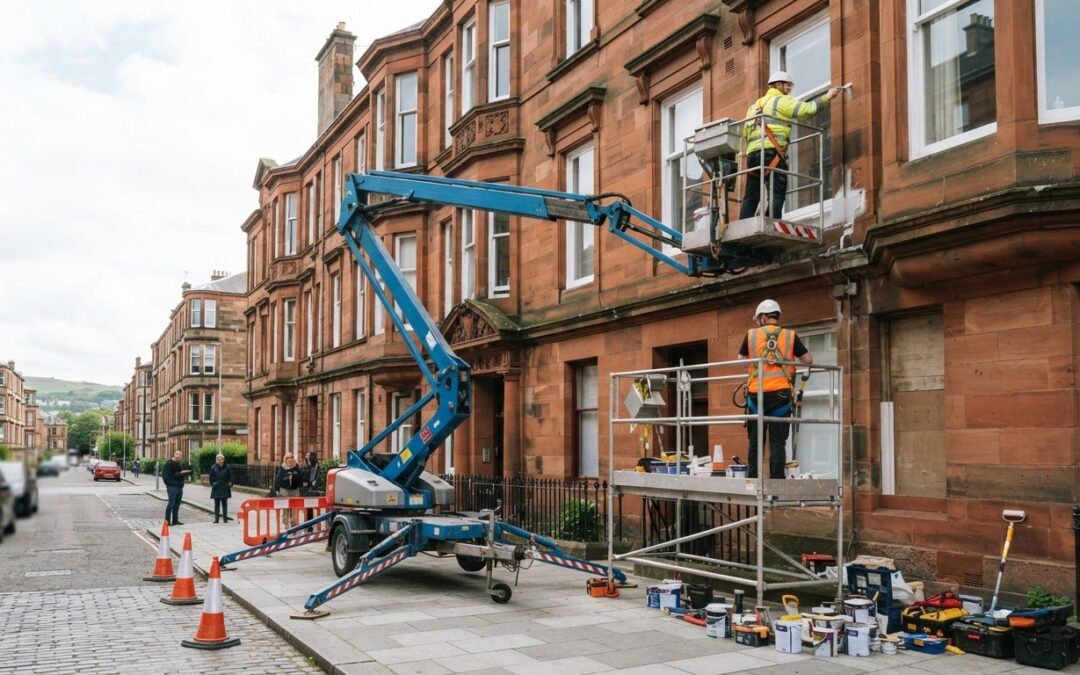
A trailer-mounted cherry picker is a mobile access platform that can raise a worker to elevated areas of a building. For exterior painting, it can provide a working position at upper-storey walls, gables and eaves, helping painters reach sections of a façade without relying on a ladder as their main work position. For a general overview of this type of aerial work platform, see the different forms and uses of powered access.
The platform can be repositioned as the work moves around the building. This may help with a targeted repair or repaint where only a few areas need attention, or a larger job divided into sections. Its usefulness depends on how easily it can be set up at each location. A narrow side passage, sloping or unsuitable ground, parked vehicles, boundary walls and overhead obstacles can all affect access and positioning.
Suitability comes down to reach, access, ground and work sequence. Assess those factors together rather than choosing equipment by building height alone. The machine’s stated reach and operating limits must suit the task, and the ground and surrounding layout must allow it to be positioned and used as intended.
Which exterior painting jobs may benefit from powered access?
Powered access may suit work on upper-storey walls, gables, eaves and other elevated surfaces that are difficult to approach from the ground. A small, one-off repair might need just one set-up position; repainting a broad façade may involve several work areas and repeated moves. Consider how much time the painter will spend at each point and whether the platform can be repositioned without disrupting the sequence. This helps distinguish a focused access requirement from a job needing prolonged, continuous access.
What should you assess before choosing a trailer-mounted platform?
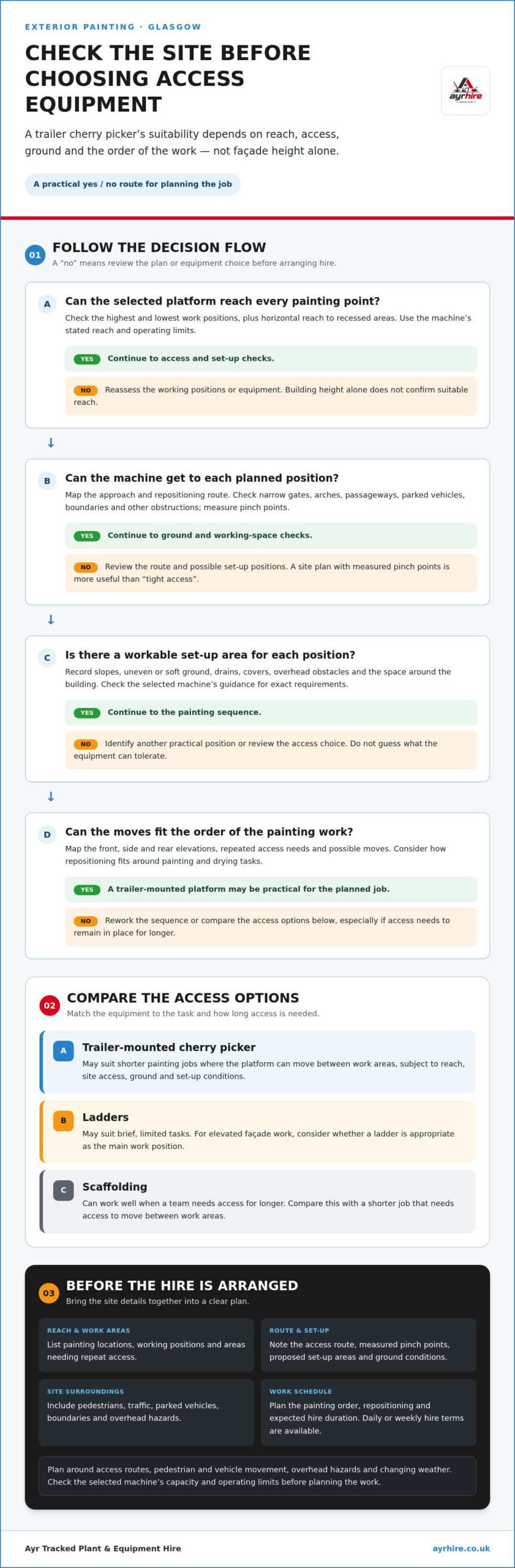
Walk the site and map the painting locations before arranging hire. Note the required reach, sections that need repeat access, and a suitable approach and set-up route. Check the surface where the equipment is expected to stand, along with the space available around the building. Record nearby pedestrians, traffic, boundaries and obstacles, including anything overhead. These details help identify practical constraints early and form a clear site plan.
For a trailer cherry picker for exterior painting Glasgow project, think through the whole working route, not just the first position. If the platform needs to move between the front, side and rear elevations, consider where it can be positioned at each stage and how those moves fit around painting and drying tasks. This site-specific assessment helps you decide whether a trailer-mounted platform is workable before hire.
Choosing the Right Trailer Cherry Picker for Glasgow Sites
A useful equipment choice starts with the job’s working positions, not a headline height. A façade may be tall, but the practical challenge could be reaching a recessed section, setting up on a restricted frontage or moving between separate elevations. Choose access equipment based on the whole site assessment, not façade height alone.
Use this comparison to organise your assessment. It isn’t a substitute for the selected machine’s operating information. Check its stated capacity and limits against the work before planning the set-up.
| Factor | What to assess | Why it matters |
|---|---|---|
| Work height | Identify the highest and lowest painting points. | The platform must suit the working positions, not just the building’s overall height. |
| Horizontal reach | Note areas set back from a possible set-up position. | A wall, boundary or planted strip may affect how directly the platform can approach the façade. |
| Ground | Record slopes, soft areas, covers and changes in surface. | Set-up conditions influence where equipment can be positioned. Use the machine guidance for exact requirements. |
| Set-up space | Measure the intended working area and access pinch points. | A suitable position must be reachable and leave space to operate as instructed. |
| Repositioning | Map the order of painting areas and possible moves. | Frequent moves or blocked routes can affect the work sequence and practical choice. |
Reach, set-up space and access route
Mark each painting area on a simple site plan, then identify where the machine could be positioned to reach it. Measure narrow gates, arches and passageways, including any clearance restrictions along the route. Don’t assume equipment will fit because a person or car can pass through. Account for parked vehicles, street layout, boundary features and other obstructions that could block delivery, set-up or repositioning.
Consider more than the first position. If the work spans the front and side elevations, show how the machine could move between them and whether the route will remain clear throughout the job. A site plan with measured pinch points gives a more useful picture than a broad description such as “tight access”.
Ground conditions and work-area layout
Look closely at each proposed set-up area. Sloping or uneven surfaces, soft ground, drains, covers and limited working space may all affect which positions are practical. Record what you can observe, but don’t guess what the equipment can tolerate. The selected machine’s information sets out its capacity and operating limits. Use that guidance to distinguish known requirements from assumptions.
People and vehicles need consideration too. Note entrances, footpaths and traffic near the work area, then include them in site planning. HSE guidance on the Work at Height Regulations 2005 provides a reference for planning work at height. For a trailer cherry picker for exterior painting Glasgow project, these details help shape a practical hire plan. Ayr Hire provides trailer-mounted cherry picker hire for Glasgow projects, with daily or weekly hire terms.
Cherry picker, scaffolding or ladders for exterior painting?
The right access method depends on how long the work will take, how many areas need painting and how often the work position must change. A mobile platform may suit a job spread across separate sections, while scaffolding can make sense when a team needs ongoing access along a large façade. Site layout matters too: space to position equipment, access routes and obstacles can affect what is practical.
Compare the methods against your painting plan:
- Trailer-mounted cherry picker: Consider it for targeted work or separate areas where the platform can be repositioned between tasks. Suitability depends on reach, set-up conditions and the route between positions.
- Scaffolding: Consider it for extensive, continuous façade work, particularly where several areas need ongoing access as the team progresses across the building.
- Ladders: Treat these cautiously. They aren’t a substitute for a job-specific access and safety assessment, and shouldn’t be chosen simply because they’re familiar or easy to position.
When a cherry picker may suit the painting plan
A mobile platform may fit a sequence that moves between separated work areas, such as a gable, a section of upper wall and eaves elsewhere on the building. It brings the painter and necessary tools to an elevated position, then can be repositioned for the next area if the route and set-up locations allow. Plan each move in advance. Don’t assume it will reduce completion time or cost, as that depends on the job.
When another access method may fit better
For a broad façade requiring continuous access over an extended period, scaffolding may better suit the work pattern. It can provide access along a longer section without relying on repeated platform moves. Ladders may be appropriate only for tasks where the risk and duration have been assessed. Consult current UK safety guidance rather than treating ladders as the default for exterior painting. The International Powered Access Federation (IPAF) also provides information on powered access and its safe use.
Before deciding, compare the expected work duration, number of positions, repositioning demands and site constraints. A short, focused repaint with clear set-up positions presents a different access problem from painting an entire façade where the team needs sustained access along its length. The specialist plant hire guide for Ayrshire offers wider context on matching equipment to a task.
For a trailer cherry picker for exterior painting Glasgow project, base the choice on the complete work sequence and site conditions, not a general claim that one method is always safer, quicker or more economical. A clear comparison helps you identify which approach fits the painting task before planning the hire.
Plan the exterior painting job before the cherry picker arrives
Preparation helps the painting team make considered use of the hire period and keep site activity organised. For a trailer cherry picker for exterior painting Glasgow project, plan the painting sequence and access positions together. Include the people, vehicles, materials and weather conditions that could affect the work, not just the areas to be painted.
A practical pre-hire checklist for painters
Start with a marked-up plan of the elevations, painting areas and intended work order. Note where the platform is expected to be positioned and how the team will move between tasks. Then review the access route, set-up area, ground and other site activity. This provides a practical basis for coordinating the hire period with the job.
- Define the scope. List the surfaces to prepare and paint, including any repairs, and identify areas needing repeat access. Agree the order with the painting team so access moves don’t disrupt the sequence.
- Plan arrival and positioning. Record the approach route and intended set-up areas. Consider delivery access, gates, parked vehicles and street activity, then plan how the work area will be managed while equipment is on site.
- Review site conditions. Look at the surface at each proposed position and note slopes, soft ground, covers or other concerns. Use the selected machine’s instructions for its exact operating requirements rather than relying on assumptions.
- Organise people and vehicles. Identify pedestrian routes, entrances and vehicle movements near the work. Include clear arrangements for keeping people away from active work areas and managing access around the building.
- Prepare materials and protection. Plan where paint, tools and other materials will be kept so they don’t obstruct routes or set-up areas. Protect nearby windows, paving, planting, fixtures and equipment from drips or splashes using suitable materials for the task.
- Coordinate the hire period. Allow for the planned work sequence and preparation, then arrange daily or weekly hire terms that fit the schedule. Build in time to review site conditions before work starts.
Working safely around elevated exterior painting
Before work begins, brief the team on the work area, access arrangements, pedestrian management and nearby hazards. Ensure the person operating the equipment is competent and familiar with the selected machine’s instructions. Follow current HSE guidance and the machine information for operating requirements. General advice doesn’t replace the specific instructions that apply.
Check the weather on the day and throughout the planned work. Wind, rain or changing conditions may affect whether painting or equipment use can proceed, so follow the machine instructions and the paint manufacturer’s guidance. If conditions change, reassess the plan before continuing. Keep the work sequence flexible enough to respond safely rather than pressing on to meet a pre-set schedule.
A clear scope, site plan and hire schedule give the project a practical starting point. Ayr Hire provides trailer-mounted cherry picker hire for planned exterior painting access in Glasgow, with daily or weekly hire terms to suit the work period.
Arrange trailer-mounted cherry picker hire for exterior painting in Glasgow
A useful hire plan starts with a clear picture of the building and the painting work. Ayr Hire provides trailer-mounted cherry picker hire for projects in Glasgow, with flexible daily or weekly hire terms. Sharing the practical site details helps align the hire with the work sequence, rather than treating access as a separate decision.
Before arranging hire, bring together the location, areas to be painted, intended access positions and expected hire duration. Note anything that could affect the route to the site or where equipment can be positioned. A concise, accurate summary makes planning more straightforward.
What to include when arranging local hire
Describe the building and the task, such as painting upper-storey walls, eaves or selected areas of a façade. Outline the planned work sequence and where access will be needed. Include the site address and expected duration so the hire period can be considered alongside the painting schedule.
- Work areas: List the elevations and sections that need access, including any that require repeat visits during the job.
- Access route: Note gates, narrow passages, parked vehicles or street constraints that could affect getting equipment to the site.
- Set-up and ground: Describe intended positions and any slopes, soft surfaces, covers or limited space around the building.
- Site activity: Flag pedestrian routes, vehicle movements, boundaries and overhead obstacles that may shape delivery or positioning.
- Schedule: Give the expected work period and explain how the access positions fit the painting sequence.
These details keep planning focused on how the job will work in practice. If the plan changes, for example when another elevation is added, update the work-area and duration information before finalising the hire arrangements.
Choose a practical next step for your Glasgow project
Use your site notes to connect the access requirement with the hire plan: where the work is, what needs painting, how the equipment can reach the site, where it can be set up and how long access is needed. That gives you a grounded starting point for a trailer cherry picker for exterior painting Glasgow project, without relying on height alone to decide what will suit.
Ayr Hire supports planned exterior painting access in Glasgow through trailer-mounted cherry picker hire, with daily or weekly hire terms. Find out about trailer-mounted cherry picker hire for your project.
Turn your access plan into a workable painting schedule
Before setting dates, align the access plan with the painter’s sequence. Decide which areas need attention first, when surface preparation will be complete and how changing weather could affect the day’s work. This gives the hire period a clear purpose and helps avoid arranging access before the site is ready.
For a trailer cherry picker for exterior painting Glasgow project, bring the building details, work locations and access notes together. A practical plan makes it easier to move from assessing the site to arranging equipment that fits the job.
Ayr Hire provides trailer-mounted cherry picker hire for Glasgow projects, as well as projects in South Ayrshire, North Ayrshire, East Ayrshire and Dumfries & Galloway. Arrange trailer-mounted cherry picker hire for your project.
Frequently Asked Questions
Can I use a trailer-mounted cherry picker for painting a house exterior?
Yes, it may suit elevated exterior painting if the selected machine can reach the work areas and the site allows suitable access and set-up. Assess the building, approach route, ground and painting sequence before arranging hire. A small repair above a conservatory may need a different access plan from repainting several elevations. The right option depends on the specific job, not simply the height of the house.
Is a cherry picker better than scaffolding for exterior painting?
Neither is automatically better. A cherry picker may suit separate work areas that require the platform to be repositioned, while scaffolding may suit continuous painting across a large façade. Compare the expected duration, work pattern, reach and site restrictions. Repeated work along one long wall may call for a different approach from touching up isolated sections around a property.
Do I need training to operate a cherry picker for painting?
Operators need appropriate competence and familiarisation with the specific machine and task. Hiring equipment alone doesn’t prepare someone to operate it. Plan who will use the platform, allow time to understand its controls and instructions, and brief the team on the work area. Check the selected machine’s operating guidance and current UK safety information before work starts, rather than relying on experience with a different model.
Can a trailer-mounted cherry picker be used on any Glasgow site?
No. A site may not suit the equipment if the access route is restricted, the set-up area is too limited, or ground conditions and obstacles prevent suitable positioning. Check the route from the entrance to each planned work position, including tight turns, gates and street restrictions. The selected machine’s instructions and operating limits should inform the plan for that location.
How long should I hire a cherry picker for an exterior painting job?
Base the hire period on the preparation, work sequence, number of access positions and likely site conditions. Allow for set-up, moves between work areas and finishing tasks, rather than counting painting time alone. Ayr Hire offers flexible daily or weekly hire terms. Plan the schedule around the actual scope, so access matches the work rather than an assumed standard duration.
How can I protect the building and equipment from paint during the job?
Identify surfaces and items at risk before painting begins, such as windows, paving, vehicles, paths and nearby equipment. Use suitable coverings and keep paint and tools organised so they don’t obstruct access or movement around the site. Follow the equipment instructions, and remove coverings carefully to avoid transferring wet paint onto clean surfaces.
What information should I prepare before arranging cherry picker hire in Glasgow?
Prepare the site location, building details, painting areas, access route, ground conditions, set-up space and intended hire period. Note obstacles and nearby activity, such as pedestrian entrances or regular vehicle movements, that may affect the work plan. Ayr Hire serves Glasgow as well as South Ayrshire, North Ayrshire, East Ayrshire and Dumfries & Galloway, so clear location and project details help frame the hire requirement.