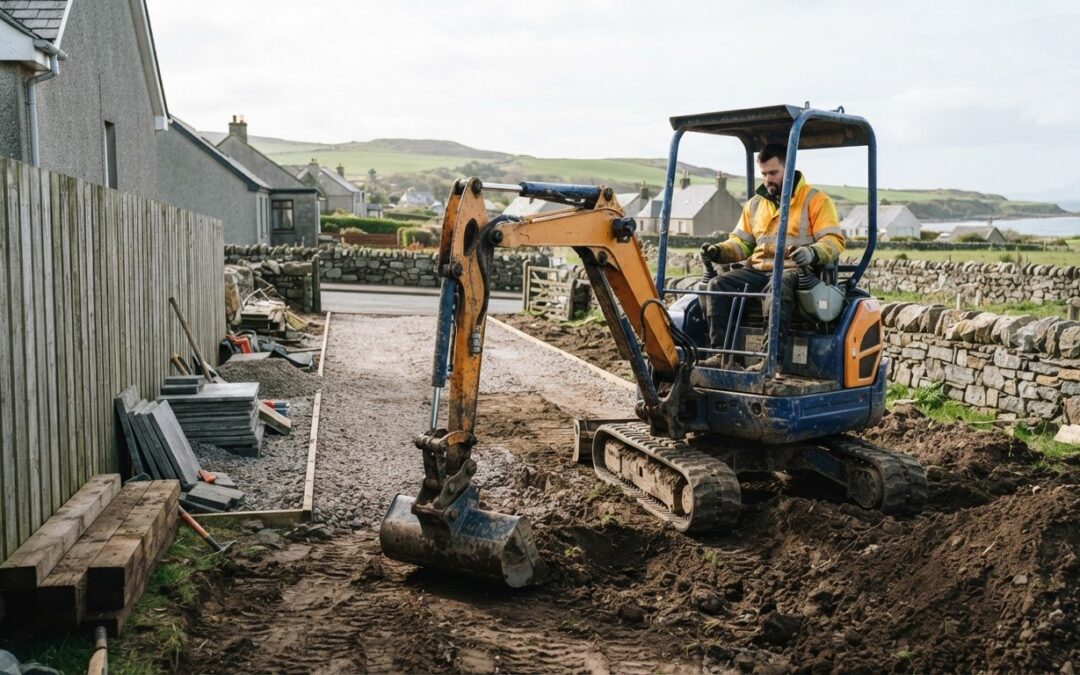
The right mini digger needs to fit the route to your work area as well as the job itself. If you’re searching for compact excavator hire near me, assess access, digging requirements and site preparation before choosing a machine.
It can be difficult to judge whether a compact excavator can reach a garden, driveway or restricted site, or suit the groundworks you have planned. Ayr Tracked Plant & Equipment Hire offers Kubota mini excavators on flexible daily or weekly hire terms across South Ayrshire, North Ayrshire, East Ayrshire, Dumfries & Galloway and Glasgow.
This guide explains how to assess the task, measure access and working space, and prepare your site before the machine arrives. It also covers practical points to include when arranging local hire in Scotland. A clear plan can help you match the equipment to the work and avoid overlooking site constraints.
Key Takeaways
- A compact excavator hire near me search is about more than distance. Check that your project is within the hire coverage and that the machine can reach the work area.
- Match the excavator to the depth, material and finish required, then compare its dimensions with your access route and site layout.
- Hand digging can suit small, localised tasks, while an excavator may be more practical for larger groundworks.
- Before work begins, define the task, assess access, check the ground and prepare the area. Identify underground services before excavation.
- Ayr Tracked Plant & Equipment Hire offers Kubota mini excavator hire across South Ayrshire, North Ayrshire, East Ayrshire, Dumfries & Galloway and Glasgow, with flexible daily or weekly hire terms.
Compact excavator hire near me: finding local coverage in Ayrshire
A search for compact excavator hire near me is a useful starting point, but proximity alone doesn’t determine whether a hire suits your project. Consider where the work will take place, what needs digging and how the machine can reach the site. A nearby hire option is only useful if the equipment also fits the task and access route.
This guide focuses on compact excavator hire for defined groundworks, such as landscaping, trenching and small excavations, rather than large-scale earthmoving. Start with the project location, then set out the work and the route into the site. For background on the machine category, Wikipedia’s overview of the compact excavator outlines common types and components.
Which areas does Ayr Tracked Plant & Equipment Hire cover for compact excavator hire?
Ayr Tracked Plant & Equipment Hire hires Kubota mini excavators across South Ayrshire, North Ayrshire, East Ayrshire, Dumfries & Galloway and Glasgow. Use the project address when planning the hire, since that is where the machine needs to work. Once you have identified the area, consider the site itself: a narrow entrance, uneven approach or limited space can affect how you plan the job.
- South Ayrshire
- North Ayrshire
- East Ayrshire
- Dumfries & Galloway
- Glasgow
Local coverage is one part of the decision. Record any restrictions between the road and the digging area, including gates, corners, slopes and soft ground. These details help you judge whether compact plant is a practical starting point for your project.
When is a compact excavator the right starting point?
A compact excavator is worth considering for contained groundworks where digging is needed, but the project is not on a large earthmoving scale. Examples include preparing ground for landscaping, forming a trench or carrying out a small excavation. Suitability depends on the work and the site, not just the word “compact”.
Describe the task in practical terms: what needs digging, the intended depth, the material involved and the space available to operate. Then consider the approach route, turning room and the position needed beside the excavation. This gives you a useful basis for choosing equipment and planning the work.
Some projects involve more than excavation. Treat specialist lifting or material movement as separate equipment requirements rather than expecting an excavator to do every job. The specialist plant hire guide explores other equipment considerations.
Start with the worksite: assess the task, ground conditions and access route together. This makes it easier to connect your project location with a realistic equipment choice before arranging the hire.
Match a compact excavator to your groundworks and site access
Choose around the job, not just the machine category. Before arranging compact excavator hire near me, describe what needs excavating, the approximate depth and area, the material involved and the finish you want. A narrow trench has different requirements from reshaping a garden or clearing a small area. The route into the site and room to work matter as much as the digging task.
Dimensions and capabilities vary between models. Don’t apply specifications for another hire company’s machine to the Kubota mini excavator you plan to hire. Compare the specific machine’s dimensions with the narrowest point on your route, and consider the room needed to manoeuvre and work at the excavation. The Association of Equipment Manufacturers provides information about its compact equipment attachments committee, a useful industry reference when considering equipment and attachments.
What site-access measurements should you gather?
Measure the narrowest gate, passage or restriction along the full route, not just the entrance. Include low branches and other overhead obstructions, tight turns, slopes and changes in surface. At the work area, note the available working and turning space. These measurements give you a practical site picture to compare with the dimensions of the machine and its intended position.
How should the excavation task shape your choice?
Set out the intended work in plain terms: the area to dig, approximate depth, material and required finish. Plan separately for moving spoil or lifting other materials. These are distinct tasks, and separating them helps avoid expecting one machine to cover every part of a job. An ALMA tracked carrier is a separate option for moving materials; the tracked multi-loader guide explains its role.
Use this comparison to organise your plans before hire:
- Task: What are you digging, how deep and across what approximate area?
- Access: What are the narrowest point, tightest turn and lowest obstruction on the route?
- Ground: What surface and material will the machine encounter, and where will it work?
- Plan: Where will excavation take place, and how will spoil or other materials be handled?
The route must suit the actual machine selected for hire. A route that looks clear at first can include a tight corner, slope or soft patch that affects access. Check the whole journey to the working position, not just the gate.
With those details prepared, you can discuss the Kubota mini excavator in relation to your groundworks and site. For project-specific hire information, visit Ayr Hire’s compact excavator hire page.
Compact excavator hire compared with hand digging or larger plant
Choose the method that fits the scale of the work and the conditions on site. Hand digging, a compact excavator and larger plant suit different circumstances. Consider the amount of ground to move, access to the work area and the expected sequence of the job. A bigger machine isn’t automatically better, particularly where space is restricted.
Use this comparison to frame your decision:
- Hand digging: May suit a small, localised task where the excavation is limited and machinery would be difficult to position. As the area or amount of digging grows, manual work may become impractical.
- Compact excavator hire: Worth assessing for repeated digging or a defined area of groundworks, provided the machine’s specification suits the task and site access.
- Larger plant: May suit a larger-scale job, but its size and working requirements can make it a poor match for a confined area or restricted route.
These are starting points, not performance guarantees. Don’t assume a machine will complete a job within a set time or achieve a particular finish without considering the task and site in detail.
When can a compact excavator make the work more manageable?
If a project involves digging repeatedly across a defined area, machinery may be worth considering instead of doing every part by hand. A groundworks plan with several excavation points, for example, may call for a different approach from one small, isolated dig. The amount of work alone doesn’t determine suitability. Access, working room, ground conditions and the excavator’s specification all matter.
Before deciding, describe the work and intended finish, then compare those requirements with the machine and site. If you’re searching for compact excavator hire near me, treat location as one part of the decision alongside the practical fit for your project.
When might another approach suit the job better?
For a very small task, hand tools may be the more straightforward option. If the access route is unsuitable or the ground presents constraints, a compact excavator may not be appropriate. A larger machine isn’t an automatic solution: the job still needs adequate access and working room, and the scale of the plant should suit the excavation.
Keep excavation separate from other site tasks. Digging is different from lifting materials or transporting them around a worksite. Ayr Hire’s ALMA crawler multi-loader is a distinct tracked carrier for material movement, not a substitute for an excavator. Separating these requirements helps you plan equipment for each part of the job without assuming one machine will cover everything.
Prepare your local site before compact excavator hire
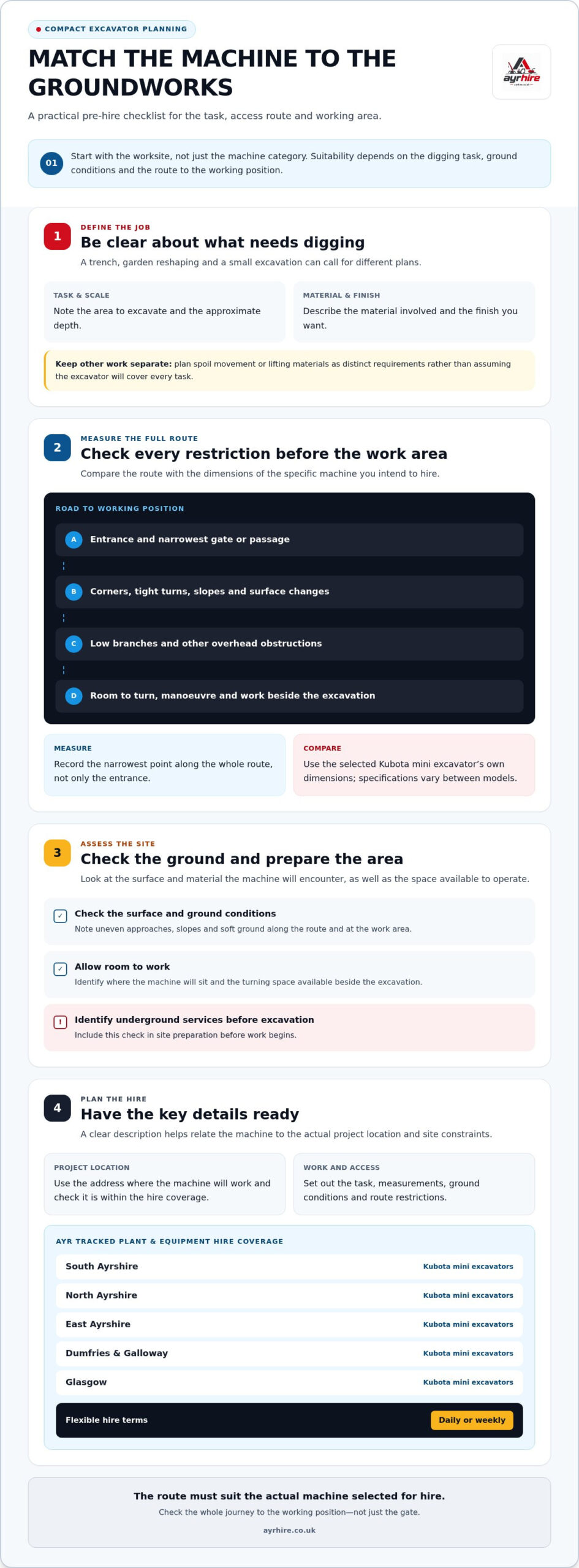
A prepared site makes it easier to plan the hire around the work and avoid preventable obstacles. Before arranging a machine, establish what needs doing, check how it will reach the work area, assess the ground and make space to operate. Keep people, vehicles and stored materials clear of the planned working area.
- Define the work. Set out the excavation area, intended depth, material and finish. Note separate tasks, such as moving spoil, so the plan covers the whole job.
- Assess access. Measure the narrowest point along the route and note turns, slopes, overhead obstructions and surface changes. Compare the route and work area with the actual machine selected for hire.
- Check the ground and surroundings. Consider ground conditions, boundaries, nearby structures and the space around the excavation. Mark out the intended work area so it’s clear where digging is planned.
- Prepare the area. Clear avoidable obstructions and keep people, vehicles and stored materials out of the machine’s working space. Plan where excavated material will go without blocking access or the work area.
What should you check before digging begins?
Identify underground services before excavation starts. Check available information about buried services and follow current HSE guidance, including HSG47, Avoiding danger from underground services. Review the planned excavation against site boundaries, nearby structures and ground conditions. Build current official safety guidance and operator competence requirements into your arrangements before work begins.
How can you make the hire period work for the project?
Estimate the sequence of work, including time to prepare the area and carry out the job safely. Allow for the steps around the excavation, not just the digging. Ayr Hire offers flexible daily or weekly hire terms for its Kubota mini excavator, so you can plan the hire period around the project. Include the tasks that need to happen before and after excavation when estimating how long you need the machine.
Before finalising your plan, bring together the task description, access notes, ground conditions and intended hire period. This gives the hire discussion a clear, practical basis and connects site preparation with the equipment choice. For the next step, plan compact excavator hire for your site.
Arrange Kubota compact excavator hire with Ayr Hire
Ayr Hire provides Kubota mini excavator hire for groundworks across South Ayrshire, North Ayrshire, East Ayrshire, Dumfries & Galloway and Glasgow. If you’re looking for compact excavator hire near me, connect your project location with a clear description of the work and site conditions.
A focused enquiry starts with the job, rather than guesswork about the machine. Describe what you plan to dig, where the work will take place and any practical constraints that could affect access or positioning.
What information helps plan your excavator hire?
Prepare a short project summary before making an enquiry. Include these details so the discussion can focus on the task and site:
- Work description: Explain the groundworks, approximate area, intended depth and material to be excavated.
- Site location: Give the project’s town or area in Ayrshire, Dumfries & Galloway or Glasgow.
- Access: Note narrow gates, restricted routes, tight turns, overhead obstacles and the space available at the work area.
- Site conditions: Describe the ground and mention nearby services, boundaries or structures relevant to the planned excavation.
- Hire period: State the expected duration and work sequence, including when the area will be ready for the machine.
These details keep the conversation practical and help you discuss whether the Kubota mini excavator suits your groundworks and site conditions. Be specific about constraints, even if they seem minor. A limited turning area or nearby structure can affect how you plan the work.
How to take the next step with Ayr Hire
Once you’ve gathered the project details, make a hire enquiry through Ayr Hire’s website. Set out the task, location, access considerations and intended hire period in a few clear points. Ayr Hire provides flexible daily or weekly hire terms, so include the expected duration in your project outline.
Keep your site information to hand as you arrange the hire. If the work plan changes, update your notes so the project description stays accurate. A clear brief supports a focused discussion about equipment hire for your project in Ayrshire, Dumfries & Galloway or Glasgow.
Make a Kubota mini excavator hire enquiry with Ayr Hire.
Turn your site plan into the next step
Before arranging hire, turn your project notes into a short brief that reflects how the work will unfold. Separate excavation from follow-on tasks and identify site constraints that could affect the planned sequence. This gives you a clear basis for discussing the job and keeps equipment planning connected to the work you need to complete.
If you’re still weighing up compact excavator hire near me, focus on the fit between the project and the machine, not just how close the hire option appears. A precise description of the job and site is a practical starting point for a useful enquiry.
Discuss your compact excavator hire requirements with Ayr Hire and take the next step towards planning your groundworks.
Frequently Asked Questions
Is a compact excavator suitable for garden landscaping?
It can suit landscaping that involves a defined amount of excavation, such as reshaping part of a garden or preparing ground for new features. Consider the finished surface as well as the digging: where will excavated material go, and how will you tidy the area afterwards? For delicate lawns, established planting or tight boundaries, plan how to protect areas outside the work zone.
Can a compact excavator pass through a standard garden gate?
Not necessarily. Gate sizes vary, and the machine’s actual width and configuration determine whether it can pass through. Measure the clear opening, including posts or fittings that reduce usable space, then check the full route for tight turns and other restrictions. Compare your measurements with the specific machine’s dimensions rather than relying on another model’s specifications.
Do I need a licence to operate a mini excavator in the UK?
Don’t assume that a driving licence alone demonstrates competence to operate plant. Requirements can depend on the work, workplace and site arrangements. Anyone planning to operate an excavator should follow the relevant site rules and current official health and safety guidance, and ensure they have suitable training and competence for the task. Employers and those controlling work should establish what applies to their project before digging starts.
Can I dig near underground services with a compact excavator?
Excavation near buried services carries a risk of serious injury and damage. Identify services before work begins, consult available plans and follow the Health and Safety Executive’s HSG47 guidance on avoiding danger from underground services. Plans alone shouldn’t be treated as proof that an area is clear. If the service location is uncertain, don’t start digging there until the risks have been assessed and a safe approach established.
How should I check whether a compact excavator can access my site?
Measure the narrowest clear width and height on the complete route, not just the gate. Note corners, slopes, surface changes and anything else that could restrict movement. Take clear photographs from the entrance through to the work area, including tight spots. Then compare your measurements and images with the exact machine’s dimensions and access requirements, allowing for fittings or obstacles that reduce usable clearance.
Can compact excavators work on uneven or sloping ground?
It depends on the machine, the slope and the ground beneath it. Soft, loose or uneven surfaces can affect stability and safe operation, so don’t assume a tracked machine can work safely on every slope. Describe the gradient and surface conditions when planning the job. Use the machine’s operating guidance and a competent assessment to establish a safe working position before excavation begins.
What information should I provide when enquiring about excavator hire?
For a useful compact excavator hire near me enquiry, provide the project location, the work you plan to carry out, the approximate area and the material to be excavated. Include access measurements, ground conditions and nearby services or structures that could affect the work. A simple site sketch or current photographs can make restrictions easier to describe. State your intended hire period and when the site should be ready.