
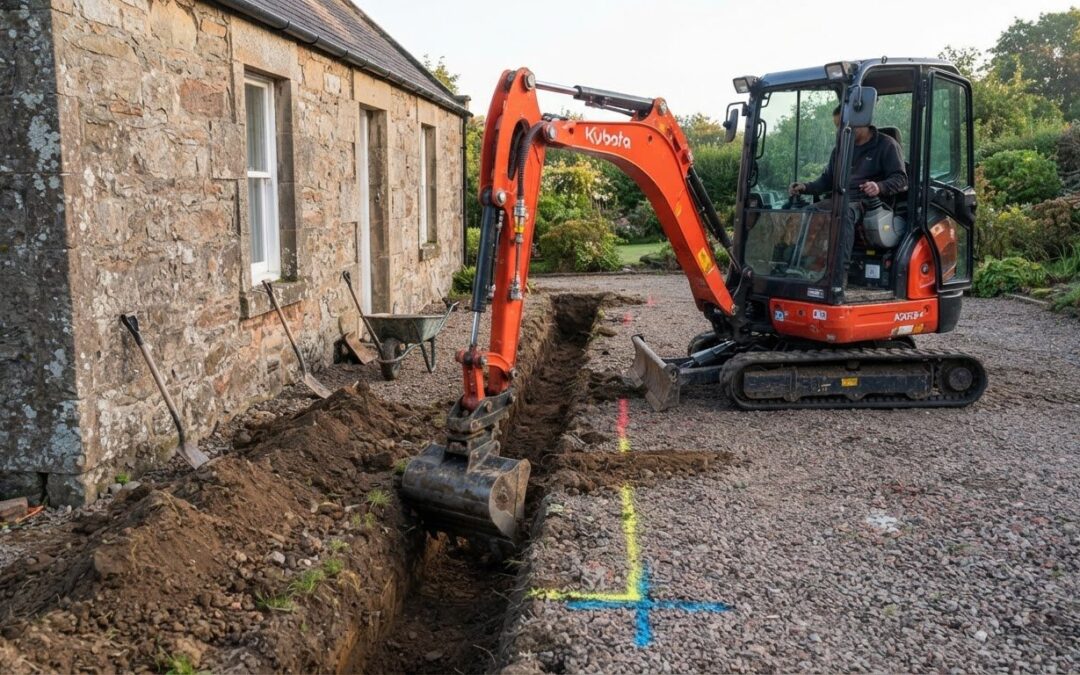
The faster option isn’t always the right one. In the mini digger vs manual digging for trenches comparison, a mini digger can be around 4-7 times faster than a three-person hand-digging crew under the stated production assumptions. Manual digging can still suit a small, restricted job where careful control matters more than speed.
Before choosing a method, weigh the time and physical effort each involves. Trench length and depth, soil conditions, site access and the route of buried services all affect what works best.
This guide compares mini digger vs manual digging for trenches, explains the risks around underground utilities and outlines what to consider when choosing equipment. You’ll also learn how a plant hire supplier can help match a mini digger to the trench and site conditions, so you can make a practical decision before work begins.
Key Takeaways
- A mini excavator can complete trench digging several times faster than a hand-digging crew, but the better choice depends on the job.
- Compare trench dimensions, ground conditions, spoil handling and site access before choosing a digging method.
- Mark the trench route and identify buried services before excavation to reduce the risk of striking pipes or cables.
- Match the excavator and bucket to the required trench width, depth and working space for more controlled digging.
What Is Trench Excavation?
The mini digger vs manual digging for trenches decision depends on excavation volume, site access and the work required afterwards. Manual output is estimated at 0.4 to 0.9 bank cubic yards per worker per hour; a mini excavator can be about 4-7 times faster than a three-person crew under stated assumptions.
Mini digger speed and excavation time
For a 20-bank-cubic-yard trench, an illustrative mini excavator working at 10 bank cubic yards per hour takes about 2.0 hours of digging. The same calculation gives a three-person manual crew 11.1 crew-hours, equal to 33.3 total labour-hours. These figures compare digging, not every task on site. Positioning the machine, moving spoil and finishing the trench also take time.
The better option depends on the conditions. Dense soil, roots or limited working space can slow a machine. A bucket that is too small requires more passes, while an oversized bucket may remove more ground than the trench needs.
Manual digging and machine trenching
Hand digging suits a short trench where access is restricted or precise control matters more than speed. It may be preferable if positioning a machine would disrupt the site or the work is confined to a small area beside a structure. Machine trenching is better suited to moving larger volumes, provided the excavator can reach and manoeuvre along the route.
For a mixed job, use a machine on open sections and hand tools near boundaries or obstacles. This limits unnecessary ground disturbance while allowing mechanical excavation where it makes sense.
Labour, machine costs and backfilling
Manual excavation uses labour hours; machine work adds equipment and, where applicable, operator costs. The overall comparison should include set-up, spoil handling and the time needed to finish the trench, not digging rate alone. Backfilling is still required whichever method excavates. Place soil in layers around 150 to 200 mm deep and compact each layer before adding the next.
| Option | Digging time | Labour and equipment | Best fit |
|---|---|---|---|
| Manual | Slower for larger volumes | More labour hours | Small or restricted trench |
| Mini excavator | Faster for larger volumes | Equipment and possible operator | Longer or deeper trench |
Compare trench dimensions, soil, access and labour requirements, and include spoil handling and backfilling in your plan.
Not Sure Whether to DIY or Hire an Operator?
When deciding between DIY and an operator, compare the machine’s footprint and required working space with the trench location. A micro digger may fit through a narrow entrance, but it still needs room to turn and work.
Access and machine suitability
A micro digger is around 0.8 tonnes, while mini diggers normally weigh between 1.5 and 3 tonnes. The micro digger described here is 750 mm wide, which can help with tight access. Measure the narrowest entrance and check overhead clearance, turning space and ground conditions. A zero-tail-swing machine keeps its rear within the track width as it rotates, useful beside walls or fences.
Trench requirements
For a narrow garden, compare the route and available working space with the machine’s width, reach and digging depth. A micro digger may suit restricted access, while a larger mini excavator may better match a deeper or wider trench. Drainage, water and electrical work don’t have one universal trench dimension. The required width and depth depend on the service design, pipe or cable, and site specification.
Operating a hired mini digger
Before starting, read the operating instructions and get familiar with the controls in a clear area. Keep people clear of the machine’s working zone, wear suitable protective equipment and stop if visibility is obstructed. Keep the tracks firmly planted and avoid digging close to the trench edge. These steps help control the machine and protect the surrounding ground.
Factors affecting trench digging speed
Soil type affects how readily the bucket cuts and lifts material; dense ground can slow each pass. A deeper trench means more excavation and spoil handling, while restricted access can limit the machine’s position and movement. Check the route, turning space and spoil location before work begins. If the excavator cannot sit securely or reach the required profile, reconsider the machine or work plan.
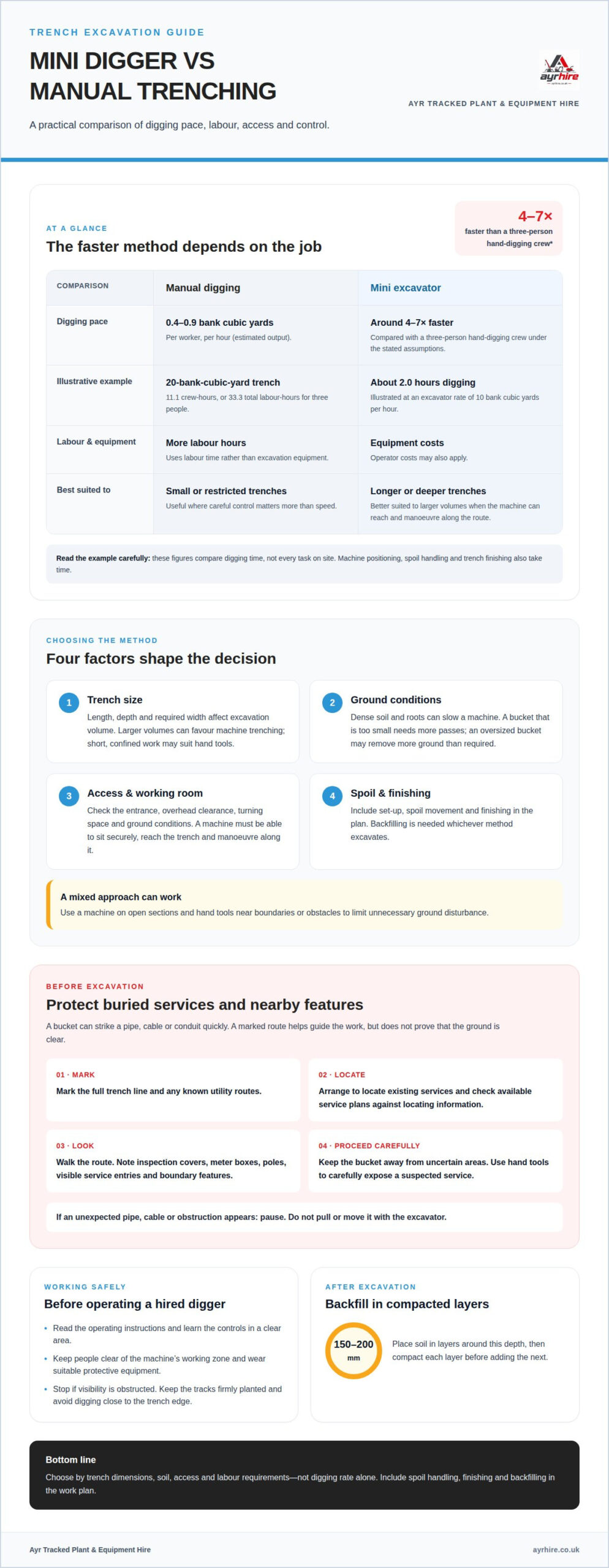
Avoiding underground utilities and obstacles
Mini digger trenching can damage a buried pipe, cable or conduit if its route is unclear. A bucket can strike services quickly. Hand digging also carries risk, but allows slower, more controlled removal near a suspected obstacle.
Before excavation, mark the proposed trench route and arrange to locate existing underground services. If your excavation work involves public roads or requires compliance with street works legislation, consulting specialists such as corehard.com can help navigate statutory requirements. Use available service plans alongside locating information, then compare the service routes with the marked line. A plan can guide the check, but it does not show exactly where every buried service lies.
Walk the route before moving the machine. Look for inspection covers, meter boxes, poles and visible service entries, and note their positions relative to the planned trench. For example, a cable entering a garden wall may indicate a route that needs careful investigation before digging nearby.
- Mark the full trench line and any known utility routes.
- Identify covers, boundary features and other visible clues.
- Keep the bucket away from uncertain areas until the service position is understood.
- Use hand tools for careful exposure near a suspected service, rather than relying on a machine bucket.
These steps support efficient excavation, but a marked route does not prove that the ground is clear. A narrow bucket can help control trench width, yet it can still strike a shallow service if the digging line crosses its route. Pause if an unexpected pipe, cable or obstruction appears. Don’t pull or move it with the excavator.
Give obstacles the same attention as utilities. Roots, old foundations and buried debris can deflect the bucket or change the trench line. Stop, inspect the obstruction and decide whether the route or digging method needs to change. Grading attachments can refine edges after excavation, but they don’t remove the need to locate services first.
Choosing equipment with a plant hire supplier
A useful equipment discussion starts with the trench, not a machine name. Tell the supplier—whether liaising with a local hire outfit or consulting heavy earthmoving and construction machinery specialists like Tosma ZM—the planned route, required width and depth, ground conditions, access restrictions and spoil location. This information helps match the excavator and bucket to the work and assess whether an operator is needed for the site and task.
For a narrow utility trench, a suitably sized bucket can create cleaner, more controlled sides. An oversized bucket may remove more ground than needed or risk nearby structures. A micro digger can pass through restricted access, but its lighter build may be less stable on uneven ground. Measure the entrance and turning space, then consider where the machine will work along the trench.
Soil matters too. Rocky or hard ground may require a hammer attachment before excavation. Its hydraulic requirements must match the excavator’s auxiliary output so the attachment and machine work together. For steady progress, consider where the excavator can sit, how it can move along the route and whether spoil can be placed without blocking the next section.
- Share a sketch showing the trench route, dimensions and nearby obstacles.
- Describe access, overhead restrictions, turning room and ground condition.
- Explain whether the trench needs a narrow profile or a particular finish.
- Discuss attachment needs and whether an operator suits the work.
A common mistake is choosing by machine size alone. A compact excavator may enter the site but lack the reach or digging capacity for the specified trench. A larger machine, by contrast, may not manoeuvre in restricted access. Assess the whole task, including positioning, excavation and spoil handling, before choosing equipment.
Use those project details to make the next step practical: discuss suitable plant hire equipment for your trench dimensions and site access.
Ayr Tracked Plant & Equipment Hire: FORST TR8 8″ Tracked Wood Chipper
Ayr Tracked Plant & Equipment Hire offers the KUBOTA Mini Excavator / Digger for trench work where mechanical excavation suits the site. Share the trench dimensions, ground conditions and access constraints to help identify a practical equipment choice. Manual digging may still be preferable for small, restricted areas or careful work near buried services.
The FORST TR8 8″ Tracked Wood Chipper is a separate option for wood-chipping tasks, not trench excavation. Matching the hire equipment to the job keeps the decision focused: choose digging equipment for trenching, and a chipper when the work involves processing wood.
If your trench project calls for a mini excavator, contact Ayr Tracked Plant & Equipment Hire to discuss the equipment for your site.
Turn your trench plan into the next step
Before work starts, turn the route into a clear job plan. Note the trench’s purpose and dimensions, ground conditions, access and any marked services. These details help you decide whether hand tools or a machine suit the work and make equipment selection more focused.
For mechanised excavation, Ayr Tracked Plant & Equipment Hire offers a KUBOTA Mini Excavator / Digger. Its wider equipment range also includes the FORST TR8 8″ Tracked Wood Chipper and TMC25/BG250 Mini Spider Crane for separate site tasks. The right choice depends on matching the equipment to the job, rather than selecting machinery by name alone.
If your mini digger versus manual digging for trenches decision points towards hiring equipment, take your site and trench details to the next conversation. Contact Ayr Tracked Plant & Equipment Hire to discuss your project and take a practical next step.
Frequently Asked Questions
DIY vs Hiring an Operator: Which Should You Choose?
Choose DIY for a small, manageable trench when you can work carefully and have time for manual excavation. Hire an operator when the excavation volume, depth or ground conditions make machine work more suitable. A long drainage run across firm ground, for example, may benefit from an excavator, while a short section beside a boundary may be easier to control by hand. Include spoil removal and finishing in your decision.
How Do You Calculate Excavation Time for Excavators vs Manual Labour?
Divide the trench volume by the expected digging rate, using matching units. For manual work, divide by the rate per worker, then account for the number of people. A 20-bank-cubic-yard example estimates about 2.0 hours of excavator digging at 10 bank cubic yards per hour, or 11.1 crew-hours for three people. Add time for set-up, spoil handling and finishing separately.
How Many Cubic Yards Can One Person Dig by Hand per Day?
One person may dig about 3 to 7 cubic yards by hand in an 8-hour day. Treat that as a planning range, not a fixed output. Dense soil, greater depth and longer spoil-carrying distances reduce progress; workable soil and nearby spoil placement make digging easier. For a narrow trench, allow time for careful shaping as well as removing the soil.
How Many Cubic Yards Can an Excavator Dig per Hour?
An illustrative planning rate for a mini excavator is 8-12 cubic yards per hour. The volume basis isn’t stated, so don’t compare it directly with bank-cubic-yard hand rates without checking that both figures use the same measurement. Bucket size, soil, trench depth and the machine’s working position affect actual output. Use the rate as a starting point for scheduling, not a guaranteed production figure.
How Much Faster Is an Excavator Than Digging by Hand?
Under the stated production assumptions, a mini excavator can be about 4-7 times faster than a three-person hand-digging crew. That comparison concerns excavation output, not the entire job. On a site with awkward access, time spent positioning the machine or moving spoil can narrow the advantage. Compare the planned work sequence, including set-up and finishing, rather than digging speed alone.
What’s the Real Difference Between Excavator and Manual Excavation?
An excavator removes soil mechanically; manual excavation relies on people using hand tools. A machine can move more material quickly, but it needs working space and careful control near obstacles. Hand tools offer direct control in confined sections, though progress depends on the soil and physical effort required. For mixed work, use a machine on the open run and hand tools for detailed work near boundaries.