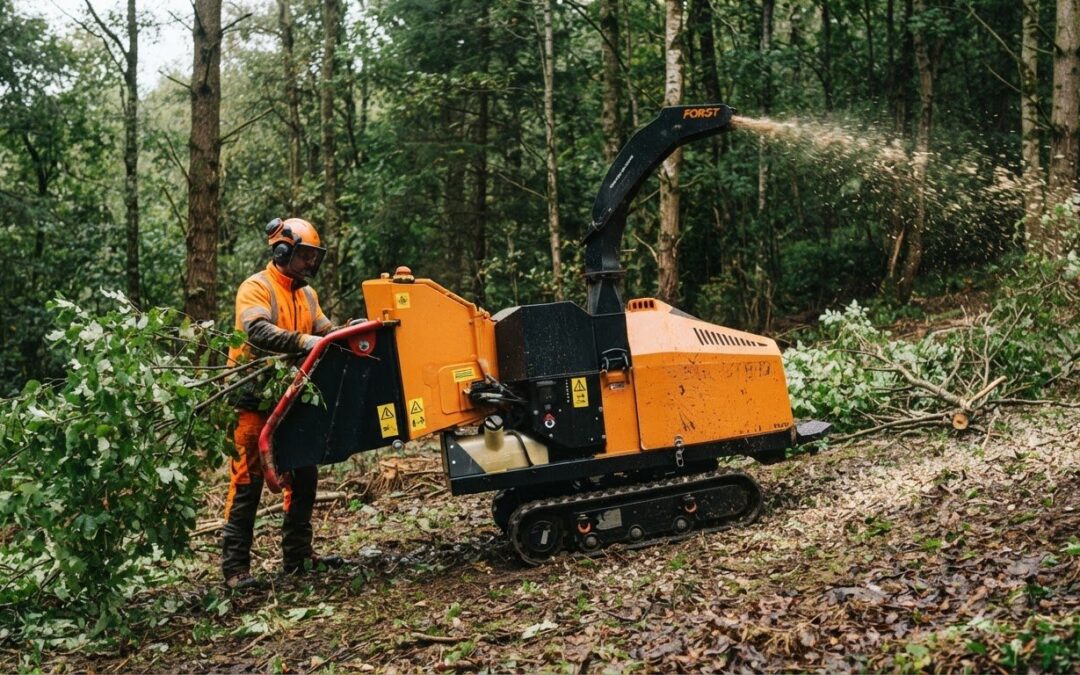
The chipper that’s easiest to tow may not be the best choice once the ground slopes. For the tracked chipper vs wheeled chipper choice on slopes, tracked machines are generally better suited to steep, soft or uneven ground, while wheeled chippers suit firm, level or gently sloping sites. Let the ground and access route guide your decision.
That’s only part of the calculation. A wheeled chipper can be convenient when you’re moving between jobs, but a tracked machine can get closer to brash on difficult ground and reduce the distance material needs to be dragged. This guide compares slope access, on-site chipping, material removal, relative costs and road towing, so you can weigh the practical trade-offs before choosing equipment. You’ll also find a clear decision guide for matching the machine to your site and working pattern.
Key Takeaways
- Match the chipper to the steepness, softness and condition of the access route, not just the size of the job.
- Consider how close the machine can get to the brash when weighing on-site chipping against moving material to a roadside.
- Compare hire and upkeep costs with the time and effort each machine could save on your site.
- Factor in road transport and the towing setup when moving between jobs; Ayr Tracked Plant & Equipment Hire offers a FORST TR8 tracked chipper for challenging access.
Tracked vs Towable Wood Chippers: Which One Is Right ?
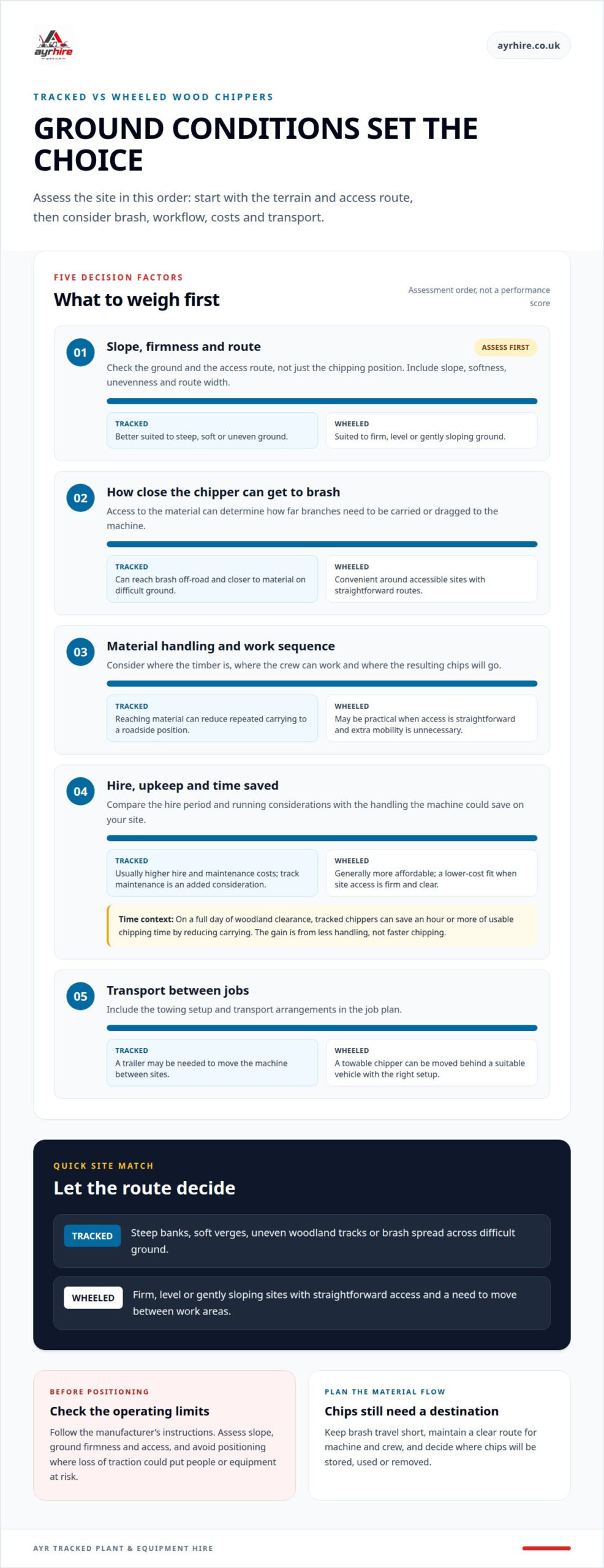
For slopes and soft ground, tracked chippers generally offer better traction and stability. Wheeled machines suit firm, level or gently sloping terrain.
Tracked chipper mobility on slopes
Tracks spread the machine’s weight across a larger footprint, helping it cross ruts and soft ground. This can improve mobility on steep banks, where moving a wheeled chipper may be difficult. Tracks also let the operator move closer to brash. Follow the machine’s operating instructions and consider track wear on abrasive surfaces.
Wheeled chipper mobility on suitable terrain
Wheeled chippers are designed for firm, level or gently sloping ground, where wheels can move between work areas without off-road traction. They can suit small or medium jobs with straightforward access. On rough, soft or uneven terrain, wheels may limit manoeuvrability and stability. Assess the route as well as the chipping position.
Choosing between mobility options
Compare the slope, ground firmness and route width before choosing. A tracked chipper may reach brash directly on a bank, reducing how far branches need to be dragged. A wheeled machine can be more practical when the site is firm and the chipper needs repositioning. Match the machine to the material and job, then weigh access against setup and maintenance.
| Option | Traction | Suitable ground | On-site access |
|---|---|---|---|
| Tracked | Better on rough ground | Soft, uneven or steep | Can reach brash off-road |
| Wheeled | Best on firm ground | Level or gently sloping | Convenient around accessible sites |
Choose by matching ground conditions and brash access to the machine’s strengths.
Safety guidance for slope operation
For UK slope work, follow the chipper manufacturer’s operating instructions and assess the site before positioning the machine. Consider ground firmness, slope, access and the route for moving brash. Keep the machine within its stated operating limits, and avoid placing it where loss of traction could put people or equipment at risk. These checks apply to tracked and wheeled chippers.
On-site chipping and reduced material removal
At woodland clearance sites, the distance between felled timber and the chipper shapes the working sequence. A tracked machine that reaches material within the work area can reduce repeated carrying to a roadside position. On a full day of woodland clearance, tracked chippers can save an hour or more of usable chipping time by reducing that carrying. The gain comes from less handling, not faster chipping.
Access matters too. A narrow garden path, soft verge or uneven woodland track may prevent a wheeled chipper reaching the brash. If it must stay near the entrance, the crew has to carry branches further. When comparing a tracked chipper vs wheeled chipper for slopes, consider whether the machine can reach the cutting area and where the crew can work.
On-site processing changes what needs moving. Chip suitable branches near where they were cut, then plan a practical collection point for the resulting material. This reduces the loose brash that needs removal, but the chips still need a destination. For forestry work, decide where to store, use or remove them before choosing the machine’s working position. The tracked chipper vs wheeled chipper for slopes choice can affect how directly the crew processes material across the site.
- Position the chipper to keep brash travel short.
- Keep the access route clear for the machine and crew.
- Plan where chips will go before processing begins.
Where wheeled access is straightforward, positioning beside the material may make extra mobility unnecessary. On sloping or soft ground, a tracked chipper may reach more of the work area. Compare access, material location and the chipper’s capacity when planning the operation.
Relative costs of wheeled and tracked chippers
Wheeled wood chippers are generally more affordable than tracked machines. Tracked chippers usually have higher hire and maintenance costs than comparable towable models. The difference reflects their off-road mobility and track system. For a firm, accessible site, a wheeled machine may be a suitable lower-cost choice. On soft or sloping ground, tracked mobility may make it the practical option.
Project size changes the value calculation. For a short job with clear access, paying for tracked mobility may bring little benefit. For woodland clearance, steep banks or brash spread across rough terrain, reaching material directly can reduce handling and keep processing near the work area. Compare the hire period with the time spent moving branches, rather than judging the machine by its day rate alone.
Running costs also depend on how the chipper is used. Track maintenance is an additional consideration, while wheeled equipment needs its own checks and upkeep. Engine type, working conditions and transport arrangements affect the overall job plan. A trailer may be needed to move a tracked chipper between sites, adding a transport requirement alongside the hire cost.
- Compare the hire period with the expected work duration.
- Allow for access, transport and site conditions.
- Match machine capacity to the material being processed.
A hire quote depends on the machine, hire duration, delivery and site conditions. Before requesting a quote, note the terrain, brash location and transport needs. This makes the trade-off clearer: wheeled chippers can cost less where access is straightforward, while tracked machines may justify higher costs in demanding environments where their mobility changes the work sequence.
Wheeled chipper towing between job sites
A towable chipper suits crews travelling between jobs because its wheels and towing hitch allow road transport behind a suitable vehicle. Many professional towable chippers weigh under 750 kg, which can make towing easier with the right licence and setup. The actual combination still matters: vehicle capability, chipper weight and any load carried all affect the towing arrangement.
Before setting off, assess the complete load, not just the chipper. Correct loading, nose weight and weight limits matter on UK roads, especially if the trailer also carries timber or chip. Keep the load balanced and secure, and account for added material before travelling. A chipper that is straightforward to move empty may create a different towing load after work.
Routine checks help keep a wheeled chassis ready for repeated journeys. Check tyre pressure and bearings, and inspect the brake system where fitted. Tracked machines require a trailer for transport because their tracks aren’t designed for road travel. A tracked chipper’s remote operation may help it move around a worksite, but it doesn’t replace transport equipment between sites.
- Match the chipper and trailer to the towing vehicle.
- Reassess the load after adding timber or chip.
- Inspect tyres, bearings and fitted brakes before travel.
For a crew visiting several accessible sites, a towable machine can simplify the transition: hitch it up, travel, then position it where ground access permits. That road convenience doesn’t make it suitable for every slope. Choose based on both legs of the job: the public-road journey and the terrain at each worksite. If difficult ground makes a tracked machine the better fit, explore tracked chipper hire for your project.
Ayr Tracked Plant & Equipment Hire: FORST TR8 8″ Tracked Wood Chipper
Ayr Tracked Plant & Equipment Hire offers the FORST TR8 8″ Tracked Wood Chipper for projects where tracked access suits the site. It may be a practical option for work involving uneven ground, slopes or brash that is difficult to bring to a roadside machine. Base your choice on the access route, working area and material to be processed, then consider how the chipper fits your transport plan.
If the site also needs equipment to move materials around challenging access, Ayr Hire offers a KUBOTA Mini Excavator / Digger and an ALMA Crawler Multi-Loader. Share the ground conditions and job requirements when discussing the equipment that fits your project. Contact Ayr Tracked Plant & Equipment Hire to discuss the FORST TR8 for your site.
Plan the machine around the whole site
Before booking equipment, map the route from the unloading point to the working area. Mark narrow turns, changes in surface, overhead obstacles and where chipped material will go. This simple site plan turns the tracked chipper versus wheeled chipper decision for slopes into a practical choice based on the actual route and work position.
Also consider how the job will change as work progresses. A clear entrance may lead to soft ground further in, or the best chipping position may shift as brash is cleared. Share these details when discussing equipment, so the conversation focuses on access and your site’s requirements.
Ayr Tracked Plant & Equipment Hire offers tracked and other specialist equipment for demanding access and lifting tasks. Contact Ayr Tracked Plant & Equipment Hire to discuss your project and plan the next step with confidence.
Frequently Asked Questions
Should I choose track or wheels for land clearing?
Choose tracks when the clearance area includes soft, rutted or sloping ground; choose wheels when access is firm and straightforward. For example, a woodland plot with scattered brash may favour a tracked machine if carrying branches to the roadside would slow the crew. On a compact, level plot beside a drive, a wheeled chipper may be easier to position and move between cuttings.
What are the different types of wood chippers and their benefits?
The main types in this comparison are tracked, wheeled or towable, and stationary chippers. Tracked machines travel around a site under their own power, while towable chippers can be hitched to a suitable vehicle for road journeys. Stationary chippers suit heavy-duty processing and continuous operation. For a single site, compare access and material flow; for multiple locations, include transport in the decision.
What is important to know about mobile wood chippers?
Mobile chippers differ in how they move around a site and between jobs. A wheeled model uses a towing hitch and suitable vehicle for road transport; a tracked machine needs a trailer for road journeys. Before choosing, map the route from unloading point to work area, including gates, turning space and changes in ground. This reveals whether road convenience or off-road reach matters more.
What are the advantages of a track-mounted chipper?
A track-mounted chipper can reach work areas that wheeled equipment may struggle to access, including soft ground and rough woodland routes. Its tracks spread weight over a larger footprint, helping it cross uneven terrain when operated within its limits. Positioning close to scattered brash can reduce how far branches must be carried. Tracks also need maintenance, including attention to tension and wear.
Which configuration is right for your operation?
Choose the configuration that fits your work pattern: tracked for difficult site access, towable for repeated road travel, or stationary for sustained heavy processing. Include the route, material handling and equipment transport in your planning. For local projects across South Ayrshire, North Ayrshire, East Ayrshire, Dumfries & Galloway and Glasgow, Ayr Tracked Plant & Equipment Hire offers tracked plant and lifting equipment hire.
How do tracked and wheeled wood chippers perform on slopes?
Tracked chippers generally provide better traction and stability on steep or soft ground, while wheeled chippers suit firm, level or gently sloping sites. The slope itself is only one factor: surface condition, access route and where the chipper can be positioned also affect the choice. Follow the machine’s operating instructions and keep it within its stated limits on sloping terrain.