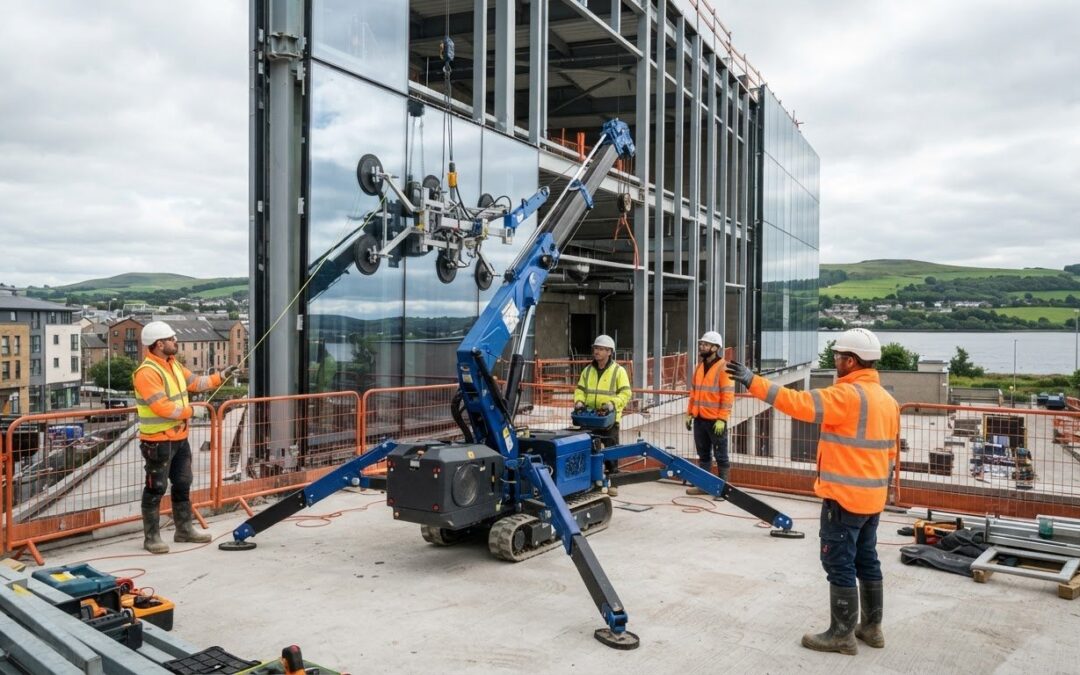
Could a vacuum lifter that looks right on paper still be unsuitable for your curtain-wall installation? Glass dimensions and weight matter, but so do site access, working space and the position of the lift. If you’re looking for a vacuum lifter for curtain walling North Ayrshire, checking these details early can help you avoid an equipment mismatch and plan the work more effectively.
Before arranging hire, establish what information the provider needs to assess suitability and how the equipment will reach and operate at the installation area. This guide explains what glass details to gather, which access and positioning constraints to flag, and how to plan the lift sequence before the equipment arrives.
Ayr Tracked Plant & Equipment Hire provides vacuum lifter hire in North Ayrshire, with daily or weekly hire terms. Discuss your load and site details, then confirm current availability and suitability for your project before making arrangements.
Key Takeaways
- Gather each glass unit’s dimensions, weight, shape and relevant surface details before checking equipment suitability.
- Match the lifter’s stated working capacity and configuration to the specific load. Don’t assume one setup suits every panel.
- Compare a vacuum lifter, crane-assisted handling and manual handling against the load, reach, access and planned lift sequence.
- Plan access, positioning, site controls and team communications before the equipment arrives.
- When enquiring about a vacuum lifter for curtain walling North Ayrshire, share verified load details, site access, project location and intended hire dates.
What does a vacuum lifter do on a North Ayrshire curtain-walling project?
A curtain wall is an external building covering that doesn’t form part of the main structural frame. Many curtain wall systems include large glass units, so the project team needs to plan how each panel will be moved and presented at the building face.
A vacuum lifter uses vacuum pads to grip and move suitable glass units. Unlike a crane, it grips the glass, and unlike general lifting accessories, it is designed for direct contact with compatible glazing. It handles and positions a panel as part of a planned lift. It doesn’t install or fix the glazing in place.
For a contractor considering a vacuum lifter for curtain walling North Ayrshire, the key question is whether the particular unit, glass surface and lifting configuration are compatible. Check the equipment specifications against the load and the planned handling method. A general description of the job isn’t enough to confirm suitability.
How vacuum lifting supports curtain-wall glass handling
When the glass and equipment are compatible, vacuum pads provide a controlled grip to help the team move and position a panel during the planned lift. This may be useful for heavy or awkward units that are difficult to guide by hand. Plan the lift around the panel, travel route and landing position. Don’t assume vacuum handling will speed up installation or prevent breakage; those outcomes depend on the project and how the work is carried out.
When should a project consider another lifting method?
Pause for technical review if a panel has an unusual shape, a challenging surface or specific handling requirements. Access restrictions can also affect where equipment can be brought in and positioned. Share these details before confirming a hire. A mini spider crane is a separate lifting option to assess if the site or lift presents constraints, but it isn’t an automatic substitute for a vacuum lifter. The suitable method depends on the load and planned operation.
Ayr Tracked Plant & Equipment Hire offers vacuum lifter hire in North Ayrshire. Discuss the glass specifications, access and intended lift before confirming current availability and suitability. Start with a project-specific assessment rather than assuming one type of equipment will suit every curtain-wall panel.
Which glass and site details determine vacuum lifter suitability?
Equipment selection depends on verified load data and site conditions. Check the lifter’s stated working capacity and configuration against the actual glass unit and planned lift. Don’t select equipment based on an estimated weight or a general description of the glazing.
What glass information should you have ready?
Start with reliable project documentation for each unit. Record its dimensions and weight, then describe its shape and surface. Note features that could affect pad contact, such as curves, surface treatments, openings or other interruptions. This information helps the equipment provider assess whether the available vacuum lifter and configuration are suitable. Don’t assume a lifter compatible with one panel will suit every unit on the job.
- Dimensions and weight: use verified information for each glass unit.
- Shape and surface: describe the panel and any details that may affect contact with the pads.
- Lift requirements: state the required lift height, reach and landing position.
Map the proposed route from the delivery or unloading point to the lifting position, then from there to the landing area. A panel may be within the equipment’s stated capacity but still present a practical challenge if the route is obstructed or the planned position is difficult to reach. For a safe, efficient curtain-wall glass lift, the HSE’s LOLER guidance is a useful reference for lifting equipment and operations.
How do North Ayrshire site conditions affect the assessment?
Describe the site as it will be on the planned hire dates. Include delivery access, unloading arrangements and the working space available at the lifting position. Note ground or floor conditions that may affect where equipment can be brought or positioned, without assuming they’re suitable. Flag occupied areas, neighbouring work and any restrictions on movement or setup.
Be specific about pinch points. A narrow entrance, restricted route or limited space near the façade could change how the glass reaches the lift position. Share these constraints early so they can be considered alongside panel dimensions, lift height, reach and landing position. A site sketch or photographs may help explain the layout, but they don’t replace confirmation of equipment suitability.
For a vacuum lifter for curtain walling North Ayrshire, give the provider verified glass details and a clear picture of the access and proposed lift. You can discuss these requirements with Ayr Hire’s vacuum lifter hire team before confirming current availability and suitability.
Vacuum lifter, crane or manual handling: how should you compare options?
Choose the method around the whole lift, not just the panel’s weight. Consider whether the load suits the equipment, how far it must travel, the available access, where it needs to be positioned and how it will be landed. The method should also fit the planned sequence of work. LEEA offers industry guidance on lifting equipment; use its resources to help compare options, alongside project-specific advice.
| Method | May suit when | Key caveat |
|---|---|---|
| Vacuum lifter | The glass surface and shape are compatible, and the unit can be handled and positioned with the available setup. | Confirm the hire unit’s working capacity and configuration against the specific glass and lift. |
| Crane-assisted handling | The lift calls for reach or a lifting position that another method may not provide. | Assess access, setup position, ground or floor conditions, reach and landing area for the proposed crane. |
| Manual handling | A competent, job-specific assessment finds the task suitable for the people and conditions involved. | Don’t treat it as the default. The load, route, positioning and individual capability all matter. |
When might a vacuum lifter be the right fit?
A vacuum lifter may be appropriate where the glass unit is compatible with the pads and the planned route allows it to be moved into position. Check the landing point as carefully as the initial lift: the team needs a workable way to guide the panel to its intended location. Ask the equipment provider to confirm that the particular hire unit suits the glass and proposed handling arrangement.
When should you assess crane-assisted lifting instead?
Consider crane-assisted handling if reach, the lifting position or site access makes the proposed vacuum-lifting arrangement unsuitable. A mini spider crane may be relevant on a restricted-access site, but its suitability depends on the load and site conditions, including where it can be positioned. Assess it as a separate option, not an automatic replacement. Share the lift details with the relevant provider before deciding.
For broader context, review guidance on specialist lifting solutions in Scotland and the related mini spider crane hire guide for North Ayrshire if those pages are available on the provider’s website. For a vacuum lifter for curtain walling North Ayrshire, assess the glass, access and landing requirements together before selecting a method.
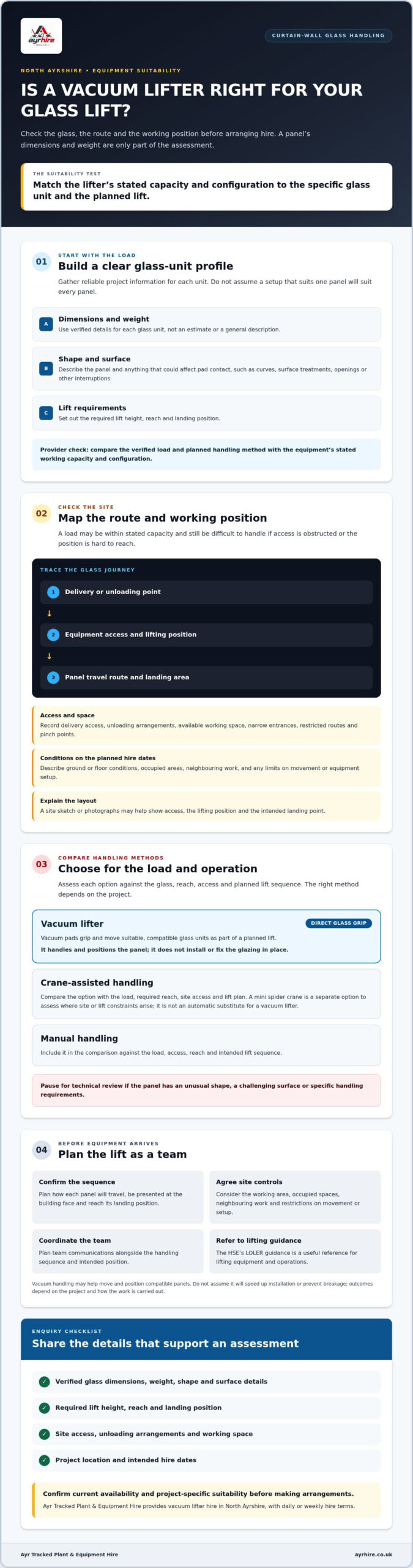
How to prepare a safe, efficient curtain-wall glass lift
A clear sequence helps the project team spot missing information before the vacuum lifter arrives. Treat equipment selection, site preparation and the lift briefing as linked steps. The project team remains responsible for coordinating site controls and communications, even when discussing equipment suitability with a hire provider.
What belongs in a pre-hire and pre-lift checklist?
- 1. Confirm the load. Check the verified weight, dimensions, shape and surface details for each glass unit. Identify the panel to be lifted and make sure the information relates to the actual load.
- 2. Define the movement. Record the required lift height, intended travel path and final positioning area. Consider how the panel will be guided and handed over at its landing point.
- 3. Check site access. Confirm delivery access, unloading arrangements, the route to the lifting position and available setup space. Note floor or ground conditions and restrictions, such as occupied areas or neighbouring work.
- 4. Confirm equipment suitability. Give the provider the load details and proposed lift arrangement. Ask them to confirm whether the specific hire unit and configuration are suitable, and check any operating conditions that apply.
- 5. Agree site responsibilities. Before equipment is brought onto site, decide who will assess and control the lift, manage access, brief the team and coordinate communication during the operation.
- 6. Brief the team. Make sure everyone involved understands the agreed sequence, their role, the route, the landing area and how communication will be maintained. Revisit the plan if site conditions or the load change.
Which safety checks need competent confirmation?
Don’t rely on assumptions about capacity, pad arrangement or operating conditions. Consult the equipment instructions and ask the provider or other competent personnel to confirm the checks relevant to the specific unit and task. If the glass, access route or site setup differs from what was described, pause and reassess before proceeding.
HSE guidance on lifting equipment and operations, including information about LOLER and PUWER, can help the project team identify relevant considerations. Check current official guidance and competent advice for the circumstances of the lift. This checklist isn’t a substitute for a project-specific assessment or a statement of legal obligations.
Preparing to hire a vacuum lifter for curtain walling North Ayrshire? Share the verified load details, access arrangements and planned lift with Ayr Hire’s vacuum lifter hire team to discuss equipment suitability and current availability before confirming the hire.
Arrange vacuum lifter hire for curtain walling in North Ayrshire
Ayr Tracked Plant & Equipment Hire offers vacuum lifter hire and lists North Ayrshire within its service area. To make an enquiry useful, provide enough detail for the team to discuss the glass, site and proposed lift. Hire is available on daily or weekly terms. Confirm current availability and equipment suitability for your project before making arrangements.
What should you include in a hire enquiry?
Prepare a clear brief for the specific glass units and lifting task. Include:
- Glass dimensions, verified unit weights, shape and relevant surface details.
- Lift height, intended movement route, landing position and any positioning constraints.
- Site access, delivery and unloading arrangements, setup space, and relevant ground or floor information.
- The North Ayrshire project location, intended hire dates and any scheduling constraints.
Specifics help the provider assess whether a suitable hire unit may be available. If the project involves different glass types or panel sizes, describe each one rather than relying on a typical specification. Mention any changes to the site or lift plan that could affect access or equipment positioning.
How can Ayr Tracked Plant & Equipment Hire support your equipment-hire planning?
Ayr Tracked Plant & Equipment Hire provides equipment hire, not glazing contracting or equipment sales. Discuss the glass specifications and planned lift with the team, then confirm suitability and current availability before booking. Daily and weekly hire terms are available; explain the intended dates and duration so the requirement can be considered clearly.
For related local information, look for the Ayrshire vacuum lifter hire guide alongside this North Ayrshire project guidance. The same principle applies: provide accurate load and access details, and ask for confirmation rather than assuming a unit will suit the job.
If you need a vacuum lifter for curtain walling North Ayrshire, contact Ayr Tracked Plant & Equipment Hire with your verified glass details, site access information, project location and intended dates. A practical brief gives you a clear starting point for discussing equipment suitability and hire arrangements.
Plan your curtain-wall lift with confidence
The right lifting method depends on more than the glass unit’s weight. Check its dimensions, shape and surface, then assess access, reach, positioning and the landing area. A clear lift sequence and site briefing help the project team coordinate the work before equipment arrives.
If you’re considering a vacuum lifter for curtain walling North Ayrshire, Ayr Hire offers vacuum lifter hire and lists North Ayrshire within its service area. Daily and weekly hire terms are available. Share your verified glass details, site conditions, project location and intended dates, then confirm current availability and equipment suitability before booking. Ayr Hire also lists South Ayrshire, East Ayrshire, Dumfries & Galloway and Glasgow within its service area.
Talk to Ayr Hire about your curtain-walling lift. Share a practical brief to start discussing equipment suitability and hire arrangements.
Frequently Asked Questions
Can a vacuum lifter handle curtain-wall glass?
Yes, a vacuum lifter can handle curtain-wall glass if the specific unit and lifting configuration suit the glass and planned movement. It uses vacuum pads to grip compatible surfaces and help move panels into position as part of the lift. It doesn’t install or fix the glazing. Before hiring, share the glass dimensions, weight, shape and surface details with the equipment provider. Suitability depends on those specifications and the site conditions.
How do I know whether a vacuum lifter is suitable for my glass units?
For vacuum lifter for curtain walling North Ayrshire projects, start with verified dimensions and weights for each unit. Note the shape, surface and any features that may affect pad contact. Compare these details with the hire unit’s stated working capacity and configuration. Also consider the planned lift height, reach, route and landing position. Ask the equipment provider to confirm suitability for the specific glass rather than assuming one setup will suit every panel.
What information should I provide when hiring a vacuum lifter in North Ayrshire?
Provide verified glass dimensions and unit weights, plus the shape and relevant surface details. Describe the lift height, travel route, landing position, site access, unloading arrangements and space available for positioning. Include the full North Ayrshire project location, intended hire dates and any scheduling constraints. Ayr Tracked Plant & Equipment Hire lists North Ayrshire, South Ayrshire, East Ayrshire, Dumfries & Galloway and Glasgow within its service area. Confirm current availability and suitability before booking.
Can a vacuum lifter be used on a restricted-access construction site?
Possibly, but assess restricted access before hire. Explain the delivery route, entrance dimensions, unloading arrangements, setup space and path to the lifting position. Limited room may affect how equipment can be brought in or positioned, even if the glass itself is compatible. Share a site sketch or relevant photographs with the provider if available, and confirm that the proposed equipment and lift arrangement suit the actual conditions.
Do I need a crane as well as a vacuum lifter for curtain walling?
Not necessarily. A vacuum lifter handles compatible glass, while a crane may be considered where the lift needs different reach or positioning. Whether one or both are suitable depends on the panel, access, setup space, travel route and landing area. A mini spider crane is a separate option to assess, not an automatic substitute or addition. Discuss the full lift sequence with the relevant equipment provider before deciding what the project requires.
Who is responsible for checking vacuum lifting equipment before use?
Agree responsibilities between the hire provider and project team before the lift. Ask the provider to confirm the equipment’s suitability, provide its instructions and clarify what checks or documentation relate to the hire unit. The project team should ensure site conditions and the planned lift are reviewed, checks are carried out as instructed, and only suitably competent people operate the equipment. Confirm applicable requirements with current HSE guidance and competent personnel.
How long can I hire a vacuum lifter from Ayr Hire?
Ayr Hire lists daily and weekly hire terms for vacuum lifter hire. The right term depends on your project schedule and how long the equipment is needed on site. Share your intended dates and any scheduling constraints when enquiring, then confirm the hire period, current availability and suitability directly with the business. Don’t assume a specific booking period or availability until it has been discussed and confirmed.