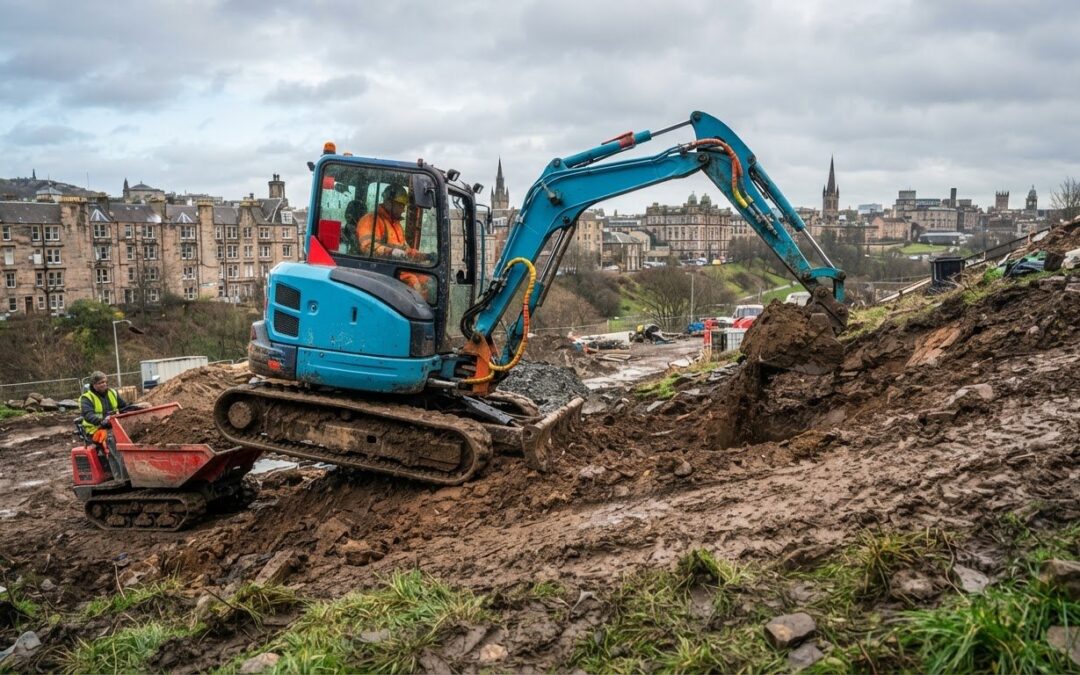
The right machine matters more than raw size on difficult ground. Plant hire for difficult terrain in Glasgow can include tracked excavators and other equipment selected for the surface, access and work required. The UK Government describes typical inclines of 30% for ride-on rollers and 60-70% for tracked excavators, with operation kept within manufacturers’ safe limits.
Uneven, soft or sloping ground can make access and stability as important as digging power. Matching the equipment to the site helps keep the work practical and controlled.
This guide explains which types of plant and specialist equipment can suit challenging sites, what to consider when arranging excavator hire, and how ground conditions affect your choice. It also covers how tracked machinery and lifting equipment can help with restricted access in and around Glasgow.
Key Takeaways
- Assess the ground, gradient and access before choosing machinery; these conditions shape which plant can work effectively on site.
- Match the equipment to the task. Tracked excavators can support digging, whilst specialist lifting equipment can help where access is restricted.
- Use incline figures as planning context: the UK Government describes typical inclines of 30% for ride-on rollers and 60-70% for tracked excavators, with operation kept within manufacturers’ safe limits.
- When comparing excavator options, focus on the digging depth, bucket force and dumping height needed for the work.
Plant machinery available for hire
On muddy or uneven Glasgow sites, tracked plant can provide traction and ground contact suited to challenging surfaces. Wheeled machines may be appropriate on firmer routes and prepared sites, but soft ground can restrict access. Compare the machine’s footprint and travel method with the surface, gradient and task.
Options can include tracked excavators for digging, rollers for ground preparation and dumpers for moving material. A 3-tonne swivel dumper has a skip that swivels through 180 degrees, allowing discharge to the side rather than requiring the whole machine to turn. That can help where turning space is restricted.
Incline capability depends on the machine and its operating limits. The UK Government assessment plan describes typical inclines of 30% for ride-on rollers and 60-70% for tracked excavators, with operation kept within manufacturers’ safe limits. These figures are planning context, not a substitute for assessing the actual surface.
For Scotland, hiring a machine does not itself establish that an operator has the training or competence needed to use it. Requirements depend on the equipment and work; match the operator’s experience to the machine and arrange familiarisation before use.
Plant hire insurance terms are set out in the hire agreement. Read the clauses on damage waivers, excesses, exclusions, theft and responsibility for equipment on site. These explain how liability is allocated if damage occurs.
For Glasgow delivery and collection, the price depends on the case and is given after a quote request. Transport distance, site access, loading arrangements and collection timing shape the charge, so include the delivery point and any narrow or restricted approaches in the job details.
Before choosing plant, record the site entrance, route width, surface, soft spots, gradient and working area. On steep or unstable ground, assess rollover risk and plan for machine stability and suitable rollover protection, in line with UK Government guidance on minimising that risk.
Specialist equipment support
Restricted access can call for compact, tracked or specialist lifting equipment instead of standard site plant. The route, load and task determine which option is suitable.
Specialist rough-terrain equipment
Tracked carriers can move materials across ground where wheeled transport may struggle, while compact excavators can work in tighter areas. For lifting, a spider crane can be used in confined spaces, and vacuum lifting equipment can handle suitable sheet materials. Match the machine to the load, working area and surface. A narrow gate, soft verge or uneven approach can affect which equipment is practical.
Delivery to restricted-access sites
For remote or restricted-access work around Glasgow, the relevant hire companies are those handling specialist plant and planning delivery to constrained sites. The delivery plan depends on the transport vehicle’s route, the unloading area and the machine’s onward path. Share the entrance width, overhead obstructions, turning space and ground condition. These details help shape the transport and unloading arrangements.
Separate road access from access across the site. A delivery vehicle may reach the entrance, while the hired machine still needs to cross soft ground or pass through a narrow route. Identify gates, slopes and weak surfaces along the way. For example, a crawler carrier may suit moving materials where a larger vehicle cannot travel safely.
Plan the sequence as well. Decide where the equipment will be unloaded, where it will work and how it will leave the site. Keep the intended working area clear of stored materials and other trades to make handover and movement easier to organise.
For Glasgow projects that need compact machinery or specialist access solutions, explore specialist equipment hire as part of planning the site setup. A clear description of the task, route and ground helps identify the equipment category to consider.
Excavator hire
For uneven Glasgow sites, choose an excavator based on the work, access route and required digging reach. A tracked machine may suit challenging ground, but size alone does not determine whether it will fit. Compare digging depth, force, dumping height and the space needed to position and operate the machine.
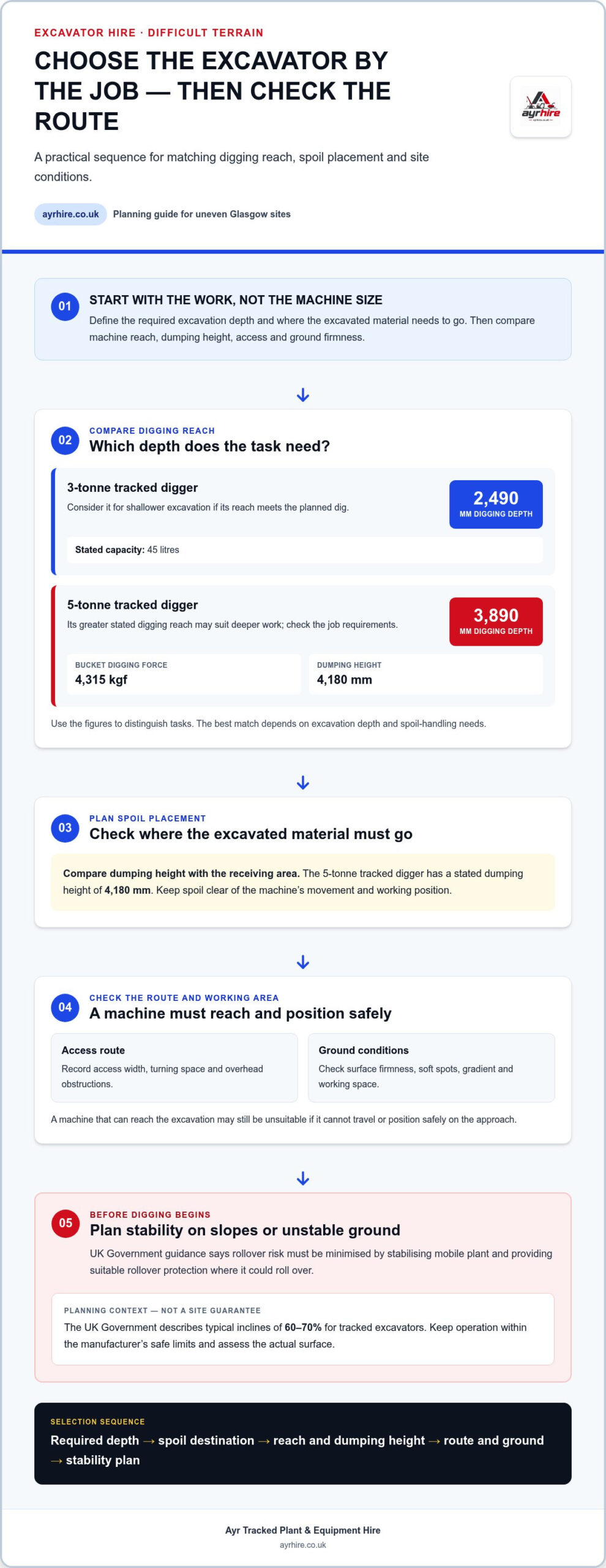
A 3-tonne tracked digger has a digging depth of 2,490 mm and a 45-litre capacity. A 5-tonne tracked digger reaches 3,890 mm, with a bucket digging force of 4,315 kgf and a dumping height of 4,180 mm. These figures help distinguish tasks, but the best match depends on the job’s excavation depth and spoil-handling needs.
- For shallower excavation: consider whether the 3-tonne machine’s 2,490 mm reach meets the planned dig.
- For deeper work: the 5-tonne option reaches 3,890 mm and has a greater stated bucket digging force.
- For spoil placement: compare the 5-tonne machine’s 4,180 mm dumping height with the receiving area.
Before arranging hire, map the excavation and the machine’s route to it. Note the access width, turning space, overhead obstructions and ground firmness. A machine that can reach the excavation may still be unsuitable if it cannot travel or position safely on the approach.
On a slope or unstable surface, plan where the excavator will sit before digging begins. UK Government guidance says rollover risk must be minimised by stabilising mobile plant and providing suitable rollover protection where it could roll over. Keep the work area organised and avoid placing spoil where it could obstruct the machine’s movement or working position.
Use a practical selection sequence: define the required depth, identify where excavated material must go, then compare reach and dumping height. Finally, assess the route and working surface against the machine’s size. This makes excavator hire for difficult terrain in Glasgow a task-led decision, rather than simply a choice based on machine weight.
Which Glasgow plant hire companies specialise in equipment for difficult or rough terrain?
For difficult ground in Glasgow, look for plant hire with tracked machinery, compact access options and specialist lifting equipment. Prepared sites may suit other plant, while restricted approaches or soft ground call for machinery matched to the route and task. Focus on the equipment available and whether it suits your work, not on a broad “rough-terrain” label.
Start with the job. Woodland clearance may need tracked machinery to move equipment across uneven ground, while a confined construction site may call for compact plant. Lifting work requires equipment suited to the load and working area. On Glasgow sites, the route matters too: the machine must reach the work area as well as perform the task.
- Ground access: identify soft patches, slopes, narrow entrances and uneven surfaces.
- Work type: distinguish digging, material movement, vegetation work and lifting.
- Site constraints: note overhead obstructions, turning room and where equipment can be positioned.
Use those details to compare suitable hire options. A tracked machine may suit a soft approach, while a compact option may be more practical through a narrow gate. Working reach, footprint and transport requirements all affect whether equipment fits the site. Avoid choosing on capacity alone.
Before booking, set out the task, access route and ground conditions in a short site brief. Add photographs or a simple marked-up plan if helpful. This gives the hire team a clearer basis for discussing equipment and delivery arrangements. For plant hire for difficult terrain in Glasgow, matching these practical details to specialist machinery is key.
Ayr Tracked Plant & Equipment Hire: FORST TR8 8″ Tracked Wood Chipper
Ayr Tracked Plant & Equipment Hire offers the FORST TR8 8″ Tracked Wood Chipper for vegetation work where tracked access is useful. For projects involving different tasks, its KUBOTA Mini Excavator / Digger can support digging, whilst the ALMA Crawler Multi-Loader is suited to moving materials around challenging site access. Vacuum Lifter Hire is another option for handling suitable lifting work.
Choose equipment to suit the job, route and working area. A tracked chipper may suit woodland clearance, while digging calls for an excavator. For moving materials, consider a crawler multi-loader. Describing the ground and access constraints helps identify the equipment type that fits your project.
For plant hire in Glasgow, contact Ayr Tracked Plant & Equipment Hire to discuss the equipment suited to your work.
Plan your next site move
Before arranging plant hire for difficult terrain in Glasgow, turn your site notes into a clear equipment brief. Describe the task, ground conditions, access route and intended working area. This gives the hire conversation a practical starting point and keeps the equipment choice focused on the work, not guesswork.
Think about the whole job, not just the machine’s main function. Vegetation work may call for a FORST TR8 8″ Tracked Wood Chipper; digging may need a KUBOTA Mini Excavator / Digger. Where lifting in a constrained space is central, the TMC25/BG250 Mini Spider Crane may be relevant. The key is explaining what needs doing and what the site allows.
Share those details with Ayr Tracked Plant & Equipment Hire to discuss the equipment options that fit your project. Contact Ayr Tracked Plant & Equipment Hire and take the next step with a clear brief. A well-planned equipment choice gives your Glasgow project a more workable starting point.
Frequently Asked Questions
What tracked plant and all-terrain machinery can be hired in Glasgow?
Tracked and specialist hire options in Glasgow include the FORST TR8 8″ Tracked Wood Chipper, KUBOTA Mini Excavator / Digger, TMC25/BG250 Mini Spider Crane and ALMA Crawler Multi-Loader. Ayr Tracked Plant & Equipment Hire also offers Vacuum Lifter Hire and a Trailer Mounted Cherry Picker. Match the equipment to the job: vegetation work, digging, lifting, material movement or access for maintenance.