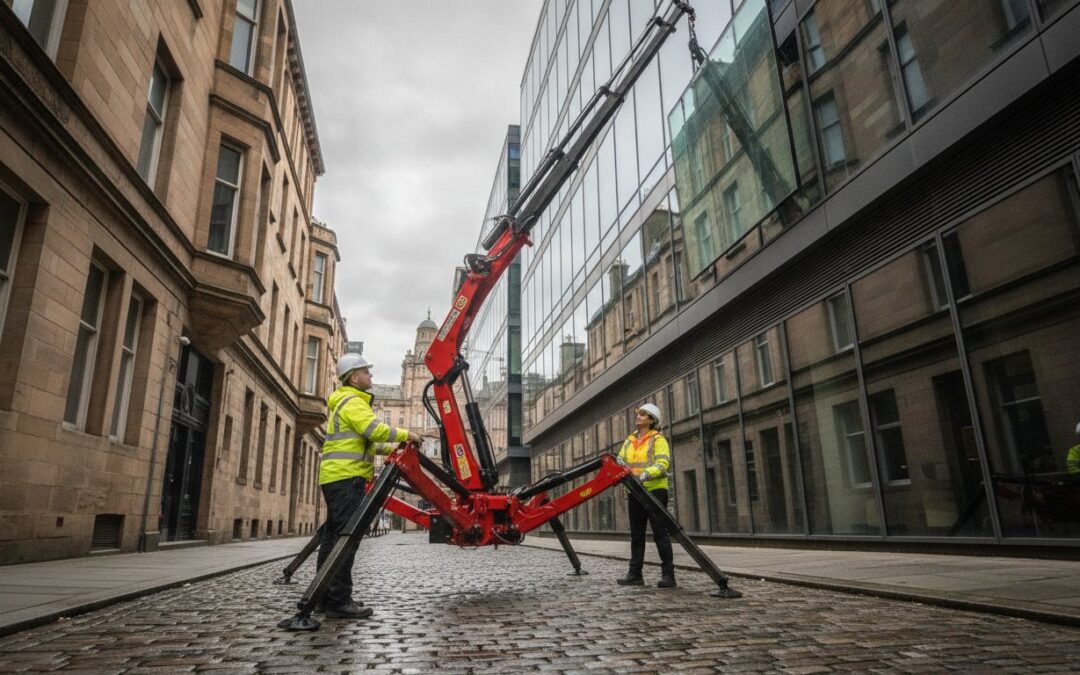
Picture a narrow lane in central Glasgow or a weight-sensitive suspended slab in Edinburgh. Traditional cranes simply won’t fit, and manual lifting is a safety risk you can’t afford. You’ve likely faced the frustration of a project stalling because the equipment is too bulky for the site. Finding reliable spider crane hire Scotland shouldn’t be another hurdle. You need a solution that balances compact dimensions with serious lifting power. It’s about getting the job done without the fuss of oversized machinery.
We understand that every site presents unique challenges, from the steep, uneven terrain of Ayrshire to the strict weight limits of modern city developments. This guide provides a clear path through those logistical headaches. You’ll learn exactly how mini cranes operate in tight spaces and what you need to do to prepare your site for a safe lift. We’ll also help you identify what to look for in a local hire partner. This is your practical resource for mastering restricted access lifting and keeping your project on schedule. Let’s look at how these precision tools can transform your site operations.
Key Takeaways
- Understand the technical advantages of compact tracked lifting and why the TMC25/BG250 model is ideal for internal or restricted site work.
- Compare spider cranes with traditional mobile units to determine when you can bypass expensive road closure permits and bulky machinery.
- Learn how to prepare your site for a safe lift, from assessing overhead obstructions to using spreader mats on soft Ayrshire ground.
- Discover the logistical benefits of spider crane hire Scotland, focusing on reduced transport costs and local site knowledge.
- Gain clarity on LOLER regulations and safety standards to ensure your lifting operation is both compliant and efficient.
Understanding Spider Crane Hire: Solving Restricted Access in Scotland
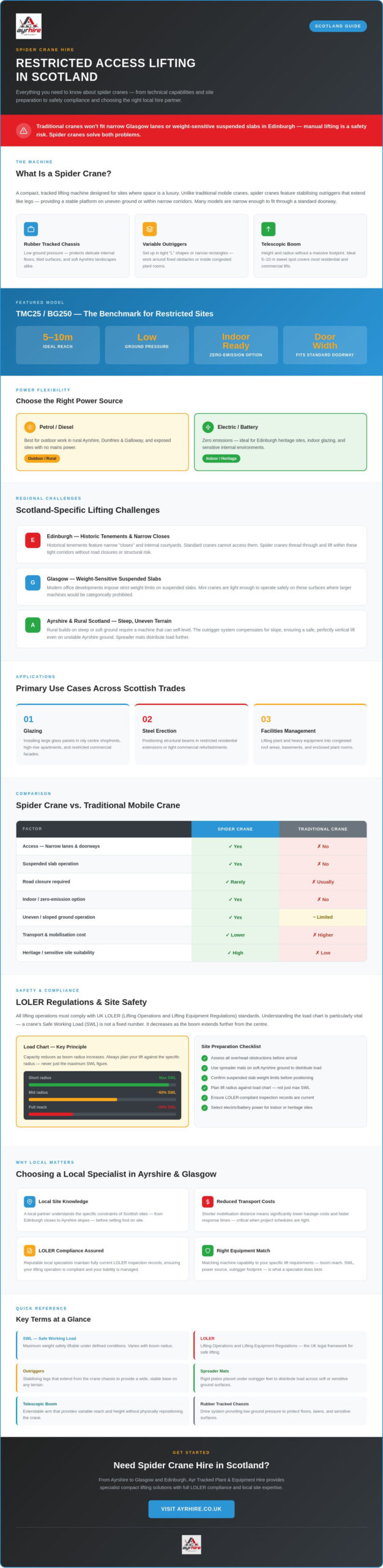
Lifting challenges in Scotland require more than just raw power. They demand precision. A mini spider crane is a compact, tracked lifting machine designed for sites where space is a luxury. Unlike traditional mobile cranes, these units feature stabilising outriggers that extend like legs. This design provides a stable platform on uneven ground or within narrow corridors. If you are asking What is a crane? in a modern context, it’s no longer just a giant tower on a skyline. It’s often a nimble machine that can fit through a standard doorway.
Choosing spider crane hire Scotland provides the flexibility needed for these restricted environments. It’s a pragmatic choice for contractors who need to move heavy loads without the logistical nightmare of road closures or massive footprints. These machines are built for the specific architectural and geographic constraints of our region.
The Anatomy of a Spider Crane
The core of the machine is its tracked chassis. These rubber tracks ensure low ground pressure. It’s essential for protecting delicate Scottish landscapes or tiled internal floors. Models like the TMC25/BG250 are engineered for this exact balance of power and portability. The variable outrigger footprints are the standout feature. They allow the crane to set up in tight “L” shapes or narrow rectangles. You can work around fixed obstacles or inside congested plant rooms. The telescopic boom provides the necessary reach. It offers height and radius without the massive footprint of a road-going crane.
Scotland-Specific Lifting Challenges
Scotland’s architectural heritage creates unique bottlenecks. In Edinburgh, historical tenements often feature narrow “closes” or internal courtyards. A standard crane can’t get near them. In Glasgow, modern office developments often require lifting on suspended slabs. These slabs have strict weight limits. Mini cranes are light enough to operate there safely. Rural builds in Ayrshire or Dumfries & Galloway often sit on steep, uneven terrain. The outrigger system levels the machine perfectly. This ensures a safe, vertical lift even on a slope. It’s about stability and reliability in unpredictable environments.
Primary uses for these machines are diverse across the Scottish trade sector:
- Glazing: Installing large glass panels in city centre shopfronts or high-rise apartments.
- Steel Erection: Positioning beams in restricted residential extensions or commercial refurbishments.
- Facilities Management: Lifting plant and equipment into congested roof areas or basements.
A spider crane sits on the pavement or within the building and gets the job done. It’s efficient. It’s quiet. Most importantly, it’s practical. Whether you’re working on a heritage restoration or a new build, these machines provide the exact tools necessary to overcome logistical hurdles.
Technical Capabilities of Mini Spider Cranes: Lifting Power in Small Footprints
Mini spider cranes are defined by their Safe Working Load (SWL). This figure represents the maximum weight the machine can safely lift under specific conditions. For many local projects, a reach of 5 to 10 metres is the ideal “sweet spot”. It covers most residential glazing or small-scale steel erection without requiring the massive footprint of a standard crane. You get the necessary height and radius whilst maintaining a compact presence on site.
Power flexibility is a core benefit. You can choose petrol or diesel engines for outdoor work in rural Ayrshire. For sensitive indoor projects or Edinburgh heritage sites, electric or battery-powered models provide zero-emission operation. This ensures you comply with UK lifting safety standards whilst protecting the internal environment. It’s a clean, quiet solution for modern construction needs.
Understanding the load chart is vital. A crane’s capacity is not a fixed number. It decreases as the boom extends further from the centre. If you are planning a lift, you must account for this radius. For those needing a reliable machine for these technical tasks, spider crane hire through a local specialist ensures you get the right equipment for the job. It’s about matching the machine’s curve to your specific site requirements.
The TMC25/BG250 Advantage
The TMC25/BG250 mini spider crane is a workhorse for restricted access. It’s designed to pass through a standard single doorway or a garden gate. This makes it perfect for back-garden extensions or internal shopfitting. Its narrow width allows it to navigate tight corridors with ease. It’s also light enough to be transported via trailer. This is a massive advantage for remote sites in Dumfries or the Borders where heavy haulage is often expensive or physically impossible. You get spider crane hire Scotland that is truly mobile and ready for immediate use.
Precision Controls and Safety Systems
Modern machines use advanced technology to ensure site safety. Remote control operation is standard. It allows the operator to stand away from the load, gaining a better view of tight Glasgow site corners. This improves communication and reduces the risk of accidents in congested areas. Intelligent outrigger interlocks are another key feature. They prevent the crane from lifting if the legs aren’t properly deployed on stable ground. Overload warning systems provide an automatic stop function. This removes the risk of human error during complex lifts, ensuring the machine stays within its engineered limits at all times.
Spider Cranes vs. Alternative Lifting Solutions: Which is Right for Your Project?
Traditional mobile cranes are heavy. They need significant space. In many Scottish towns, using them means expensive road closure permits and lengthy council applications. A spider crane bypasses these hurdles. It sits on the pavement or within the site boundary. This reduces overheads and speeds up the project timeline. Choosing spider crane hire Scotland allows you to bypass these logistical bottlenecks. It’s a pragmatic shift from “the biggest machine” to “the right machine”.
Crawler cranes have their place. They can “pick and carry” loads across a site. However, they lack the precision levelling of a spider crane. Outriggers are the decider here. They allow for safe operation on the uneven ground common in Ayrshire or the Highlands. If you need stability on a slope or a suspended slab, the spider crane is the correct tool. It provides a level base where a crawler might struggle.
Specialist glazing requires extreme precision. Integrating vacuum lifter hire Ayrshire with a mini crane creates a dedicated glass-handling solution. It’s safer than manual handling. It’s faster than traditional methods. This combination is the standard for modern shopfront installs and residential glass extensions. It removes the physical strain and reduces the risk of expensive breakages.
Buying a crane is a massive capital investment. For most construction phases, hiring is the logical choice. You get the latest technology without the maintenance costs or storage issues. It keeps your cash flow healthy. Reliable spider crane hire Scotland ensures you have the exact lifting capacity when you need it, and nothing sitting idle when you don’t.
Synergy with Other Plant Equipment
Mini cranes don’t work in isolation. They are part of a modular fleet. Pair a spider crane with an ALMA multi-loader to move materials across site before the lift. Use a Kubota mini excavator for initial groundworks, then bring in the crane for the structure. For high-level maintenance, combine the crane’s lifting power with a trailer-mounted cherry picker for personnel access. This integrated approach ensures every stage of the build is supported by the right tool. It’s about site-wide efficiency.
When to Choose a Spider Crane
Indoor projects are the primary use case. Floor loading is often a constraint in modern office builds. The low ground pressure of a tracked mini crane solves this. Roof-top lifting is another scenario. A larger crane hoists the mini unit into position. The spider crane then performs local lifts on the roof. This is common for HVAC installs or telecommunications work. Residential glazing is also a perfect fit. If your only access is a narrow side path or a garden gate, this is the only machine that will reach the back garden safely.
Site Preparation and Safety Standards for Scottish Lifting Projects
Safety starts before the machine arrives. A thorough site survey is the first step. You must measure the narrowest access point. Check for overhead obstructions like power lines or low eaves. It’s about ensuring the crane can reach the work area without compromise. If the path is too tight, you risk damage to the property or the equipment. Precision measurement is the only way to avoid these delays. Before your equipment arrives, working through a spider crane hire near me site readiness checklist can help you identify and resolve potential access and ground condition issues in advance.
Ground conditions in Scotland are often unpredictable. Soft Ayrshire turf or coastal sand in the West cannot support concentrated outrigger loads. You must use spreader mats. These distribute the weight across a larger surface area. It prevents the machine from sinking or tipping. This is a non-negotiable requirement for safe spider crane hire Scotland operations. Stability is the foundation of every successful lift.
All lifting must comply with the Lifting Operations and Lifting Equipment Regulations 1998 (LOLER). This is the legal standard in the UK. You need an Appointed Person (AP) to plan the lift. They produce the RAMS (Risk Assessment and Method Statement). On the day, a Crane Supervisor ensures the plan is followed exactly. This structure ensures accountability. It removes the guesswork from complex site movements.
LOLER Compliance and Documentation
Every piece of equipment needs a valid Report of Thorough Examination. Managing spider crane hire Scotland requires strict adherence to these legal frameworks. You must check this documentation before work begins. Ensure your operator holds valid CPCS or NPORS certification for Category A66. This protects your site and your liability. Keep all records updated for local health and safety audits. It’s about maintaining a professional standard on every project.
Step-by-Step Site Setup
Establish a clear exclusion zone. No one should enter the lifting radius during operation. Level the machine using the outriggers. This is critical on uneven Dumfries terrain. Check the weather forecast. High wind speeds are common in Scotland and can stop a lift immediately. Never ignore these limits. If you need expert advice on preparing your site or choosing the right machine, contact our team for reliable lifting support. We provide the practical tools you need to get the job done safely.
Choosing a Local Specialist for Spider Crane Hire in Ayrshire and Glasgow
Choosing a local partner for spider crane hire Scotland simplifies your logistics. It’s about regional site knowledge. We understand the specific access issues in South Ayrshire and the tight urban constraints of Glasgow. Local hire reduces transport costs. It also ensures quicker response times if your site conditions change. This proximity is a practical advantage for any project manager looking to keep a build on track.
We operate with a “no-nonsense” approach. Our equipment is maintained for immediate use. You get the tools you need without unnecessary delays. We offer flexible rental terms, including daily and weekly hire. This allows you to scale your equipment needs based on your project’s specific timeline. If you need to organise spider crane hire in Glasgow, we provide the technical support to navigate city centre restrictions and narrow site entrances.
Why Ayr Tracked Plant & Equipment Hire?
We specialise in niche tracked plant. Our inventory focuses on high-performance machines like the TMC25/BG250 mini spider crane. These tools solve specific access problems that standard plant cannot. We don’t just drop off a machine. Our team provides expert advice on the best combinations for your project. This might include pairing a crane with a vacuum lifter for glazing or an ALMA crawler multi-loader for efficient material transport across uneven ground.
Reliability is our baseline. We provide consistent delivery across North Ayrshire, East Ayrshire, and Dumfries & Galloway. Our team understands the geography. We know the rural lanes and the busy industrial estates. You get a steady hand and a reliable machine, every time. It’s about building long-term relationships through consistent performance and honest service.
Getting Started with Your Hire
The process begins with a technical consultation. We review your lifting plan and site survey. This ensures the equipment matches your requirements exactly. You’ll need to understand the hire agreement and have the correct insurance in place. This protects your site and your liability. Once the paperwork is sorted, we handle the delivery and initial setup instructions. For those looking beyond the west coast, we also facilitate spider crane hire in Edinburgh and the surrounding areas. We focus on getting the job done efficiently and safely. Contact us to discuss your next project and secure the right lifting solution for your site.
Mastering Your Next Restricted Access Lift
Navigating the tight architectural constraints of Glasgow or the uneven landscapes of Ayrshire requires more than just heavy equipment. It demands the right tool for the specific job. Mini cranes provide the precision and stability needed to overcome restricted access hurdles safely. By prioritising LOLER compliance and thorough site preparation, you ensure your project stays on schedule. Reliable spider crane hire Scotland is the most efficient way to access this technology without the burden of ownership.
We provide the technical support and no-nonsense machinery necessary for complex lifting tasks. Our fleet features the specialised TMC25/BG250 models. These are perfectly suited for narrow entry points and internal work. With local expertise across Ayrshire and Glasgow, we offer flexible daily and weekly hire terms to match your build phase. Don’t let site bottlenecks stall your progress. Enquire about Spider Crane Hire for your next project today. Let’s get your project moving.
Frequently Asked Questions
Do I need a special licence to operate a mini spider crane in Scotland?
Professional operators typically require a CPCS (Construction Plant Competence Scheme) A66 Compact Crane card to work on UK construction sites. This certification proves you have completed the necessary technical tests and safety training. For private or non-regulated sites, you must still demonstrate competency and follow LOLER regulations to ensure every lift is planned and executed safely.
What is the minimum width required for a mini spider crane to pass through?
The TMC25/BG250 model is narrow enough to pass through a standard single doorway or a garden gate. This compact design is a major reason why contractors choose spider crane hire Scotland for internal refurbishments and back-garden projects. You should always measure your narrowest access point and check for tight corners before the equipment arrives on site.
Can spider cranes be used on domestic garden projects in Ayrshire?
Yes, these machines are ideal for domestic projects where space is limited, such as residential extensions or glazing installs in Ayrshire. They can navigate narrow side paths that would be impossible for larger mobile cranes. Their rubber tracks and light weight help protect driveways and garden surfaces from significant damage during the lifting process.
How much does it cost to hire a spider crane for a week in Glasgow?
Hire costs depend on your specific project requirements, including the hire duration and whether you need a certified operator. Weekly rates generally offer better value than daily hire for longer construction phases in Glasgow. It’s best to request a technical consultation to get an accurate quote based on your site’s logistical challenges.
Are spider cranes safe to use on indoor flooring or finished surfaces?
Spider cranes are safe for most indoor environments because their rubber tracks provide low ground pressure. This protects delicate surfaces like tiles, screed, or finished floors in commercial units and heritage buildings. We recommend using spreader mats or additional floor protection for highly sensitive areas to distribute outrigger loads even more effectively.
What happens if the ground is uneven or on a slope?
The machine uses four independent stabilising outriggers to level itself on uneven ground or steep slopes. Each leg can be adjusted to different heights and angles, ensuring the crane body remains perfectly horizontal for a safe lift. This makes them highly effective for rural sites or coastal projects where flat ground is rarely available.
Is insurance included in the spider crane hire price?
Insurance is typically the responsibility of the hirer and is not usually included in the base hire rate. You will generally need Hired-In Plant insurance to cover the machine against accidental damage or theft whilst it is under your care. It’s important to verify your coverage with your insurance provider before the hire period begins.
Can a spider crane lift glass panels for a conservatory?
A spider crane is the perfect tool for conservatory glazing, especially when integrated with a vacuum lifter. This combination allows for the precise and safe positioning of large, heavy glass units that would be dangerous to move manually. Using spider crane hire Scotland for glazing tasks reduces the risk of expensive breakages and improves overall site efficiency.