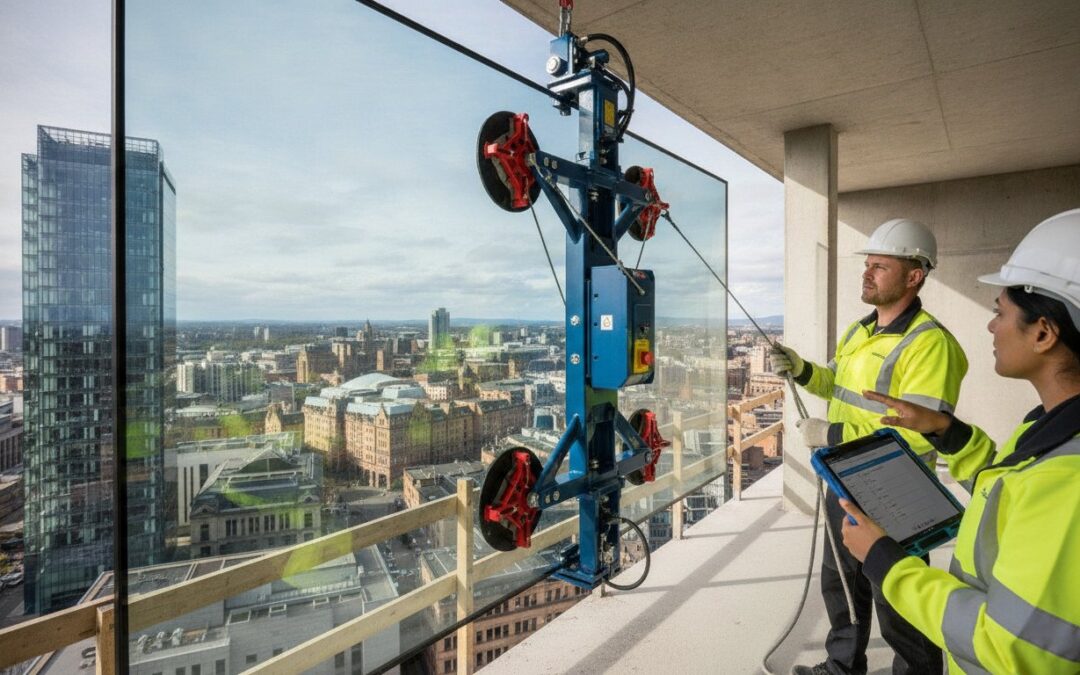
What if your next structural glazing project was defined by what didn’t happen; no shattered panels, no regulatory fines, and no site delays? You likely already know that handling oversized glass in tight spots like Glasgow’s city centre or rural Ayrshire is a high-stakes game. A single mistake with your glass vacuum lifter hire can derail your entire timeline and budget. It’s a risk that every contractor understands, but few properly prepare for until it’s too late.
We’ve built this checklist to ensure your equipment hire is a guaranteed path to a zero-accident site and full legal compliance. You’ll learn how to navigate the 2026 LOLER updates and verify technical specs before the machinery even arrives on site. Safety is about preparation. We’ll also cover essential site access requirements and load capacity checks to keep your installation timeline on track. This guide provides the practical readiness you need to manage your project with quiet confidence and professional precision.
Key Takeaways
- Learn why calculating Safe Working Load (SWL) must go beyond the weight of the glass alone to include frames and fixings.
- Identify the site access and ground stability factors that frequently derail glazing projects in urban Glasgow and rural Ayrshire.
- Use our pre-start checklist to verify your glass vacuum lifter hire is fully compliant with the latest 2026 safety regulations.
- Discover how local hire solutions reduce transport overheads whilst providing faster on-site technical support for your team.
- Understand the critical role of adjustable pad configurations when handling bespoke, curved, or oversized structural panels.
Understanding Glass Vacuum Lifters: A Safety-First Approach
A glass vacuum lifter is a specialised lifting attachment. It uses high-grade suction pads to secure non-porous loads. In modern construction, these machines are essential. Structural glazing panels frequently exceed the limits of what a team can safely move by hand. Utilising a professional glass vacuum lifter hire service ensures that your project stays on schedule and your operatives remain safe.
The primary benefit is risk reduction. Handling glass is inherently dangerous. One slip can lead to catastrophic damage or severe injury. By 2026, safety standards have evolved. Dual-circuit vacuum systems are now the baseline requirement for almost all UK construction sites. This technology provides the stability needed for demanding installations in Glasgow’s tight urban spaces or Ayrshire’s exposed coastal sites.
How Vacuum Suction Technology Works
The system relies on a vacuum pump and a dedicated reservoir. These components work together to maintain a constant seal. The fundamental principle of how suction cups work involves creating a pressure differential between the pad and the glass. This creates the grip required to lift hundreds of kilogrammes with precision.
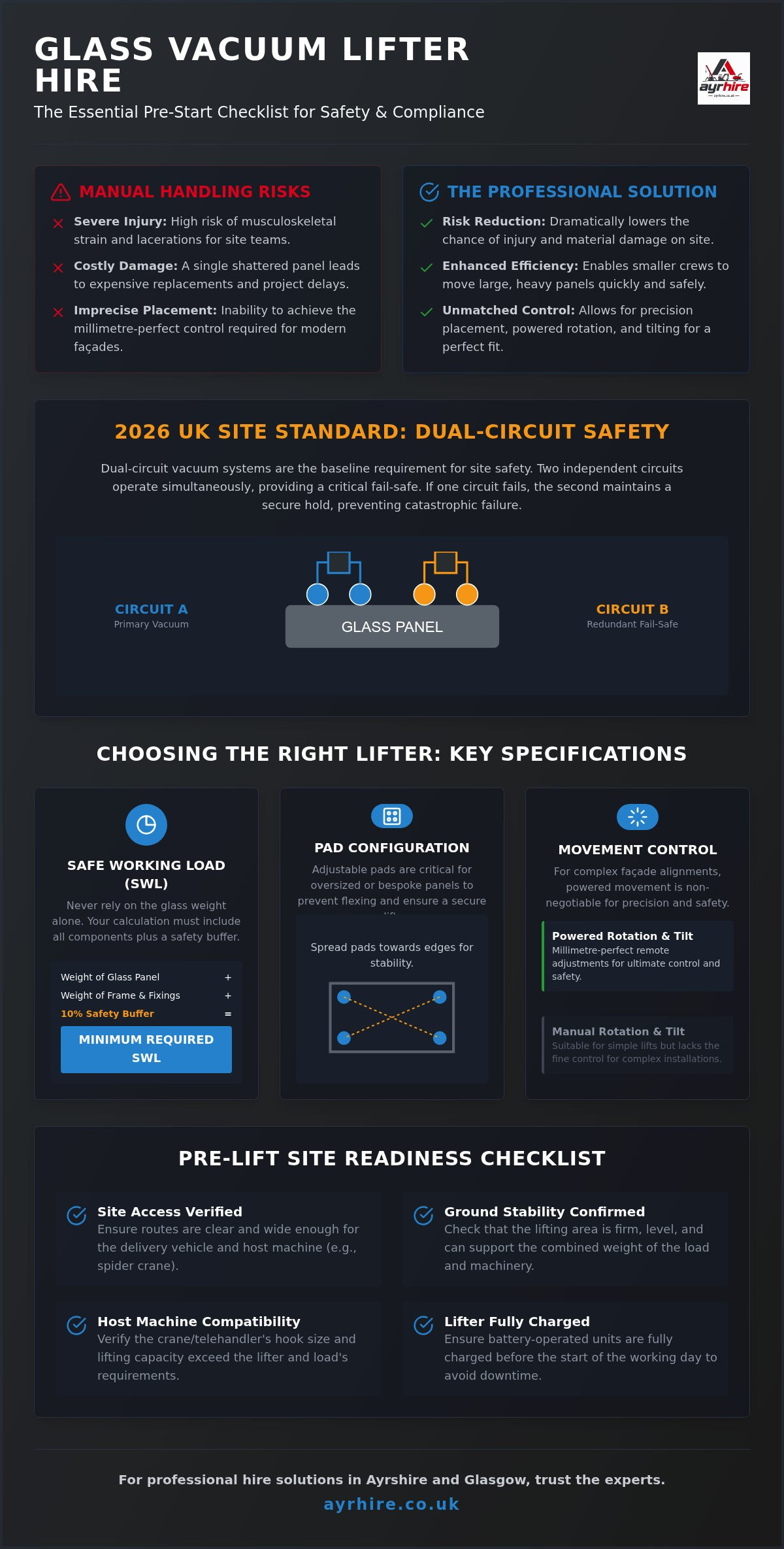
- Dual-Circuit Fail-Safe: Two independent vacuum circuits operate simultaneously. If one circuit loses pressure, the second holds the load securely until it’s lowered.
- Vacuum Reservoir: This tank stores vacuum pressure. It ensures the lifter maintains its grip even during a temporary power loss or pump failure.
- Warning Systems: Visual gauges and audible alarms are standard. They alert the operator the moment vacuum levels dip below the safe working threshold.
The Risks of Manual Glass Handling
Lifting architectural glass by hand carries significant health and safety implications. Musculoskeletal strain and laceration risks are high for any site team. The economic impact is equally severe. A shattered panel means expensive replacements and missed deadlines. Manual handling becomes an unacceptable risk when a single glass unit exceeds 25kg or requires complex manoeuvring that compromises the lifter’s posture.
Choosing glass vacuum lifter hire isn’t just about moving weight. It’s about control. It allows for precision placement that manual teams simply cannot match. This leads to a cleaner installation and a more efficient site timeline. It’s the most dependable way to manage heavy glazing without the fuss of oversized manual crews.
Essential Specifications: Choosing the Right Lifter for the Job
Selecting the correct equipment for a glass vacuum lifter hire is about matching technical capacity to site reality. It isn’t just about the weight of the glass. You must account for the total load. This includes the glazing unit, the frame, and any temporary fixings or protective tapes. Failure to calculate this correctly puts your project at risk and violates UK safety regulations. Precision at the planning stage prevents equipment failure during the lift.
Check the interface between the lifter and your primary lifting machine. Whether you’re using a telehandler or a mini spider crane, the hook size and weight limit of the host machine must align with the lifter’s attachment point. Battery-operated units are the standard for 2026. They’re reliable and eliminate the trip hazards or reach limitations of cable-fed alternatives. This is particularly vital on busy sites in Glasgow where floor space is at a premium and cables are a constant liability.
Weight Capacity and Pad Configuration
Calculating your Safe Working Load (SWL) requires precision. Always add a 10% safety buffer to your total estimated weight. This accounts for environmental factors like wind loading on large surface areas. Pad configuration is equally critical. Adjustable arms allow you to spread the suction pads towards the edges of the panel. This prevents the glass from flexing during the lift. For bespoke projects involving curved or textured surfaces, ensure the lifter is fitted with specialised pads designed for those specific finishes. If you’re unsure which specification fits your next project, checking our range of specialised lifting solutions can help clarify your requirements.
Manual vs Powered Rotation and Tilt
Positioning architectural glass requires extreme control. A 90-degree tilt function is essential for moving panels from a horizontal transport stillage to a vertical installation position. For complex façade alignments, 360-degree rotation allows for millimetre-perfect adjustments. Powered movements are preferred over manual ones. They significantly reduce physical strain on the glazing team. This leads to fewer mistakes and a faster installation timeline. It’s a simple way to keep your crew fresh and focused on the technical aspects of the seal.
Always verify the power source’s endurance. On rural Ayrshire sites, you might not have easy access to charging points. Ensure the battery life exceeds your daily operational hours to avoid mid-shift delays. A dependable lifter is only useful if it’s ready to work when you are. For projects where you also need elevated access alongside your glazing work, trailer mounted cherry picker hire offers a highly mobile, towable solution that eliminates costly delivery overheads on rural Ayrshire sites.
Site Readiness: Preparing Your Workspace in Ayrshire and Glasgow
Successful glazing depends on the environment as much as the equipment. When arranging a glass vacuum lifter hire, your site must be ready before the delivery vehicle arrives. In Glasgow city centre, this often means navigating tight alleyways or restricted pedestrian zones. In rural Ayrshire, the challenge shifts to soft terrain and exposed elevations. Planning for these specific local factors prevents site delays and ensures the safety of your lifting operations.
Establish a dedicated storage zone for glass stillages. This area should be as close to the final installation point as possible. Minimising the distance the glass travels across the site reduces the window for potential accidents. Ensure this zone is on firm, level ground to prevent stillages from tipping or sinking. A tidy site is a safe site. Clear all debris from the transit path to ensure the lifting machine has a smooth, unobstructed journey to the aperture.
Ground Conditions and Access Routes
The primary lifting machine, such as a mini crane or telehandler, requires a stable base. Always check for underground services, drainage pipes, or voids that could collapse under the concentrated load of outriggers. If you are working in confined urban spaces, you must measure the narrowest points of your access route. This includes doorways, scaffolding gaps, and site hoardings. For projects with particularly restricted footprints, choosing specialist plant hire Ayrshire can provide the compact machinery needed to navigate these bottlenecks safely.
Weather Considerations for External Glazing
Scottish weather is a major variable in glazing safety. High winds are the primary concern. Large glass panels act as sails, creating significant lateral forces that can overpower a lifting machine’s stability. Adhering to glazing industry standards regarding maximum wind speeds is non-negotiable. If gusts exceed the manufacturer’s limit, the lift must be postponed immediately. Safety outweighs the pressure of a tight schedule.
- Temperature: Extreme cold or frost can affect the flexibility of suction pads. This compromises the seal. Ensure pads are kept at an operational temperature before use.
- Moisture: A secure vacuum requires a clean, dry surface. Rain or heavy condensation can cause the pads to slip. Always wipe the glass surface with a lint-free cloth immediately before attaching the lifter.
- Visibility: Low light or heavy rain in winter months can obscure the operator’s view. Ensure the workspace is well-lit to maintain clear communication between the slinger and the operator.
Your glass vacuum lifter hire is a precision tool. It performs best when the site conditions are controlled and predictable. By addressing these environmental factors early, you protect your team and the high-value materials they handle.
The Ultimate Glass Vacuum Lifter Hire Checklist
Site readiness is set. Now focus on the machinery. A rigorous checklist is your final line of defence. For every glass vacuum lifter hire, documentation is the starting point. You must verify the LOLER (Lifting Operations and Lifting Equipment Regulations) certification is current. Under 2026 standards, this means a thorough examination within the last 6 months for lifting accessories. Don’t take the supplier’s word for it. Review the paperwork yourself before the first lift.
Inspect the hardware. Suction pads are the most vulnerable component. Look for nicks, tears, or embedded debris. Even a tiny scratch can compromise the vacuum seal on a heavy architectural panel. Confirm the battery is fully charged. Test the backup pump. It must be operational and capable of maintaining pressure if the primary system fails. Reliability is non-negotiable when handling high-value glazing.
Brief your team. Every operator needs a clear understanding of the specific lift plan. They must know the emergency procedures. If the alarm sounds, everyone should know exactly where to move and how to secure the area. Clear communication prevents panic. It ensures that every person on site understands their role in maintaining a zero-accident environment.
Pre-Start Inspection and Documentation
Check the Safe Working Load (SWL) plate. It must match or exceed your heaviest panel weight. Perform a vacuum leakage rate test before the first actual lift of the day. Attach the lifter to a test surface and monitor the gauges for any pressure drop over a five-minute period. Finally, verify that secondary safety straps are available. These straps provide an essential mechanical backup should the vacuum fail. They are a simple but vital part of a professional glass vacuum lifter hire setup.
Load Surface and Environment Verification
Most guides focus on the machine. We focus on the glass. The suction points must be clinical. Clean the glass thoroughly to remove dust, grease, or protective coatings. Be aware of “low-e” coatings or films. These can affect suction performance on certain lifter models. Check the lifting radius for overhead obstructions. Look for power lines or scaffolding protrusions that could snag the load. If you’re ready to secure your equipment, you can book your glass vacuum lifter hire today to ensure site-wide compliance and safety.
Professional Hire Solutions: Why Local Expertise Matters
Local expertise is the final piece of the safe glazing puzzle. National firms offer wide coverage, but they often lack the personal accountability found with a local specialist. When you arrange a glass vacuum lifter hire, you’re securing more than just a tool. You’re gaining a partner who understands the specific regional challenges of South-West Scotland. Whether you’re navigating the sandstone tenements of Glasgow or the exposed coastal elevations of Ayrshire, local knowledge ensures your equipment is selected for the specific terrain and building style.
Logistics are simpler when your supplier is nearby. Transport costs are lower. Support is faster. If a technical issue occurs or site conditions shift, a local team can respond within hours rather than days. This level of service is vital for maintaining a strict installation timeline. It’s about practical readiness. You need a supplier who can adapt as quickly as the Scottish weather. This directness creates a sense of transparency that national call centres simply cannot match.
Flexible hire terms are a core benefit of a local partnership. We understand that UK construction projects are rarely linear. Site delays happen. Delivery windows move. Our approach focuses on stability and efficiency, offering daily or weekly terms that respect the unpredictable nature of site work. This keeps your project budget-efficient whilst ensuring you always have the right lifting capacity on hand. It’s a “get the job done” attitude that prioritises your project’s success over rigid corporate contracts.
Integrating Lifters with Mini Spider Cranes
Compact cranes are the perfect partner for vacuum lifters. They allow for millimetre-perfect glass placement in areas where larger machinery cannot reach. If you’re working on an internal glazing project or a restricted balcony, check our mini spider crane hire North Ayrshire specifications. Using a single supplier for both pieces of kit ensures total compatibility. It simplifies your site logistics and provides a clear line of accountability for the entire lifting operation.
The Benefits of Local Hire in South-West Scotland
Proximity matters. A local supplier provides direct communication with the experts who actually maintain the fleet. If site conditions change or a technical question arises, you get an answer immediately. For those managing projects in the region, vacuum lifter hire Ayrshire offers the speed and reliability needed for high-pressure installations. It’s a dependable service built on regional commitment and a deep understanding of the local landscape. This ensures your glass vacuum lifter hire is a seamless part of your installation timeline.
Securing Your 2026 Glazing Project
Safe structural glazing is about more than just the lift; it’s about the technical readiness established before the machine arrives. You now have a complete framework for managing site access, calculating load weights, and verifying compliance. By adhering to these standards, you protect your site team and your high-value materials from unnecessary risk. A successful glass vacuum lifter hire ensures your project stays on schedule without the threat of shattered panels or regulatory fines.
Ayr Tracked Plant & Equipment Hire provides the dependable solutions required for complex installations across South-West Scotland. Our fleet is fully LOLER compliant and meticulously maintained to ensure peak reliability on every site. With flexible daily and weekly hire rates, we adapt to your specific timeline whilst maintaining professional standards. Whether you are operating in the heart of Glasgow or on a remote Ayrshire coast, we provide the steady hand your project needs. Enquire about vacuum lifter hire for your next project and let’s get the job done with precision.
Frequently Asked Questions
How much weight can a glass vacuum lifter actually lift?
Lifting capacities for a glass vacuum lifter hire vary significantly based on the specific model. Light-duty units typically handle around 70kg, whilst heavy-duty industrial lifters can manage loads up to 8,500kg. You must always check the Safe Working Load (SWL) plate on the machine before use. It’s essential to match the lifter’s capacity to your heaviest panel weight plus a safety margin for environmental factors.
Do I need a special licence to operate a glass vacuum lifter?
You don’t need a specific government licence to operate the lifter itself, but you must be a “competent person” under LOLER and PUWER regulations. This means you have the training and experience to use the equipment safely. If the lifter is attached to a crane, the crane operator must hold the relevant CPCS or NPORS qualifications. Employers are responsible for ensuring all staff are properly briefed on the lift plan.
Can I use a glass vacuum lifter in the rain or wind?
You should avoid lifting glass in high winds or heavy rain. Wind speeds exceeding 18mph often make large panels unmanageable due to the sail effect, which can destabilise the lifting machine. Rain compromises the vacuum seal by allowing moisture between the pad and the glass. Always ensure the glass surface is dry and clean before attaching the suction pads to maintain site safety.
What happens if the power fails while the glass is in the air?
Professional lifters include a vacuum reservoir and a dual-circuit system to prevent the load from dropping immediately. If the pump loses power, the reservoir maintains suction for several minutes. This provides the operator with enough time to lower the load to the ground safely. Visual and audible alarms will alert the team the moment a pressure drop is detected by the system sensors.
How do I know if my glass surface is suitable for vacuum lifting?
Your glass must be non-porous, clean, and free from grease or dust. Standard architectural glass is ideal, but certain “low-e” coatings or textured finishes might require specialised pads. You should test the suction on a small area before the main lift. If the vacuum gauge doesn’t reach the green zone quickly, the surface or the pads may be unsuitable for that specific material.
Is a secondary safety device like a strap always required?
Secondary safety straps are mandatory for most structural glazing projects in 2026. Whilst the vacuum system is the primary hold, straps provide a mechanical backup in case of an unforeseen seal failure. You should always use them when lifting over people or at significant heights. They are a simple, effective way to ensure a zero-accident site during complex installations in urban Glasgow or rural Ayrshire.
Can I hire a vacuum lifter for a single day in Glasgow?
Yes, we offer flexible daily and weekly hire terms across Glasgow and South-West Scotland. This allows you to scale your equipment costs to the exact duration of your project. Local glass vacuum lifter hire reduces transport overheads and ensures you have the machinery only for as long as it’s needed. It’s a cost-effective solution for short-term residential or commercial glazing repairs.
What is the difference between a single-circuit and dual-circuit lifter?
A dual-circuit lifter features two independent vacuum systems, providing a critical fail-safe for the operator. If one circuit fails, the other holds the load securely until it can be lowered. Single-circuit lifters lack this redundancy and are increasingly restricted on modern UK construction sites. For maximum safety and compliance with 2026 standards, you should always specify a dual-circuit machine for your project.